Statin Discontinuation Appears Safe in Adults ≥75 Without ASCVD: Study
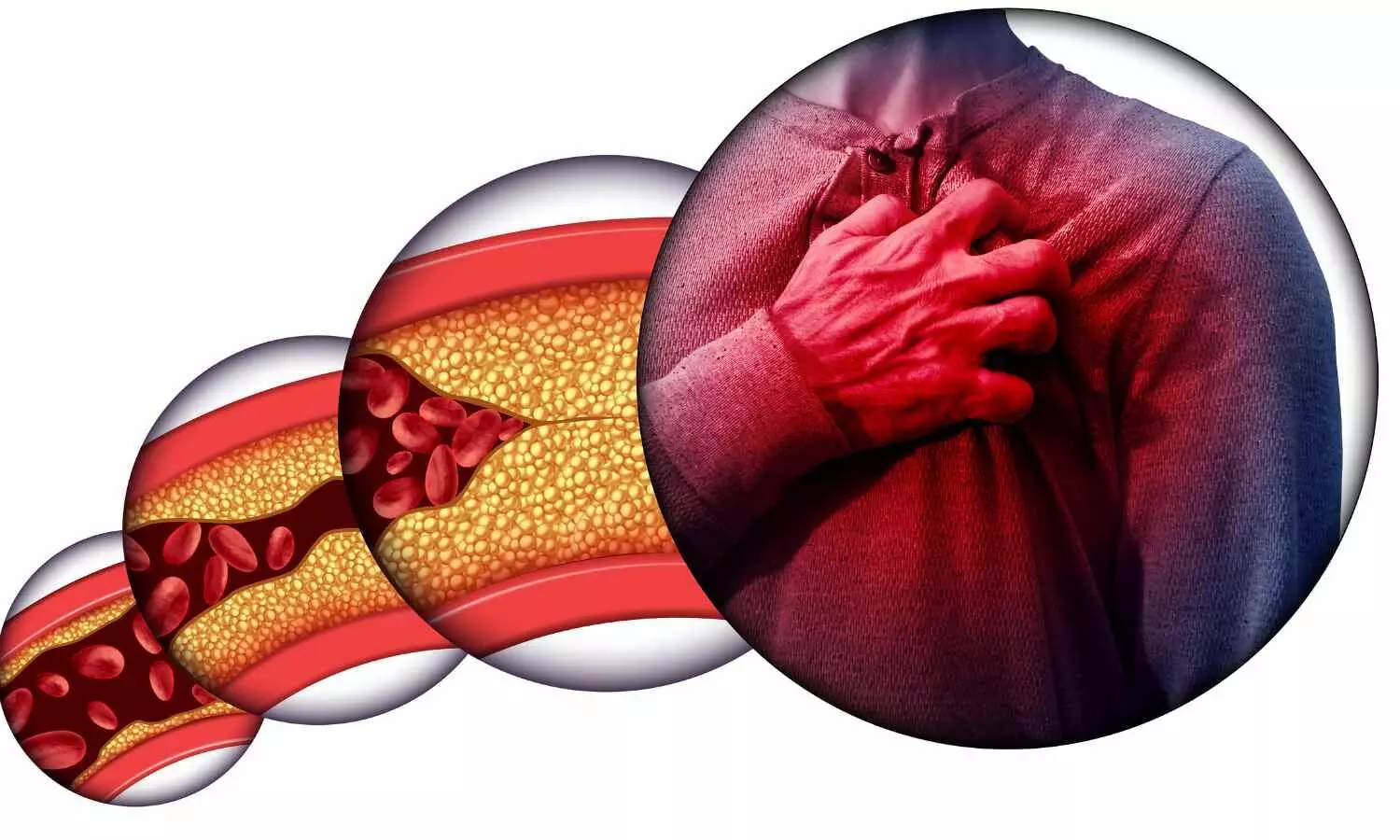


The SAGA/SITE study suggests that adults aged 75 years or older who have never developed ASCVD may be able to safely discontinue statins used for primary prevention. At 3 years, stopping statins was noninferior to continuing therapy for all-cause mortality.
However, discontinuation did not improve quality of life, challenging the assumption that stopping statins necessarily provides a quality-of-life benefit in older adults. The findings address an important evidence gap, as many statin trials have excluded people over 70–80 years, leaving the benefits of primary-prevention statin therapy in the elderly uncertain. The study was published in The Lancet Healthy Longevity by Prof. Fabrice B. and colleagues.
The study was designed to investigate the association between stopping statins and mortality. This was achieved through conducting a multicenter, open-label, parallel group, phase 3, pragmatic trial in 297 primary care offices from June 15, 2016, to January 7, 2020. For participants to be eligible, they had to be 75 years old or above and on a statin for more than one year for the purpose of primary ASCVD prevention without any prior recorded history of cardiovascular disease, along with having signed consent forms.
Those with a terminal illness that was expected to take less than 3 months to pass, those with dementia diagnosis, and familial hypercholesterolemia were excluded. Participants were then randomized using an unblinded 5:4 ratio for continuing or stopping the use of statins for a period of 36 months.
Key findings:
- At 36 months, death occurred in 48 of 604 participants (7.9%) in the statin continuation group versus 35 of 484 participants (7.2%) in the statin discontinuation group.
- The absolute between-group difference in all-cause mortality was −0.68% (95% CI −3.95% to 2.60%).
- Because the upper bound of the confidence interval (+2.60%) remained well below the predefined 5% non-inferiority margin, statin cessation was confirmed non-inferior to continuation.
- Adverse events occurred in 461 of 631 participants (73.1%) in the continuation arm compared to 390 of 527 participants (74.0%) in the discontinuation arm.
- Non-cardiovascular adverse events were reported in 456 of 631 participants (72.3%) in the continuation group and 383 of 527 participants (72.7%) in the discontinuation group.
To sum up, the cessation of statin treatment for individuals aged 75 years and above who have no history of ASCVD is as good as continuing the medication in terms of all-cause mortality rate after 3 years. An absolute mortality difference of −0.68% proves beyond doubt that the risk of mortality among individuals stopping their primary prevention of statins is indeed very low.
Reference:
Bonnet, F., Poulizac, P., Rousselot, N., Couffinhal, T., Galli, G., Berdaï, D., Vandenhende, M.-A., Rousset, M., Coueron, R., Bénard, A., Joseph, J.-P., Adam, C., Aimé, B., Alexandre, B., Allaoui, K., Amendola, M., Angoulvant, C., Archambault, P., Ariza, M., … Zimmermann, S. (2026). Discontinuation of statins for primary prevention of atherosclerotic cardiovascular disease in adults aged 75 years or older (SAGA/SITE): a multicentre, open-label, pragmatic, non-inferiority randomised trial. The Lancet Healthy Longevity, 7(7), 100884. https://doi.org/10.1016/j.lanhl.2026.100884