Medical Dialogues
  • Dermatology
Login Register
This site is intended for healthcare professionals only
Login Register
  • MD Brand Connect
  • Webinars
  • Vaccine Hub
  • MDTV
    • Breaking News
    • Medical News Today
    • Health News Today
    • Latest
    • Journal Club
    • Medico Legal Update
    • Latest Webinars
    • MD Shorts
    • Health Dialogues
  • Fact Check
  • Health Dialogues
Medical Dialogues
  • Medical News & Guidelines
      • Anesthesiology
      • Cardiology and CTVS
      • Critical Care
      • Dentistry
      • Dermatology
      • Diabetes and Endocrinology
      • ENT
      • Gastroenterology
      • Medicine
      • Nephrology
      • Neurology
      • Obstretics-Gynaecology
      • Oncology
      • Ophthalmology
      • Orthopaedics
      • Pediatrics-Neonatology
      • Psychiatry
      • Pulmonology
      • Radiology
      • Surgery
      • Urology
      • Laboratory Medicine
      • Diet
      • Nursing
      • Paramedical
      • Physiotherapy
  • Health news
      • Doctor News
      • Government Policies
      • Hospital & Diagnostics
      • International Health News
      • Medical Organization News
      • Medico Legal News
      • NBE News
      • NMC News
  • Fact Check
      • Bone Health Fact Check
      • Brain Health Fact Check
      • Cancer Related Fact Check
      • Child Care Fact Check
      • Dental and oral health fact check
      • Diabetes and metabolic health fact check
      • Diet and Nutrition Fact Check
      • Eye and ENT Care Fact Check
      • Fitness fact check
      • Gut health fact check
      • Heart health fact check
      • Kidney health fact check
      • Medical education fact check
      • Men's health fact check
      • Respiratory fact check
      • Skin and hair care fact check
      • Vaccine and Immunization fact check
      • Women's health fact check
  • AYUSH
    • Ayurveda
    • Homeopathy
    • Siddha
    • Unani
    • Yoga
  • State News
      • Andaman and Nicobar Islands
      • Andhra Pradesh
      • Arunachal Pradesh
      • Assam
      • Bihar
      • Chandigarh
      • Chattisgarh
      • Dadra and Nagar Haveli
      • Daman and Diu
      • Delhi
      • Goa
      • Gujarat
      • Haryana
      • Himachal Pradesh
      • Jammu & Kashmir
      • Jharkhand
      • Karnataka
      • Kerala
      • Ladakh
      • Lakshadweep
      • Madhya Pradesh
      • Maharashtra
      • Manipur
      • Meghalaya
      • Mizoram
      • Nagaland
      • Odisha
      • Puducherry
      • Punjab
      • Rajasthan
      • Sikkim
      • Tamil Nadu
      • Telangana
      • Tripura
      • Uttar Pradesh
      • Uttrakhand
      • West Bengal
  • Medical Education
      • Ayush Education News
      • Dentistry Education News
      • Medical Admission News
      • Medical Colleges News
      • Medical Courses News
      • Medical Universities News
      • Nursing education News
      • Paramedical Education News
      • Study Abroad
  • Industry
      • Health Investment News
      • Health Startup News
      • Medical Devices News
      • Pharma News
      • Pharmacy Education News
      • AI and healthcare
      • Industry Perspective
  • MDTV
      • Health Dialogues MDTV
      • Health News today MDTV
      • Latest Videos MDTV
      • Latest Webinars MDTV
      • MD shorts MDTV
      • Medical News Today MDTV
      • Medico Legal Update MDTV
      • Top Videos MDTV
      • Health Perspectives MDTV
      • Journal Club MDTV
      • Medical Dialogues Show
This site is intended for healthcare professionals only
LoginRegister
Medical Dialogues
LoginRegister
  • Home
  • Medical news & Guidelines
    • Anesthesiology
    • Cardiology and CTVS
    • Critical Care
    • Dentistry
    • Dermatology
    • Diabetes and Endocrinology
    • ENT
    • Gastroenterology
    • Medicine
    • Nephrology
    • Neurology
    • Obstretics-Gynaecology
    • Oncology
    • Ophthalmology
    • Orthopaedics
    • Pediatrics-Neonatology
    • Psychiatry
    • Pulmonology
    • Radiology
    • Surgery
    • Urology
    • Laboratory Medicine
    • Diet
    • Nursing
    • Paramedical
    • Physiotherapy
  • Health news
    • Doctor News
    • Government Policies
    • Hospital & Diagnostics
    • International Health News
    • Medical Organization News
    • Medico Legal News
    • NBE News
    • NMC News
  • Fact Check
    • Bone Health Fact Check
    • Brain Health Fact Check
    • Cancer Related Fact Check
    • Child Care Fact Check
    • Dental and oral health fact check
    • Diabetes and metabolic health fact check
    • Diet and Nutrition Fact Check
    • Eye and ENT Care Fact Check
    • Fitness fact check
    • Gut health fact check
    • Heart health fact check
    • Kidney health fact check
    • Medical education fact check
    • Men's health fact check
    • Respiratory fact check
    • Skin and hair care fact check
    • Vaccine and Immunization fact check
    • Women's health fact check
  • AYUSH
    • Ayurveda
      • Ayurveda Giuidelines
      • Ayurveda News
    • Homeopathy
      • Homeopathy Guidelines
      • Homeopathy News
    • Siddha
      • Siddha Guidelines
      • Siddha News
    • Unani
      • Unani Guidelines
      • Unani News
    • Yoga
      • Yoga Guidelines
      • Yoga News
  • State News
    • Andaman and Nicobar Islands
    • Andhra Pradesh
    • Arunachal Pradesh
    • Assam
    • Bihar
    • Chandigarh
    • Chattisgarh
    • Dadra and Nagar Haveli
    • Daman and Diu
    • Delhi
    • Goa
    • Gujarat
    • Haryana
    • Himachal Pradesh
    • Jammu & Kashmir
    • Jharkhand
    • Karnataka
    • Kerala
    • Ladakh
    • Lakshadweep
    • Madhya Pradesh
    • Maharashtra
    • Manipur
    • Meghalaya
    • Mizoram
    • Nagaland
    • Odisha
    • Puducherry
    • Punjab
    • Rajasthan
    • Sikkim
    • Tamil Nadu
    • Telangana
    • Tripura
    • Uttar Pradesh
    • Uttrakhand
    • West Bengal
  • Medical Education
    • Ayush Education News
    • Dentistry Education News
    • Medical Admission News
    • Medical Colleges News
    • Medical Courses News
    • Medical Universities News
    • Nursing education News
    • Paramedical Education News
    • Study Abroad
  • Industry
    • Health Investment News
    • Health Startup News
    • Medical Devices News
    • Pharma News
      • CDSCO (Central Drugs Standard Control Organisation) News
    • Pharmacy Education News
    • AI and healthcare
    • Industry Perspective
  • Home
  • Cardiology-CTVS
  • Cardiology & CTVS News
  • Studies confirm that...

Studies confirm that drug-coated balloons can replace stents – even in larger coronary arteries

Written By : Dr. Kamal Kant Kohli Published On 2026-01-27T21:00:09+05:30  |  Updated On 27 Jan 2026 9:00 PM IST
Studies confirm that drug-coated balloons can replace stents – even in larger coronary arteries
  • facebook
  • twitter
  • linkedin
  • whatsapp
  • Telegram
  • Email

When arterial plaque – a sticky combination of fatty deposits, calcified material, inflammatory cells and other substances – build up on the inner walls of coronary or other arteries, blood flow is restricted, which can lead to heart failure, heart attacks or strokes. Cardiovascular disease is still one of the most common causes of illness and death worldwide.

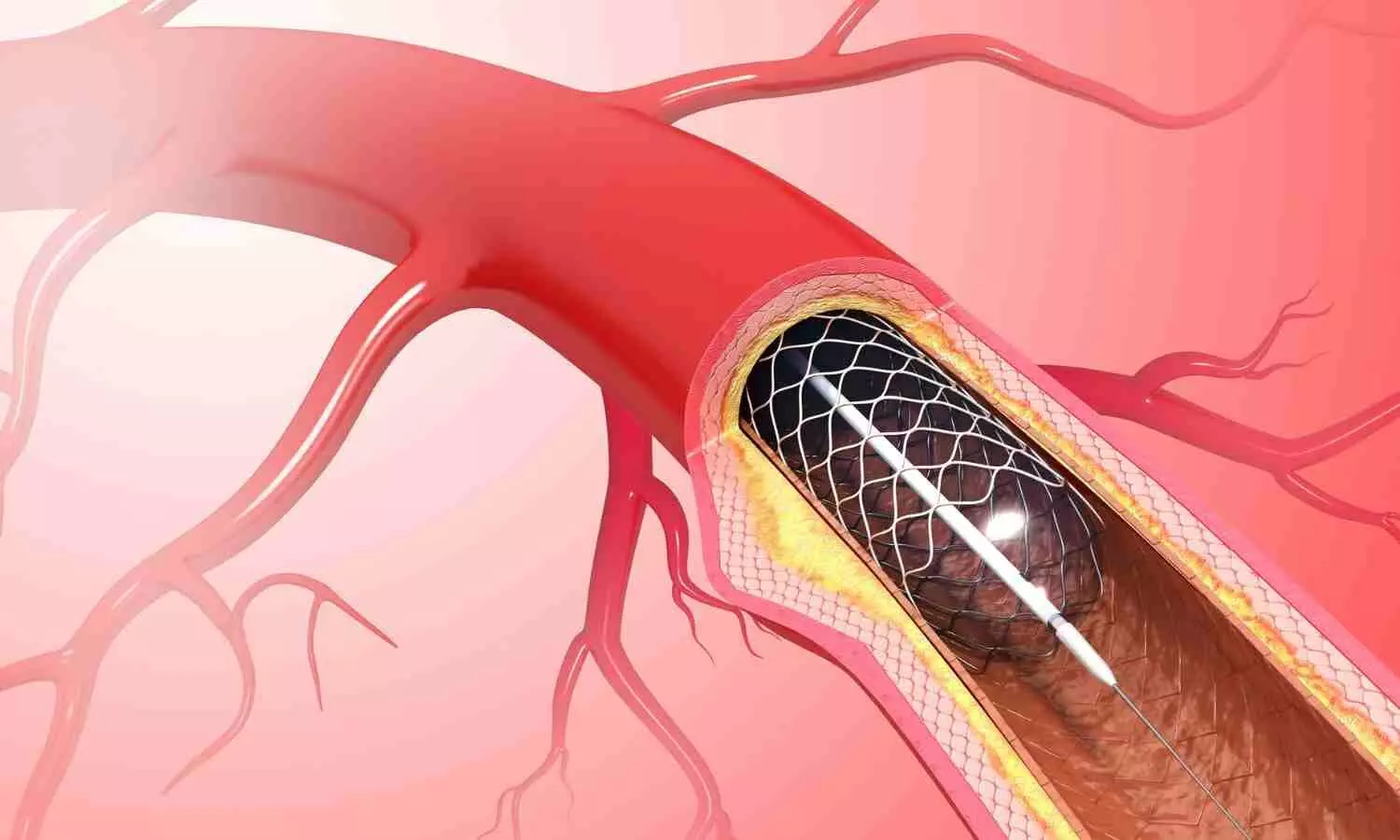
The drug-coated balloon (DCB) has become an internationally recognized treatment option. The procedure involves inserting a thin plastic tube into the affected vessel. The tube has a tiny balloon at its tip, which is then inflated to gently widen the vessel by stretching the vessel wall. What sets this method apart is that the balloon has a drug coating that is delivered deep into the vessel wall during inflation. ‘When a vessel is dilated using a standard balloon, it often narrows again due to excessive tissue growth following the intervention – a process known as “restenosis”. However, if a DCB is used, the drugs in the special coating are transferred into the walls of the artery, where they can remain active for weeks or months, effectively preventing re-narrowing of the vessel,’ explains Professor Bruno Scheller of Saarland University. The DCB technique – now one of the most widely recognized and effective therapies for treating narrowed arteries – was developed by Scheller together with Ulrich Speck, Professor Emeritus of Experimental Radiology at Charité Berlin.

Numerous clinical studies have already shown that drug-coated balloons are at least as effective, and in some cases superior, to drug-eluting stents in treating atherosclerosis in smaller vessels (up to 2.75 mm in diameter). The method has been used millions of times in clinical practice. In Asia in particular, DCB therapy has already replaced nearly half of all interventions where drug-eluting stents would previously have been used. Studies demonstrating the efficacy of DCBs in treating small coronary vessels have been published by Scheller and colleagues in leading journals such as The Lancet (Lancet. 2018 Sep 8; 392(10150): 849-856; Lancet. 2020 Nov 7; 396(10261): 1504-1510) and the European Heart Journal (Eur Heart J. 2025 May 2; 46(17): 1586-1599). An international expert group, the Academic Research Consortium (ARC), recently published treatment guidelines for DCBs in both the European Heart Journal (Eur Heart J. 2025 Jul 7; 46(26): 2498-2519) and the Journal of the American College of Cardiology, (J Am Coll Cardiol. 2025 Oct 14; 86(15): 1170-1202), with significant contributions in each case from Professor Scheller.

Now, a new international study (SELUTION DeNovo; Spaulding C. et al.) involving more than 3,300 patients has demonstrated that DCBs also offer a safe and effective means of treating coronary arteries with diameters larger than 2.75 mm, for which up until now stents have been the conventional treatment of choice. Stents are metal mesh tubes that are inserted into a narrowed or blocked blood vessel to act as a scaffold to keep it open. Until now, DCBs were primarily used in larger arteries by inserting the balloon into existing stents when these became blocked by new deposits.

But the SELUTION DeNovo study shows that DCBs also perform well in larger vessels. After one year, the rate of serious events such as sudden cardiac death, heart attack or the need for a repeat intervention was comparable to that observed with modern drug-eluting stents. ‘We know that drug-eluting stents are very safe. However, we also know that because the stent remains in the vessel, there is a risk of complications over the medium to long term,’ says Professor Scheller, who is Professor of Clinical and Experimental Interventional Cardiology at Saarland University and head of the Cardiac Catheterization Lab at Saarland University Medical Center in Homburg. ‘The advantage of drug-coated balloons is that they deliver medication locally without leaving a permanent implant behind in the vessel.’

The new study also qualifies the findings of the 2024 Chinese ‘Rec-Cagefree I’ study, which had suggested that stents were more effective than drug-coated balloons in treating larger vessels with uncomplicated stenoses (non-complex narrowing) over a two-year period, concluding that drug-coated balloons did not provide lasting efficacy in such cases. At the TCT conference in San Francisco, both the SELUTION DeNovo results and updated three-year data from Rec-Cagefree I study were presented. Professor Scheller discussed these findings with other leading global experts during one of the TCT main sessions.

‘The results of the Rec-Cagefree I study cannot be applied to our method,' says Scheller. After the original patent for DCBs expired, the Chinese researchers tested a coating that they developed themselves based on the original Charité patent by Professors Scheller and Speck. ‘Their coating differs significantly from ours, not least in terms of drug composition and particle size. The active ingredients used in the Chinese study do not remain in the vessel wall long enough, which makes long-term prevention of restenosis difficult to achieve,’ explains Scheller. He and other authors have outlined their critique in a letter to the editor published in The Lancet (Lancet. 2025 Oct 25; 406(10514): 1950-1951)*.

‘In addition to comparing different technologies for treating coronary artery disease, my team and I are focused on developing new strategies tailored to individual patient needs,’ says Bruno Scheller. ‘For many patients, a combination of drug-eluting stents and drug-coated balloons DCBs will remain the best option. DCBs allows us to avoid long stent lengths, which can pose significant risks to patients over the medium to long term.'

‘The new data presented at the TCT conference supports our long-standing approach to interventional vascular therapy. We want to treat patients using as few permanent implants as possible,’ says Scheller. His research group in Homburg is a global leader in conducting experimental and clinical research in this field. Professor Scheller is also the global lead for some of the international clinical trials on DCBs that are currently underway in Homburg, with partners from Europe, Asia and the USA.

The SELUTION DeNovo study

Spaulding C., on behalf of the SELUTION DeNovo investigators One-year results of the SELUTION DeNovo trial comparing a strategy of PCI with a sirolimus-eluting balloon and provisional stenting versus systematic DES implantation to treat de novo coronary lesions. Presented at: TCT 2025. 26 October 2025. San Francisco, CA, USA.

Bruno Scheller and others have published their assessment of the 2024 study ‘Rec-Cagefree I’ in a recent letter to the editor of The Lancet. (Lancet. 2025 Oct 25; 406(10514): 1950-1951)

Reference: Studies confirm that drug-coated balloons can replace stents – even in larger coronary arteries, Saarland University, Meeting:TCT 2025: Transcatheter Cardiovascular Therapeutics

coronary arteriesCardiovascular diseaseheart failureheart attacksstrokescardiac death
Dr. Kamal Kant Kohli

Dr Kamal Kant Kohli-MBBS, DTCD- a chest specialist with more than 30 years of practice and a flair for writing clinical articles, Dr Kamal Kant Kohli joined Medical Dialogues as a Chief Editor of Medical News. Besides writing articles, as an editor, he proofreads and verifies all the medical content published on Medical Dialogues including those coming from journals, studies,medical conferences,guidelines etc. Email: drkohli@medicaldialogues.in. Contact no. 011-43720751

Show Full Article
Next Story

Editorial

Acne On Chest, Back and Shoulders: Expert Insights with Dermatologist Dr Rajat Kandhari

Acne On Chest, Back and Shoulders: Expert Insights with Dermatologist Dr Rajat Kandhari

Evaluation of Biologic Efficacy and Cost per NNT in Moderate-to-Severe Psoriasis: Indian Analysis

Evaluation of Biologic Efficacy and Cost per NNT in Moderate-to-Severe Psoriasis: Indian Analysis

U.S. FDA Grants Approval for Ranitidine Comeback

U.S. FDA Grants Approval for Ranitidine Comeback

Dapagliflozin and Sitagliptin FDC in T2D with Heart Failure: 2025 Indian Practice Review

Dapagliflozin and Sitagliptin FDC in T2D with Heart Failure: 2025 Indian Practice Review

Importance of Early Aggressive Glucose Control - Approach in 2026

Importance of Early Aggressive Glucose Control - Approach in 2026

View All

Journal Club Today

Study Explains Why Some People Catch Bad Colds, Others Dont

Study Explains Why Some People Catch Bad Colds, Others Don't

View All

Health News Today

Health Bulletin 27/January/2026

Health Bulletin 27/January/2026

View All
© 2022 All Rights Reserved.
Powered By: Hocalwire
X
We use cookies for analytics, advertising and to improve our site. You agree to our use of cookies by continuing to use our site. To know more, see our Cookie Policy and Cookie Settings.Ok