
Ultrafast Ultrasound Detects Increased Myocardial Stiffness in Congenital Aortic Stenosis: Study
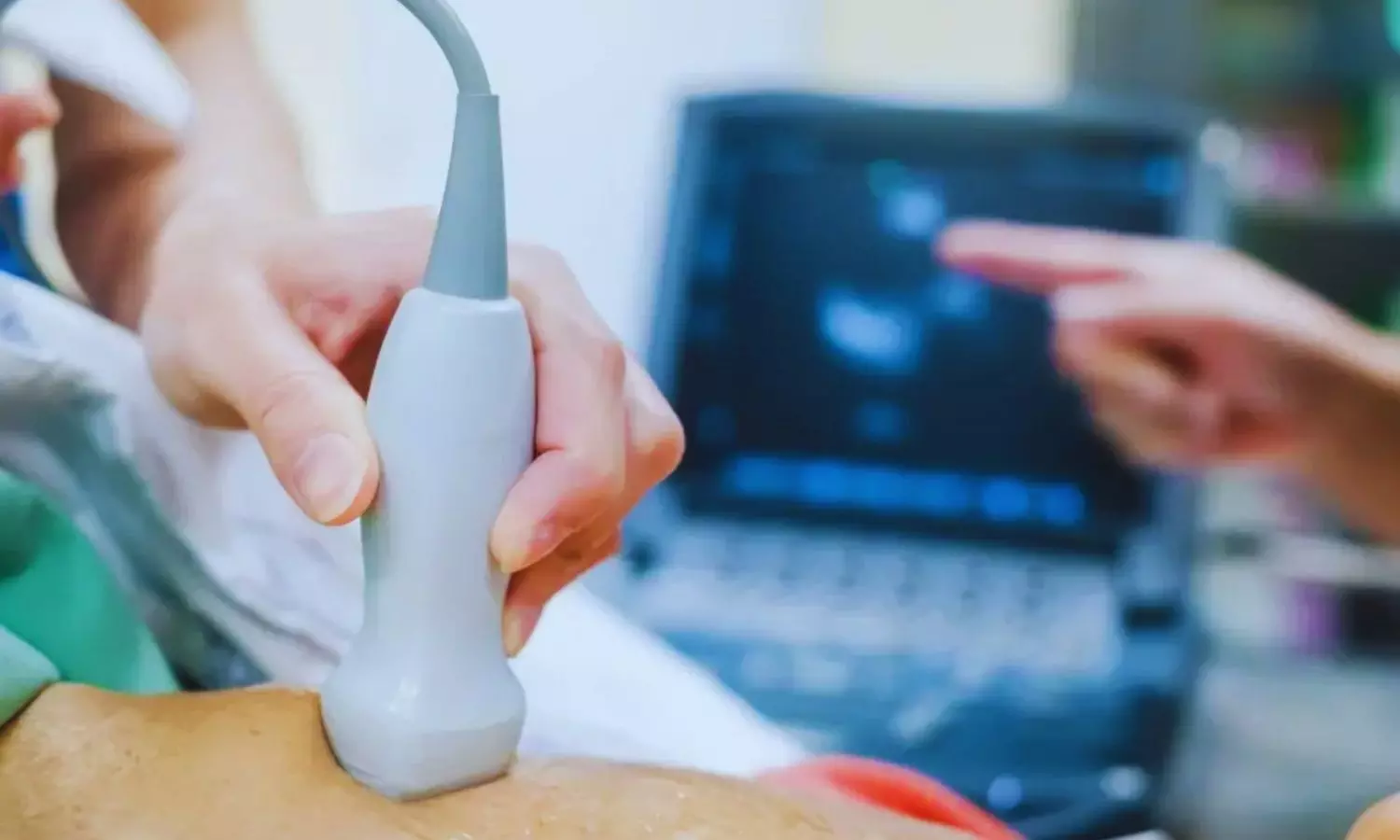


Netherlands: A study published in BMJ Open Heart found that shear wave velocity could be successfully measured using ultrafast ultrasound in most adults with congenital aortic stenosis. Patients with moderate-to-severe disease exhibited higher shear wave velocities compared with healthy volunteers, suggesting increased myocardial stiffness.
These findings indicate that ultrafast ultrasound assessment of shear wave velocity may serve as a noninvasive tool for evaluating myocardial remodeling and disease severity in patients with congenital aortic stenosis.
Congenital aortic stenosis (ConAoS) accounts for approximately 4%–8% of congenital heart defects and can lead to progressive myocardial stiffening due to chronic pressure overload. Ultrafast shear wave elastography (SWE), which measures shear wave velocity (SWV), has emerged as a promising noninvasive technique for assessing myocardial stiffness.
To evaluate its feasibility, researchers led by Robert R. Zwaan from the Department of Cardiology, Erasmus MC Universitair Medisch Centrum Rotterdam, the Netherlands, studied 68 adults with congenital aortic stenosis, including 17 who had undergone aortic valve replacement (AVR), along with 19 healthy volunteers. Using high-frame-rate echocardiography and dedicated software, they measured SWV by tracking shear wave propagation through the interventricular septum after aortic valve closure.
The study led to the following findings:
- Shear wave elastography measurements were feasible in 73% of patients with a native aortic valve, 53% of patients after aortic valve replacement (AVR), and 100% of healthy volunteers.
- The median shear wave velocity was 4.7 m/s in patients with a native aortic valve, 3.7 m/s in the post-AVR group, and 3.4 m/s in healthy volunteers.
- Patients with moderate-to-severe congenital aortic stenosis had significantly higher SWV than healthy volunteers (4.7 m/s vs. 3.4 m/s), indicating increased myocardial stiffness.
- Elevated SWV was detected despite preserved diastolic function in most patients, suggesting that SWE may identify early myocardial mechanical alterations before overt cardiac dysfunction develops.
- Patients who had undergone aortic valve replacement showed wide variability in SWV values, reflecting differences in myocardial remodeling following relief of chronic pressure overload.
The authors acknowledged several limitations, noting that image quality, spatial resolution, and manual processing may have affected measurement consistency. They also highlighted that two-dimensional imaging may not fully capture the three-dimensional propagation of myocardial shear waves, while cardiac anatomy, loading conditions, and regional myocardial characteristics can influence SWV measurements.
The researchers concluded that ultrafast ultrasound-based shear wave elastography is a feasible, quantitative, and noninvasive method for assessing myocardial stiffness in adults with congenital aortic stenosis. They suggested that SWV may serve as an early biomarker for myocardial remodeling, disease monitoring, and treatment response, while emphasizing the need for further technical optimization and validation before routine clinical use.
Reference:
Zwaan RR, Keuning ZA, Loff Barreto B, Bowen DJ, van Dalen BM, Hirsch A, et al. Ultrafast ultrasound shear wave elastography: a novel approach for assessing myocardial stiffening in congenital aortic stenosis. Open Heart. 2026;13:e004146. https://doi.org/10.1136/openhrt-2026-004146

Next Story