
Use of Enhanced Radiation Protection Does Not Delay PCI in STEMI: Study
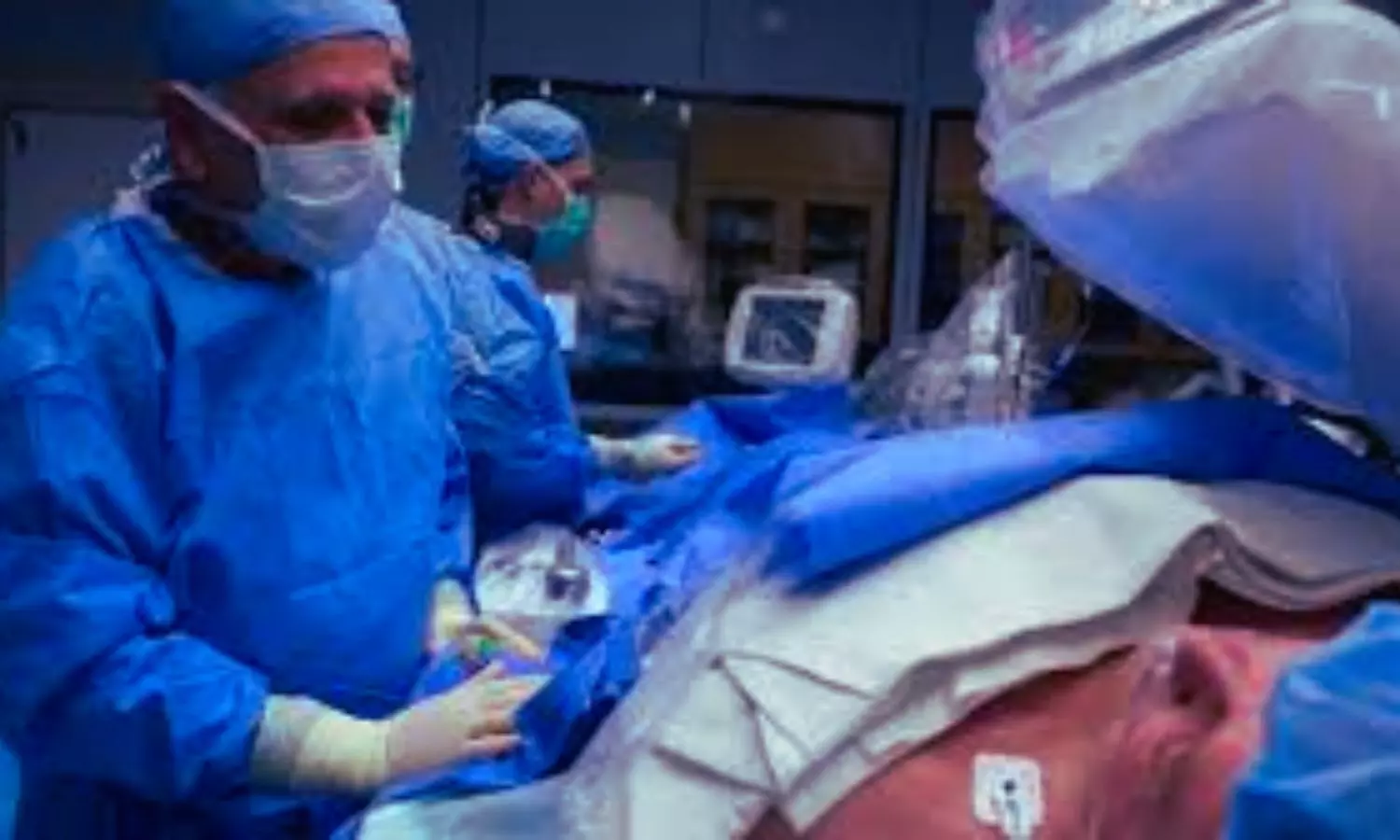


USA: A study from a single experienced center found that using an enhanced radiation protection system (Rampart M1128; Rampart IC) during percutaneous coronary intervention (PCI) for STEMI patients does not delay treatment compared with standard lead aprons.
Median door-to-balloon (D2B) time was virtually identical between the groups, with 31.0 minutes for the Rampart system and 31.1 minutes for lead aprons. After adjustment for clinical variables, the difference of 1.51 minutes was not statistically significant, indicating that improved operator radiation safety can be achieved without compromising procedural timeliness.
Prolonged radiation exposure is a well-recognized occupational hazard for catheterization laboratory staff, and traditional lead aprons, while protective, contribute to musculoskeletal injuries over time. The Rampart M1128 system is designed to enhance radiation protection while reducing physical strain on operators, but its effect on D2B times during urgent STEMI interventions had not been previously assessed. This study aimed to fill that knowledge gap.
The research, published in the Journal of the Society for Cardiovascular Angiography & Interventions, included 174 STEMI patients undergoing PCI at Ascension St. Vincent Heart Center, Indianapolis. Patients were equally divided between those treated using standard lead aprons and those using the Rampart system. The cohort was randomly selected from a pool of 298 patients, and analyses accounted for potential confounders, including bleeding, vasopressor use, intubation, mechanical circulatory support, electrical instability, vascular access type, and prior revascularization.
The study revealed the following findings:
- Unadjusted median door-to-balloon (D2B) time was 31.0 minutes for the Rampart system and 31.1 minutes for the lead apron group.
- Adjusted analysis confirmed noninferiority, with a mean difference of 1.51 minutes, well within the prespecified 5-minute margin.
- No significant differences in D2B times were observed between the two groups.
- The presence of shock or respiratory failure did not prolong D2B times in patients using the Rampart system.
- The Rampart system can be safely used without delaying PCI, even in critically ill STEMI patients.
The authors acknowledge limitations, including the single-center, retrospective design and modest sample size, which may limit detection of small differences or rare high-risk cases like cardiogenic shock requiring large-bore access. High procedural volume and operator experience likely minimized the learning curve, so smaller or lower-volume centers might see slightly longer adjustments.
Despite these limitations, the study provides encouraging evidence that enhanced radiation protection systems can be implemented without delaying life-saving PCI in STEMI patients. “Our results demonstrate that investing in operator safety with modern radiation protection does not compromise the timeliness of care,” the authors concluded. They emphasize that wider adoption of such systems may reduce occupational hazards for catheterization laboratory staff while maintaining high-quality cardiovascular outcomes.
Overall, the study supports the integration of advanced radiation protection tools like Rampart M1128 into high-volume cath labs, offering improved staff safety without adversely affecting D2B times, a critical determinant of survival in STEMI patients. Further studies in larger, multi-center settings are warranted to confirm these findings and explore their applicability across different practice environments.
Reference:
Hallak, O., Mehringer, M., Alkowatli, H., Lowery, J. W., & Hermiller, J. B. (2025). Impact of a Novel Radiation Protection System on Door-to-Balloon Time During STEMI Intervention. Journal of the Society for Cardiovascular Angiography & Interventions, 104108. https://doi.org/10.1016/j.jscai.2025.104108

Next Story