Visual Arts in Contemporary Cardiology: From Netter's Accuracy to Advocacy and Clinical Metrics, AHJ December 2025
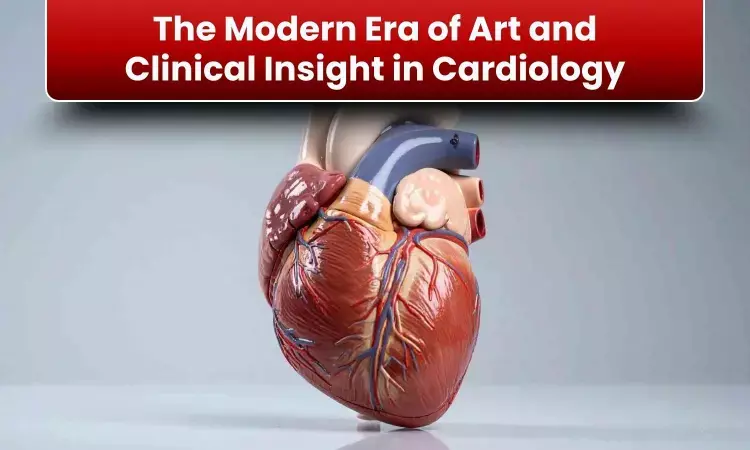


A recent review explored the evolution of visual arts in cardiovascular medicine over time, the understanding, diagnosis, and communication of cardiovascular disease and health through major domains of visual arts - education (medical illustrations, interactive anatomic models), symbolism (healing), advocacy (heart disease awareness, cardiac-focused exhibitions, interactive murals or art installations) and innovation (3D modeling, digital art, generative art, advanced medical visualization and imaging).
This special article is published in December 2025 in the American Heart Journal.
This news article elaborates on the contemporary utilization of visual arts in the present time in cardiovascular medicine.
Art as a Pathway to Emotional Resilience in Chronic Care
The heart’s symbolism continues to impact modern medicine, representing life, mortality, and healing, offering a universal language for vulnerability. This symbolism enriches patient narratives and deepens the emotional connection between clinicians and their patients. Creative expressions, including visual arts, are linked to improved overall well-being and reduced stress, offering therapeutic value, especially for patients dealing with chronic cardiovascular conditions. Since emotional resilience significantly affects treatment outcomes, these advantages are highly relevant in chronic illness management.
Visualizing Illness: The Case of Dick Ket
In the 20th century, art continued to intersect with cardiology in deeply personal ways. The painter Dick Ket (1902-1940) stands out as a particularly compelling figure who suffered from dextrocardia. Ket created deeply personal self-portraits that documented both the physical manifestations of his cardiovascular condition and the psychological burden of living with the risk of sudden cardiac death.
Frank Netter: The 'Medicine's Michelangelo'
The 20th century saw the rise of a pivotal figure in medical education: Frank H. Netter (1906-1991). Described as “medicine’s Michelangelo,” Netter’s Atlas of Human Anatomy became a standard reference text globally. His illustrations detailed the internal anatomy, conducting system, and coronary arteries. Renowned physicians like Michael DeBakey recognized Netter’s illustrations as a masterful blend of clarity, accuracy, and beauty essential for medical education.
From Artistic Observation to Quantitative Diagnostics
The development of interventional catheterization techniques in the 1960s required a mastery of anatomy and the application of visual techniques. C. Michael Gibson, an interventional cardiologist, credited his background as an artist to the development of quantitative tools used to evaluate coronary blood flow: The Thrombolysis in Myocardial Infarction (TIMI) frame count (1996) and the TIMI myocardial perfusion grade (2000). Gibson noted that the invention of the TIMI myocardial perfusion grade was inspired by his observation and subsequent painting of the “cloud of dye” in the myocardium. The frame count forms the basis for measuring velocities using digital technologies like cardiac computed tomography-fractional flow reserve (CT-FFR).
Challenging Narratives: Portraits and Public Health Advocacy
Visual art, particularly portraits, is utilized to honor the experiences and contributions of both medical scholars and patients. Modern visual initiatives ensure that women like Helen Taussig (founder of pediatric cardiology and co-developer of the Blalock-Taussig shunt) and Myra Adele Logan (first woman to perform open heart surgery on a human) are recognized. Similarly, American physicians, such as Daniel Hale Williams (first person to perform successful open-heart surgery in 1893) and nonphysicians like Vivien Thomas (surgical technician who aided the Blalock-Taussig shunt development), are now prominently included. Campaigns incorporating visual arts and social media, such as #CardioTwitter, enable a shift in public narratives, challenge inequalities, and reshape the fields of cardiology and cardiac surgery.
Visual Art in Cardiology - Powerful Potential
Contemporary artistic engagement offers tangible clinical benefits. Trainees who participate in artistic endeavors report improved empathy and observational skills, which are critical for delivering high-quality patient management, particularly in chronic illnesses like CVD. Furthermore, the application of artistic observation led directly to the creation of essential diagnostic tools like the TIMI perfusion grade and TIMI frame count. For patients, art-based interventions in hospitals and cardiac care facilities have been shown to alleviate anxiety and potentially acelerate recovery.
The next article will delve into the emerging artistic and digital tools that promise to redefine the future of cardiology.
Reference: Ugoala O, Ebubechukwu U, Mares AC, Okeke C, Anosike U, Tamirisa KP, Obuobi S, Gibson CM. Visual art and representation in cardiology: Past, present, and future. Am Heart J. 2025 Dec;290:201-215. doi: 10.1016/j.ahj.2025.06.016. Epub 2025 Jun 27. PMID: 40582478.
For regular cardiology updates from recent journals, kindly follow our WhatsApp group