Adequate Keratinized Mucosa Linked to Lower Peri-Implantitis Risk: Study
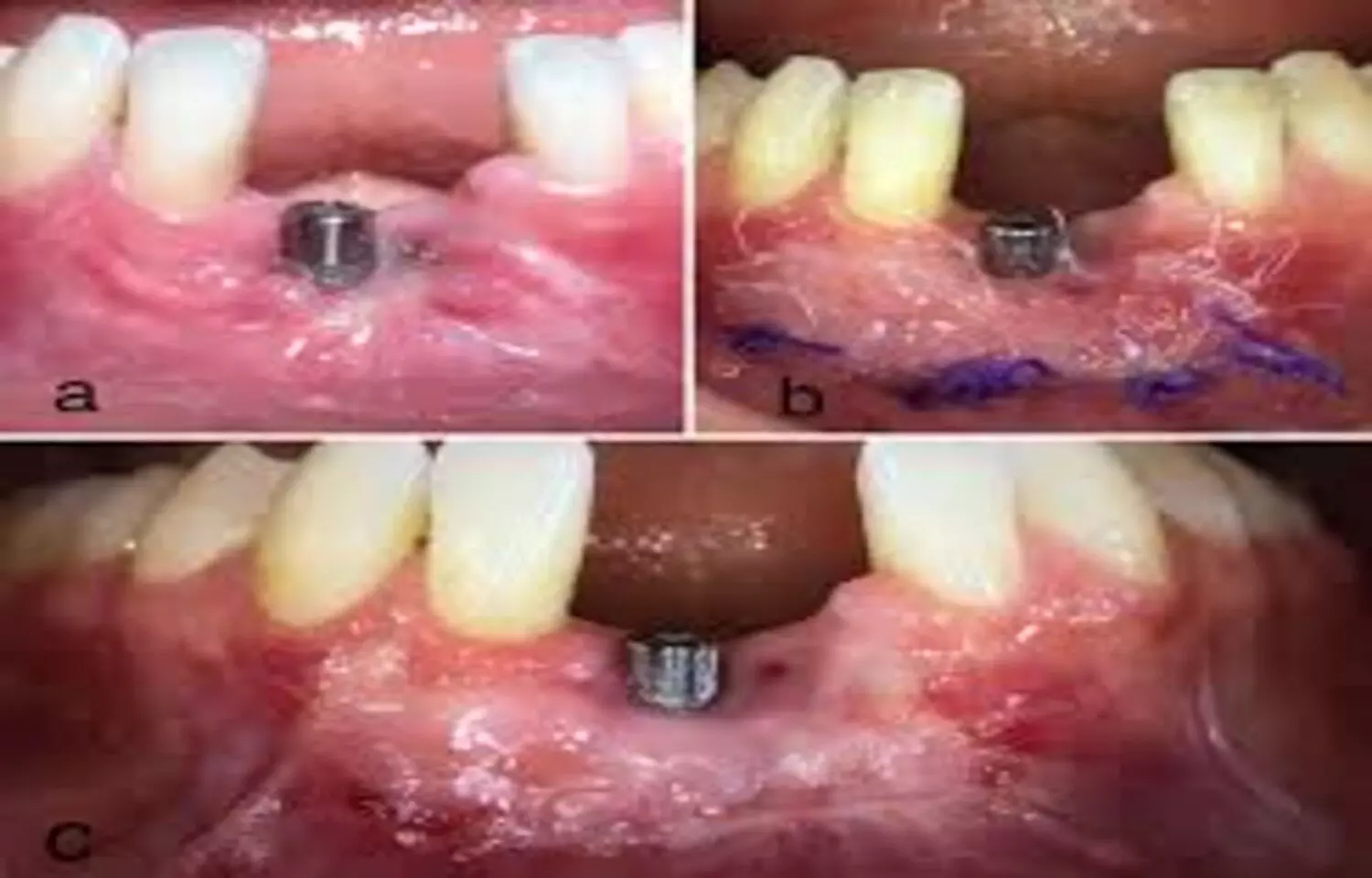


Evidence from cohort studies indicates that keratinized mucosa (KM) is not associated with the incidence of peri-implant mucositis. However, the presence of KM—especially with a width of at least 2 mm—is linked to a reduced risk of peri-implantitis. These findings suggest that assessing KM may be valuable in peri-implant risk evaluation and long-term implant maintenance.
A study was done to assess whether the presence and width of keratinized mucosa (KM) influence the incidence of peri-implant mucositis and peri-implantitis at the implant level.
Electronic searches were conducted in MEDLINE/PubMed, Scopus, Embase, and Web of Science, complemented by gray literature and manual searches. Prospective and retrospective cohort studies reporting implant-level incidence of peri-implant diseases in sites with adequate versus inadequate KM were included. Random-effects meta-analyses were performed for two KM thresholds (> 0 mm vs. 0 mm; ≥ 2 mm vs. < 2 mm), and subgroup analyses compared prospective versus retrospective cohorts. Risk of bias assessment was performed using the Joanna Briggs Institute (JBI) checklist for cohort studies. Twelve cohort studies (938 patients; 2646 implants) were included. KM was not associated with the incidence of peri-implant mucositis for either threshold (> 0 mm vs. 0 mm: RR = 0.92, 95% CI 0.69-1.21; ≥ 2 mm vs. < 2 mm: RR = 0.70, 95% CI 0.41-1.20). In contrast, peri-implantitis incidence was significantly lower in implants with KM (> 0 mm) compared to those without KM (0 mm) (RR = 0.62, 95% CI 0.42-0.91) and in implants with KM ≥ 2 mm compared to < 2 mm (RR = 0.56, 95% CI 0.37-0.84). No significant subgroup differences were observed between prospective and retrospective studies. According to the JBI checklist, 75% of the included studies were classified as having a low risk of bias.
Evidence from cohort studies suggests no association between KM and peri-implant mucositis incidence, whereas both the presence of KM and a width of ≥ 2 mm are associated with a lower incidence of peri-implantitis. Thus, KM assessment may be considered as a part of peri-implant risk evaluation.
Reference:
Dos Reis, Isabella Neme Ribeiro, et al. "Keratinized Mucosa Width and Incidence of Peri-Implant Diseases: a Systematic Review With Meta-Analysis." Journal of Periodontal Research, 2026.
Keywords:
Adequate, Keratinized, Mucosa, Linked, Lower, Peri-Implantitis Risk, Study, Dos Reis, Isabella Neme Ribeiro