Chlorhexidine Gypsum Chips Show Sustained Antibacterial Activity in Periodontitis: Study
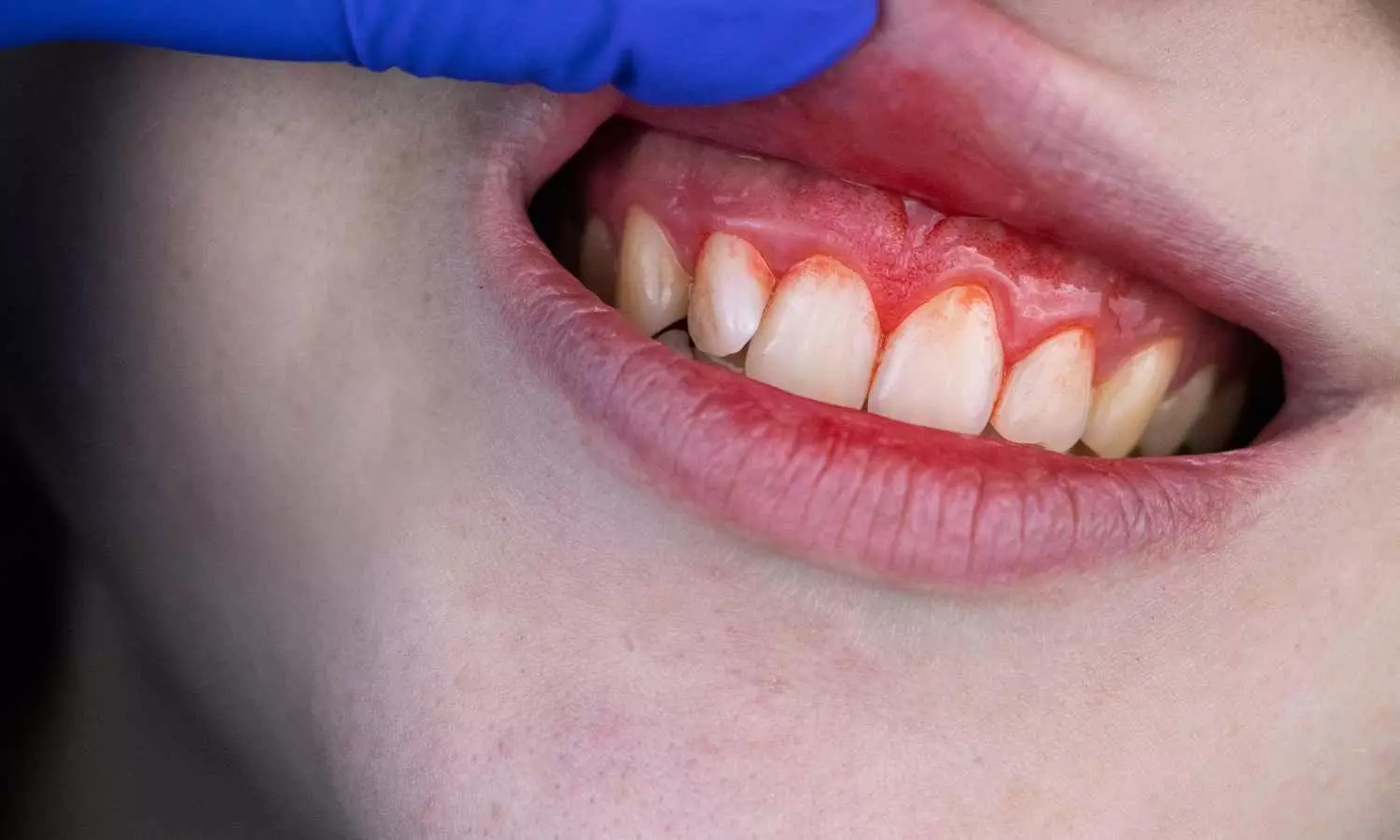


Researchers have found in a new study that chlorhexidine (CHX)-loaded gypsum chips demonstrated sustained drug release and antibacterial activity, suggesting potential as an adjunctive therapy for periodontitis, although their mechanical strength is reduced. The study was published in the European Journal of Dentistry by Sunarso S. and colleagues.
Periodontitis is a chronic inflammatory condition that affects the periodontal tissues and is often linked to pathogenic microorganisms, including *Porphyromonas gingivalis*. Treatment of periodontitis has traditionally included mechanical debridement, scaling, and root planning, which may or may not include antimicrobial agents. Although systemic antimicrobial agents can have side effects, drug delivery systems have recently been considered to offer localized antimicrobial effects. Materials that have been considered include gypsum-based materials, which have been deemed to have considerable potential due to their biocompatibility and degradability, allowing them to act as drug delivery agents.
The experiment was carried out as a laboratory experimental study to design gypsum chips with chlorhexidine and analyze their structural, mechanical, and biological properties.
To begin with, gypsum chips were prepared with three different water/powder ratios of 0.4, 0.5, and 0.6. The ratios were tested to find out which ratio would give the best mechanical properties. Among the tested ratios, the 0.4 ratio showed the highest flexural strength and was thus chosen for further experimentation with chlorhexidine.
Chlorhexidine was added to the gypsum chips in concentrations of 0%, 10%, and 20%, forming three different mixtures named Gyp-CHX 0%, Gyp-CHX 10%, and Gyp-CHX 20%. The researchers carried out a series of structural, mechanical, and biological tests to analyze the properties of the mixtures.
Key findings:
This experimental study examined gypsum chips as a local drug delivery system for the treatment of periodontitis.
The 0.4 water-to-powder ratio yielded a maximum flexural strength of 17.88 MPa. This water-to-powder ratio was selected for drug incorporation.
Addition of chlorhexidine resulted in a decrease in crystal size to 8.17 µm for 10% chlorhexidine and 4.84 µm for 20% chlorhexidine.
Setting time increased from 18.23 minutes in the control formulation to 61.11 minutes in 10% chlorhexidine and 75.95 minutes in 20% chlorhexidine.
Flexural strength decreased to 6.52 MPa in 10% chlorhexidine and 4.30 MPa in 20% chlorhexidine.
Sustained drug release for 7 days, degradation, and antibacterial activity against Porphyromonas gingivalis were noted in 10% and 20% chlorhexidine, but no inhibition zone was noted in the control group.
Chlorhexidine-charged gypsum chips showed sustained drug delivery and antibacterial effects against periodontal pathogens, which suggests their possible application as an adjunctive treatment for periodontitis, despite the decreased mechanical strength and prolonged setting time. However, additional investigations are required to determine the clinical utility and optimize the material for the treatment of periodontal diseases.
Reference:
Sunarso, S., Alwini, R. A., & Dewi, A. (2026). Chlorhexidine-Loaded Gypsum Chip as a Potential Adjunctive Therapy for Periodontitis. European journal of dentistry, 10.1055/s-0046-1817163. Advance online publication. https://doi.org/10.1055/s-0046-1817163