
Essential Oil Dentifrices Effective for Denture Hygiene, suggests study
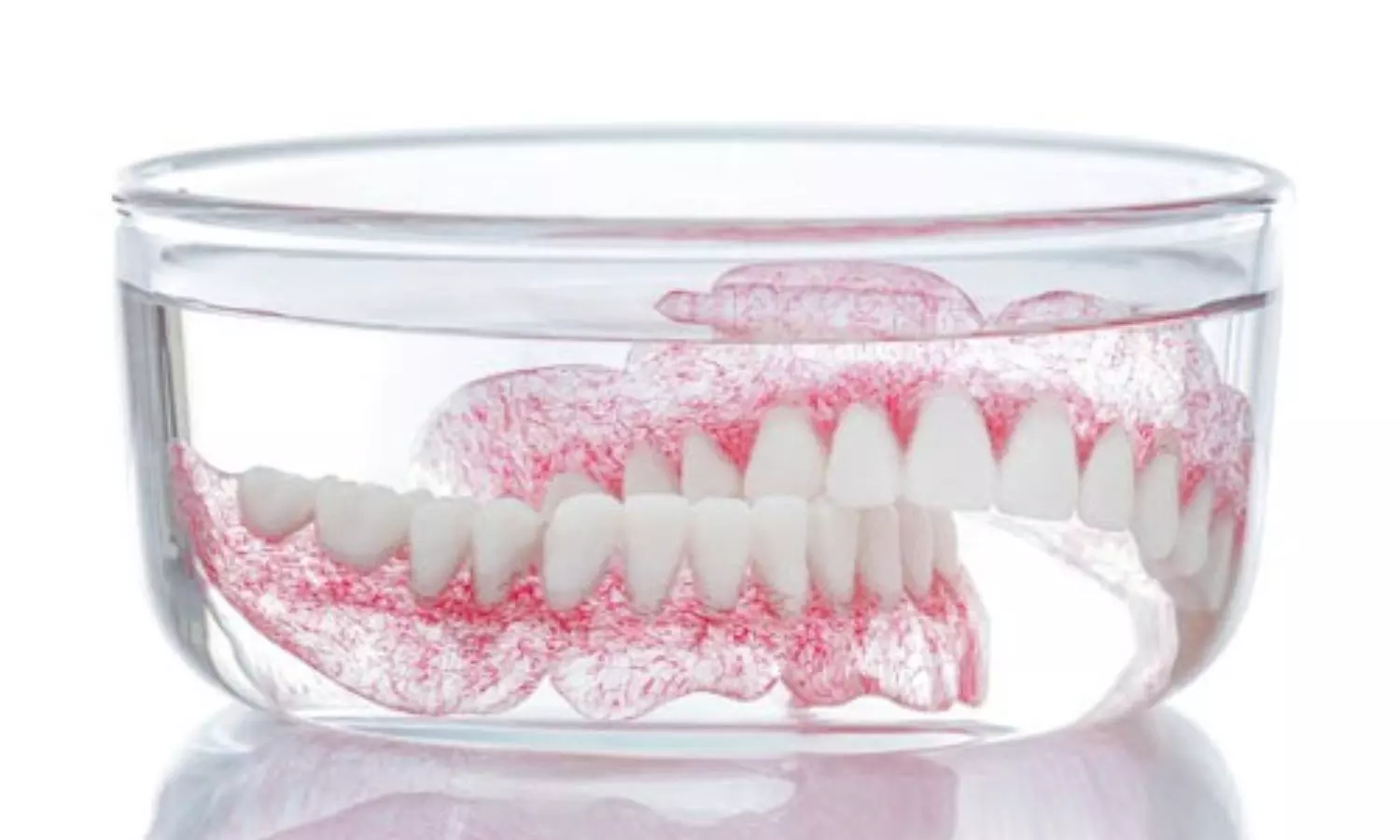


A new study published in the American Journal of Dentistry showed that essential oil-based dentifrices provide a sustainable and natural substitute for traditional synthetic cleaning products by efficiently removing denture biofilm and lowering Candida albicans levels.
Denture stomatitis and other oral infections can be avoided by maintaining denture care; however, conventional chemical cleaners can harm prosthetic materials or irritate tissue. Dentifrices based on essential oils have become a secure, all-natural substitute for regular denture cleaning. These compositions successfully fight dangerous biofilms without deteriorating the device by utilizing the strong antibacterial qualities of plant extracts.
Most importantly, they greatly increase patient satisfaction by providing everyday wearers with a better flavor, long-lasting breath freshness, and a very pleasant, non-irritating user experience. The antibiofilm activity and patient acceptability of four experimental dentifrices containing 1% essential oils were assessed in this randomized, controlled, crossover, triple-blind clinical study.
The 24 participants who met the eligibility requirements were divided into 5 groups at random: Eucalyptus citriodora (Ec), Melaleuca alternifolia (Ma), Pinus strobus (Ps), Bowdichia virgilioides Kunth (BvK), or a positive control (chloramine T dentifrice). For 14 days, they used the supplied brush and dentifrice to brush their dentures three times a day.
Each dentifrice usage was separated by a 7-day washout. Cellular metabolism (XTT-assay), cell viability (flow cytometry), biofilm removal (computerized method), Candida albicans, microbial load of Candida spp., Candida tropicalis, Staphylococcus spp., Candida glabrata, Mutans streptococci, gram-negative bacteria, and total aerobes (colony-forming unit counting), and patient satisfaction (questionnaire) were assessed both before and after using the dentifrices. Friedman's ANOVA and Cochran's Q Test for related samples (α = 0.05) were used to evaluate the data.
Following the usage of the dentifrices, the quantity of biofilm (P=0.004) and the microbiological load of Candida albicans (P=0.003) were considerably lower than baseline. Cell viability (P=0.170) and cellular metabolism (P=0.814) were not substantially impacted by the dentifrices.
There were no appreciable variations in patient acceptability between the positive control and experimental dentifrices. In addition to properly cleaning dentures and lowering the C. albicans burden, experimental dentifrices containing 1% Melaleuca alternifolia, Pinus strobus, Bowdichia virgilioides Kunth, and Eucalyptus citriodora were well-received by consumers.
Overall, dentifrices based on essential oils successfully eliminate denture biofilm and lower the load of Candida albicans, which offers a sustainable and natural substitute for synthetic agents that is well-liked by consumers.
Source:
Silva, A. A. E., Clemente, L. M., Ribeiro, A. B., Oliveira, V. D. C., Macedo, A. P., Watanabe, E., & Silva-Lovato, C. H. (2026). Clinical trial of essential oil-based dentifrices for denture cleaning and patient satisfaction. American Journal of Dentistry, 39(3), 110-116. https://www.unboundmedicine.com/medline/citation/42247359/full_citation

