
Higher Dye Concentrations in Photodynamic Therapy May Discolor Composite Restorations: Study
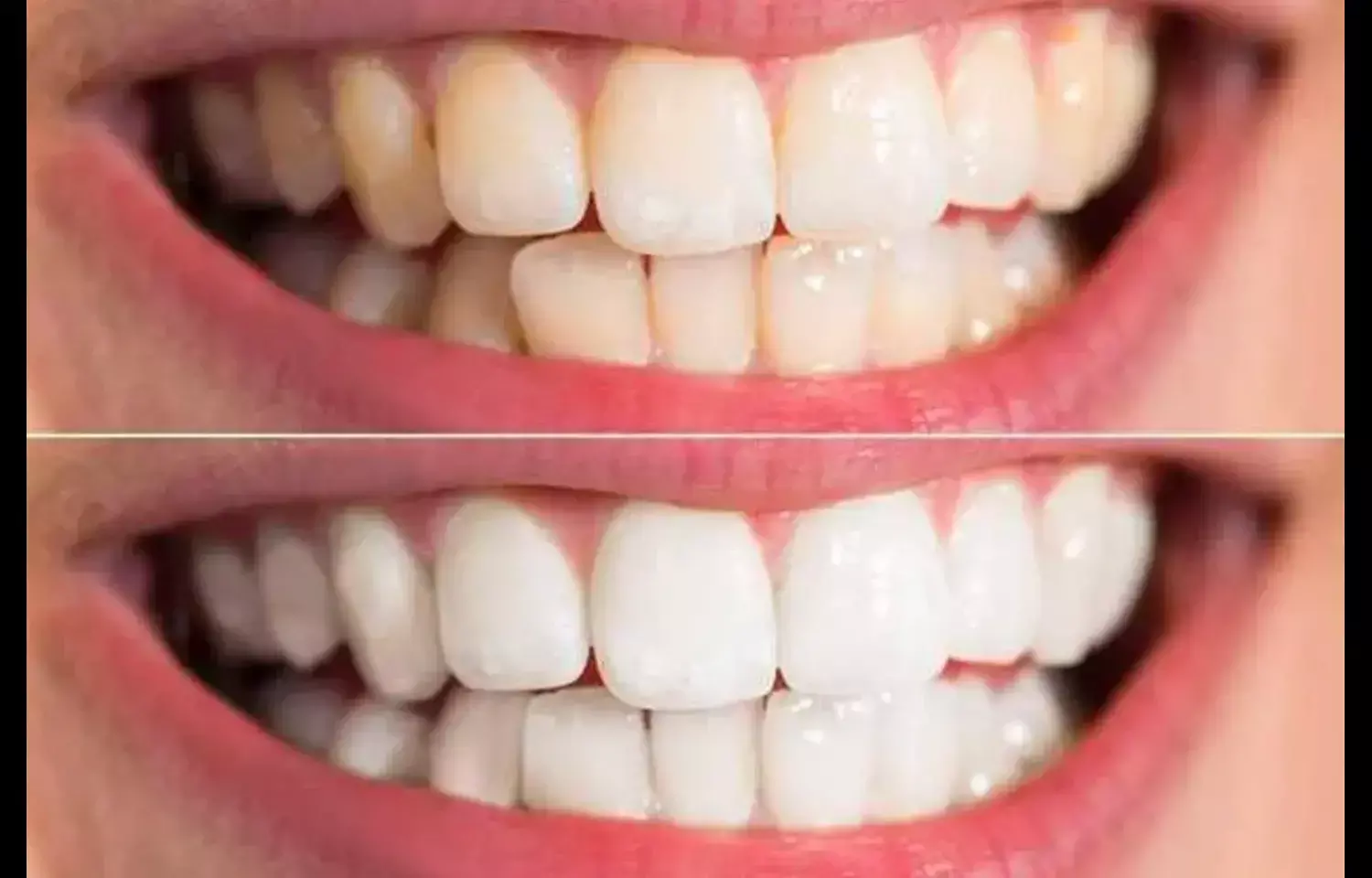


A new study published in the Journal of LASERS in Medical Science showed that there is no discernible tooth darkening after photodynamic treatment with 50 µg/ml methylene blue and washing with sodium hypochlorite or EDTA.
Photodynamic therapy (PDT) is becoming more used in dentistry as an antibacterial treatment during restorative and endodontic operations. However, the photosensitizers employed in PDT may affect the color stability of oral tissues and restorative materials. Under accelerated aging circumstances, interactions between various photosensitizers and cleansing agents can cause tooth and composite discolouration.
Understanding these effects is critical for preserving the aesthetic appearance of restorations after photodynamic treatment. Thus, this study assessed tooth and composite discolouration following photodynamic treatment with different photosensitizer doses coupled with various cleaning agents, both immediately and after accelerated aging.
104 bovine maxillary central incisors were used for this in vitro investigation. A 14-day artificial demineralization and remineralization cycle was applied to enamel-dentin discs (7x7x2 mm) that were created from the center of the crown. 13 groups were created from the samples: Methylene blue or toluidine blue at two concentrations of 50 µg/ml and 100 µg/ml, each of which has three detergents (water, 2.5% sodium hypochlorite, or 17% EDTA), and a control group disinfected with 2% chlorhexidine were used in photodynamic treatment.
The composite resin was placed after the dentin's surface was glued. Every specimen was exposed to xenon lamps for 100 hours. The hues of teeth and composites were assessed at baseline, during photodynamic treatment, and following accelerated aging. Tukey's HSD and one-way ANOVA were used for statistical analysis.
Methylene blue (50 µg/ml) plus EDTA or sodium hypochlorite washing resulted in a color shift that was below the perceptibility threshold (ΔE<3.3). The Tukey HSD test revealed that there was no discernible difference between this group and the control group (P>0.05). Composite discoloration was clinically noticeable in all group.
Overall, tooth discolouration during photodynamic treatment is determined by the photosensitizer concentration and washing agent used. Methylene blue at 50 µg/mL, followed by EDTA or sodium hypochlorite rinse, resulted in no apparent discoloration. When sodium hypochlorite was utilized, there was no discernible difference in hue between methylene blue and toluidine blue. Toluidine blue at 100 µg/mL caused the most discolouration.
Source:
Hashemikamangar, S. S., Farahani, S., Abbasi, M., & Chiniforush, N. (2025). Tooth and Composite Discoloration After Photodynamic Therapy with Different Photosensitizers and Cleansers Under Accelerated Aging Conditions. Journal of Lasers in Medical Sciences, 16, e58. https://doi.org/10.34172/jlms.2025.58

