Hydrogen Peroxide Concentration: Whitening Efficacy vs. Sensitivity
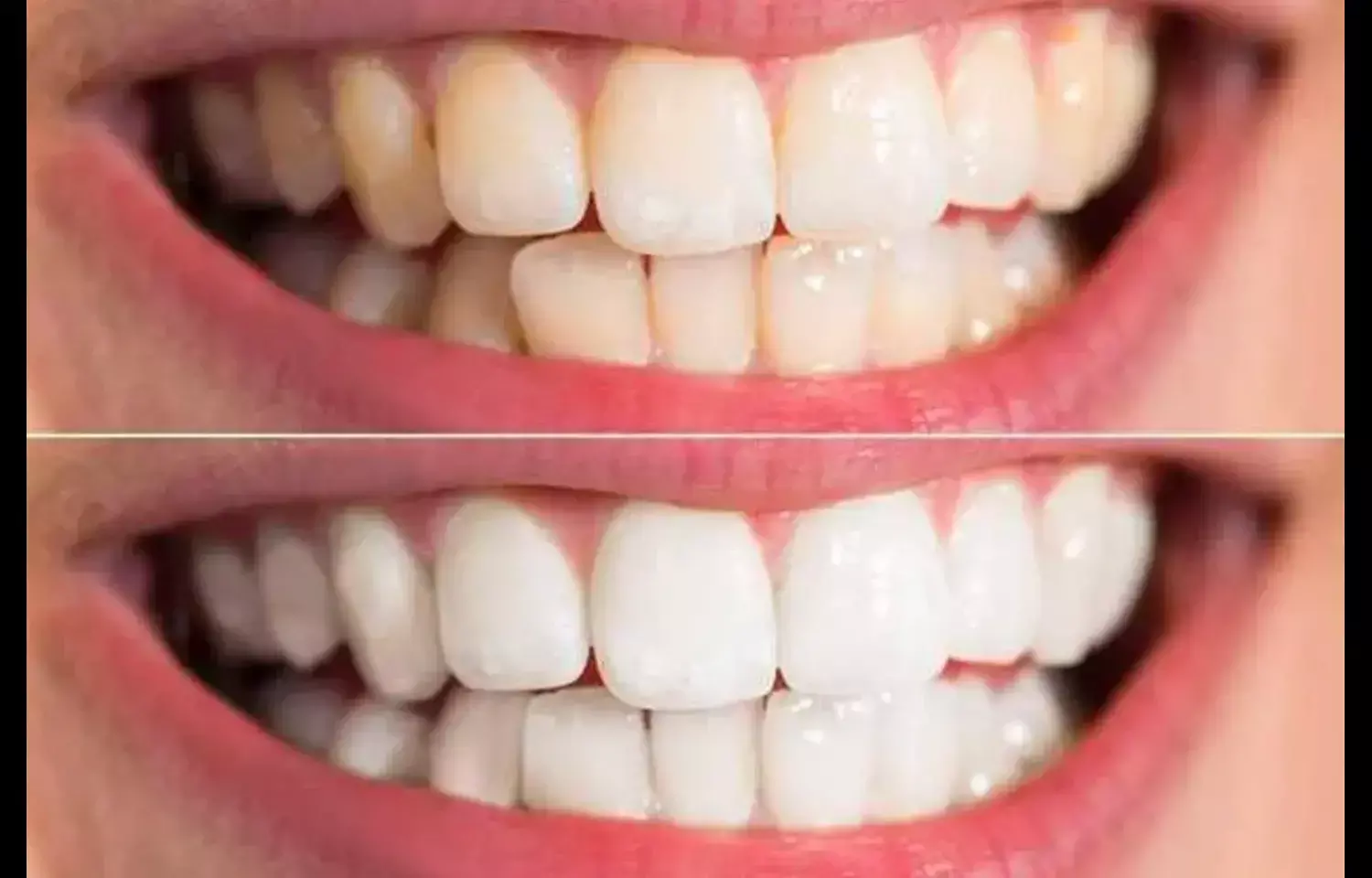


Researchers have found in a new study that there is a direct trade-off between the strength of a whitening treatment and its side effects-35% Hydrogen Peroxide: Provides the most effective whitening results in a professional setting, but carries a significantly higher risk of intense Tooth Sensitivity (TS) whereas 6% Hydrogen Peroxide: Acts as a safer alternative that reduces the likelihood and severity of sensitivity, though it results in less noticeable whitening.
This randomized, parallel, double-blind clinical trial aimed to evaluate the equivalence in bleaching efficacy (BE), as well as the risk and intensity of tooth sensitivity (TS), in participants undergoing in-office dental bleaching with low (6%) versus high-concentration (35%) hydrogen peroxide.
A total of 140 participants were randomly assigned to one of the two groups according to the bleaching gel concentration used: 6% hydrogen peroxide (Automixx 6%, FGM) or 35% hydrogen peroxide (Automixx Plus 35%, FGM). The bleaching procedure was performed for 50 min in three sessions, with a 1-week interval. The bleaching procedure was performed for 50 min in three sessions, with a 1-week interval. BE was evaluated using a Vita Easyshade spectrophotometer (ΔE00, ΔEab, and ΔWID) and both Vita Classical and Vita Bleachedguide shade guides (ΔSGU) at days 7, 14, and 21, and 1 month after completion of treatment.
The risk and intensity of TS were recorded using a visual analogue scale (VAS; 0 to 10), assessed immediately after each of the three bleaching sessions, and at 1, 24, and 48 h posttreatment. BE was assessed with a paired Student's t-test. The absolute risk of Tooth Sensitivity was evaluated using Fisher's exact test, and the Tooth Sensitivity intensity was assessed using a paired Student's t test (α = 0.05).
Results: Nonequivalent bleaching outcomes were observed between the groups across all instruments and time points (p > 0.05). The 35% hydrogen peroxide group showed significantly greater efficacy than the 6% group (MD in ΔE00 = 6.3; 90% CI 4.8–7.7; p < 0.05). The risk of Tooth Sensitivity was lower in the 6% group (44%) compared with the 35% group (74%; p = 0.0005). Sensitivity intensity was also significantly lower in the 6% group up to 24 h posttreatment (p < 0.01).
In-office dental bleaching with 6% and 35% hydrogen peroxide resulted in significant tooth whitening; however, the outcomes were not equivalent across all evaluation time points, with the 35% concentration demonstrating superior efficacy throughout the study. In contrast, Tooth Sensitivity was significantly higher in the 35% group compared with the 6% group. While 35% hydrogen peroxide delivers more effective tooth whitening in-office, it is also associated with a higher risk and intensity of Tooth Sensitivity. Lower concentrations like 6% offer a safer alternative with reduced sensitivity but less whitening efficacy.
Reference:
G. G. Centenaro, M. W. Favoreto, T. d. S. Carneiro, D. C. F. Cordeiro, and A. D. Loguercio, “ Efficacy and Tooth Sensitivity of Low- Versus High-Concentration Hydrogen Peroxide for In-Office Bleaching: A Randomized Clinical Trial,” Journal of Esthetic and Restorative Dentistry (2025): 1–10, https://doi.org/10.1111/jerd.70090.