
Increased Age Significant Risk Factor for IAN Neurosensory Deficit after Extraction of Lower Third Molars: Study Shows
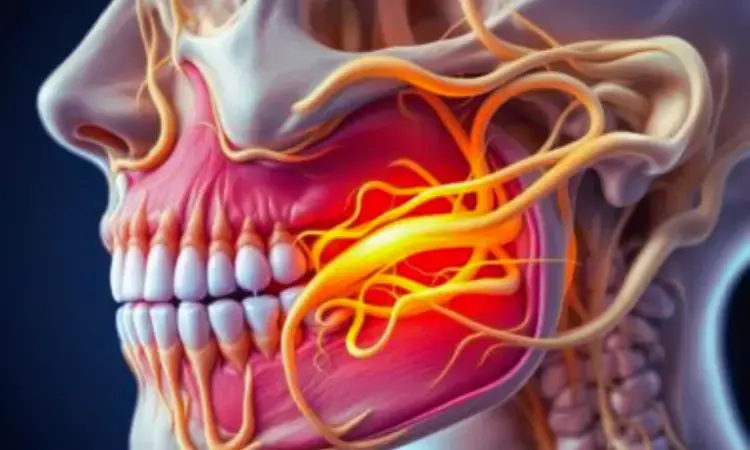


Spain: Inferior alveolar nerve (IAN) neurosensory deficit occurred in 16.89% of patients after the extraction of lower third molars. Researchers found in a new study that increasing age was identified as a statistically significant independent risk factor for IAN injury and should be carefully considered during preoperative planning.
The findings, published in the Journal of Oral and Maxillofacial Surgery, come from a nested case-control study led by Judith Soler-Capdevila from the Department of Dentistry, School of Medicine and Health Sciences, Universitat de Barcelona, Spain, and colleagues. The study focused on patients considered at elevated risk because their lower third molars were in proximity to the mandibular canal on preoperative cone-beam computed tomography (CBCT).
The investigators analyzed 219 patients, 60% of whom were female, with a mean age of 28.2 years. Among them, 37 individuals developed IAN neurosensory impairment one month after surgery. These cases were compared with 111 randomly selected patients from the same cohort who did not experience nerve-related symptoms. The primary exposure variable was age, while the main outcome was neurosensory status at one month.
The study accounted for several covariates, including sex, body mass index, side of surgery, tooth angulation and classification (Pell and Gregory, Winter), root morphology, canal position (lingual, buccal, apical), ostectomy, and tooth sectioning. Statistical analysis was performed using multivariate logistic regression to isolate independent risk factors.
The following were the key findings:
- Increasing age was identified as a significant independent predictor of inferior alveolar nerve injury after lower third molar extraction.
- Each additional year of age increased the odds of neurosensory deficit by approximately 6% (adjusted OR 1.06).
- Greater impaction depth significantly elevated the risk of nerve injury, especially when the third molar was located below the cervical line of the second molar.
- A lingual position of the mandibular canal relative to the third molar was associated with a higher likelihood of nerve damage.
- Higher body mass index was also linked to an increased risk of neurosensory deficit.
The authors acknowledged limitations inherent to retrospective research, including potential selection and information bias, incomplete records, and limited ability to establish causality. Assessment of neurosensory outcomes was restricted to a single postoperative time point, preventing evaluation of symptom duration or severity. Surgeon experience was also not formally analyzed, as most procedures were performed by training fellows.
Despite these constraints, the study provides clinically meaningful data for patients whose third molars are in direct contact with the mandibular canal. The relatively high incidence of IAN deficit in this high-risk group underscores the importance of thorough radiographic evaluation and individualized surgical planning. The findings suggest that older patients, especially those with deep impactions or a lingually positioned canal, warrant heightened caution.
The researchers recommend further prospective studies to explore recovery patterns and long-term neurosensory outcomes, as well as to better understand how age influences nerve healing after injury.
Reference:
Soler-Capdevila, J., Camps-Font, O., Sanmartí-García, G., Toledano-Serrabona, J., Gay-Escoda, C., Figueiredo, R., & Valmaseda-Castellón, E. (2026). Age and risk of nerve injury after the removal of lower third molars close to the inferior alveolar nerve: A nested case-control study. Journal of Oral and Maxillofacial Surgery. https://doi.org/10.1016/j.joms.2026.01.072

Next Story