
Intraoral Scanner Accuracy for Post-Space Digitization Depends on Scanner Type and Preparation Depth: Study
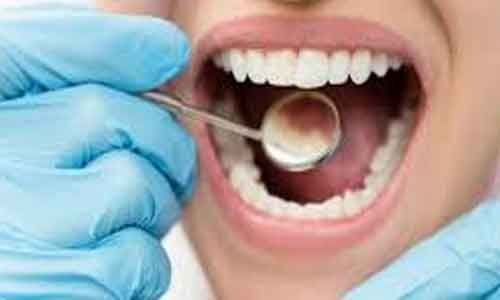


A new study published in the Journal of Dentistry showed that scanner type and preparation depth affect intraoral scanner accuracy for post-space digitization. Maintaining natural teeth is essential as life expectancy increases. Post-and-core restorations are frequently necessary for severe tooth loss. Prefabricated posts are practical, however they frequently don't fit well in intricate root canals. Although customized posts are more adaptable, they have historically required hand impressions. Deeper, narrower post preparations are frequently required to strike a compromise between biomechanical stability and tooth preservation.
Intraoral scanning (IOS) digital processes offer a contact-free substitute that may be more accurate. However, preparatory geometry and scanner technology have a major role in scanning accuracy. The majority of the literature now in publication discusses broad, superficial preparations, while there is still a dearth of information on more in-depth, focused ones. Therefore, this study evaluated the accuracy and accuracy of two IOS systems in recording post preparations with reference data from µ-CT.
To replicate advanced coronal material loss, 20 removed human mandibular premolars were constructed. Post space preparations with different diameters (ISO 090, ISO 110) and depths (10 mm, 12 mm) were made following endodontic treatment (n=5). Digital post-space acquisition was performed using two intraoral scanners, Primescan (PR) and TRIOS 4 (TR). µCT was used to create reference datasets.
By utilizing best-fit alignment to match intraoral scan data to µCT reference models and analyzing deviations at three predetermined cross-sectional levels, the accuracy and precision were evaluated. Three-way ANOVA, independent t-tests, post-hoc testing, and correlation analysis (α=0.05) were among the statistical techniques used.
The scanning system and depth had a substantial impact on trueness (p<0.001), according to the three-way ANOVA, with PR showing higher trueness than TR. There was a strong interaction between scanner and depth (p<0.001). There was no discernible impact from preparation diameter. Scanner system and depth were shown to have substantial primary impacts for accuracy (p<0.001).
PR outperformed TR in terms of accuracy, especially at deeper depths. Precision was somewhat but significantly impacted by preparation diameter (p=0.041). Trueness and accuracy were shown to be positively correlated (r = 0.838). Overall, the findings show that, within the constraints of this investigation, the scanner system and preparation depth have a substantial impact on the accuracy and veracity of intraoral scan data, with a noteworthy interaction between these two variables.
Reference:
Wildhagen, S., Rechlin, J., Kocaöz, G., Bruhnke, M., Cakmak, G., Blunck, U., Beuer, F., & Pieralli, S. (2026). Accuracy of intraoral scanners when digitizing post preparations: A µ-CT based feasibility study. Journal of Dentistry, 106851, 106851. https://doi.org/10.1016/j.jdent.2026.106851

