Mesial Inclination of Upper Third Molars Linked to Intra-Operative Sinus Perforation: Study
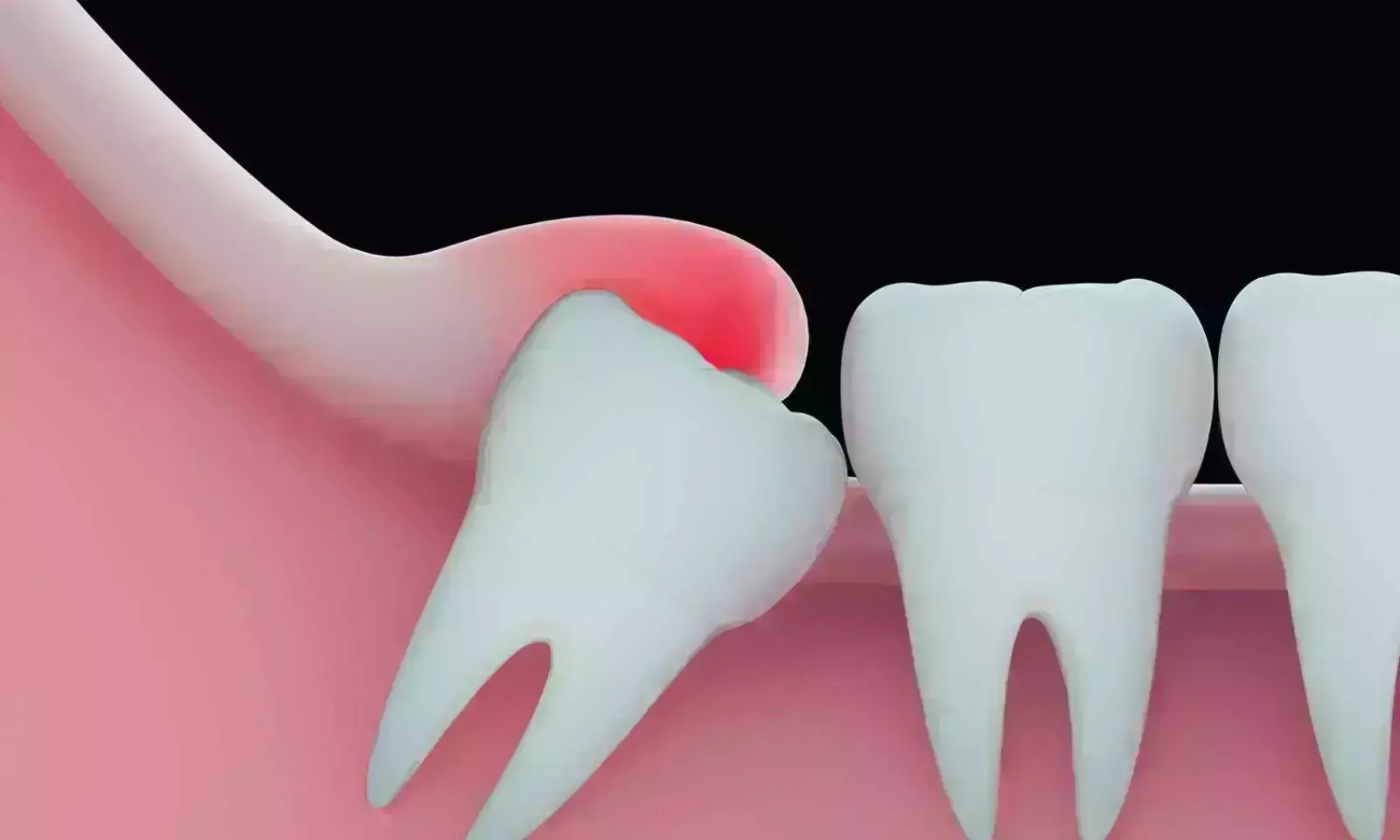


Researchers have found in a new study that Upper Third Molars (UTM) positioned close to the sinus floor with mesial inclination were identified as the main risk factor for intra-operative sinus perforation (SP). Therefore, a modified trapezoid flap technique is advised to achieve optimal wound closure. The study was published in BMC Oral Health by Wei Qi and colleagues.
Sinus perforation is a well-recognized but often underestimated complication associated with the extraction of upper third molars. The risk becomes particularly significant when the tooth roots are closely adjacent to or extend into the maxillary sinus cavity. This new study aimed to focus on a group of UTMs that were in close anatomic relationship with the maxillary sinus, in order to identify the main factors related to the risk of sinus perforation and to provide effective surgical repair techniques for this kind of complication.
This retrospective cohort study was carried out from January 2019 to May 2025 in the General Dentistry and Fifth Division of Peking University School of Stomatology. In total, 141 upper third molars in 120 patients were finally obtained for analysis. These molars were categorized by extent of sinus protrusion, impaction depth, and type of inclination. Chi-square tests and binary logistic regression were then performed to determine correlations among anatomical factors and the occurrence of SP. A p-value < 0.05 was considered statistically significant.
Results
• Of the 141 sites, 24 resulted in sinus perforation, giving an incidence rate of 16.5%.
• Of these, 7 were iatrogenic perforations of mesially or horizontally impacted UTMs (p < 0.05).
• No SP was found when less than half of the root tip protruded into the sinus, suggesting that there might be a threshold relationship between the position of the root and the risk of perforation.
• A modified trapezoid flap was successfully used to manage most SPs, thus preventing postoperative complications by achieving effective wound closure.
• Postoperative oral-antral fistula was reported in only one case, indicating very low incidence rates for long-term complications.
• Chi-square tests showed there was a significant correlation between mesially inclined UTMs and both the total and iatrogenic incidence of SPs (p < 0.05).
• Logistic regression confirmed that mesial impaction (OR 4.12) and type IIc protrusion (OR 6.03) were independent predictors of SP occurrence.
It was concluded that mesial impaction and type IIc sinus protrusion are the most significant risk factors for sinus perforation in the course of an upper third molar extraction. Most perforations can be managed with a modified trapezoid flap, which offers excellent wound closure and minimizes postoperative complications. These findings emphasize the importance of preoperative imaging and careful surgical technique in cases involving the upper wisdom teeth, closely related to the maxillary sinus.
Reference:
Qi, W., Qian, J., Hu, L. et al. Risk factors of sinus perforation after extraction of upper third molars in proximity with the sinus floor. BMC Oral Health 25, 1768 (2025). https://doi.org/10.1186/s12903-025-07144-2