Nanocomposite Hydrogel Significantly Inhibits Cariogenic Biofilms and Promotes Enamel Remineralization: Study
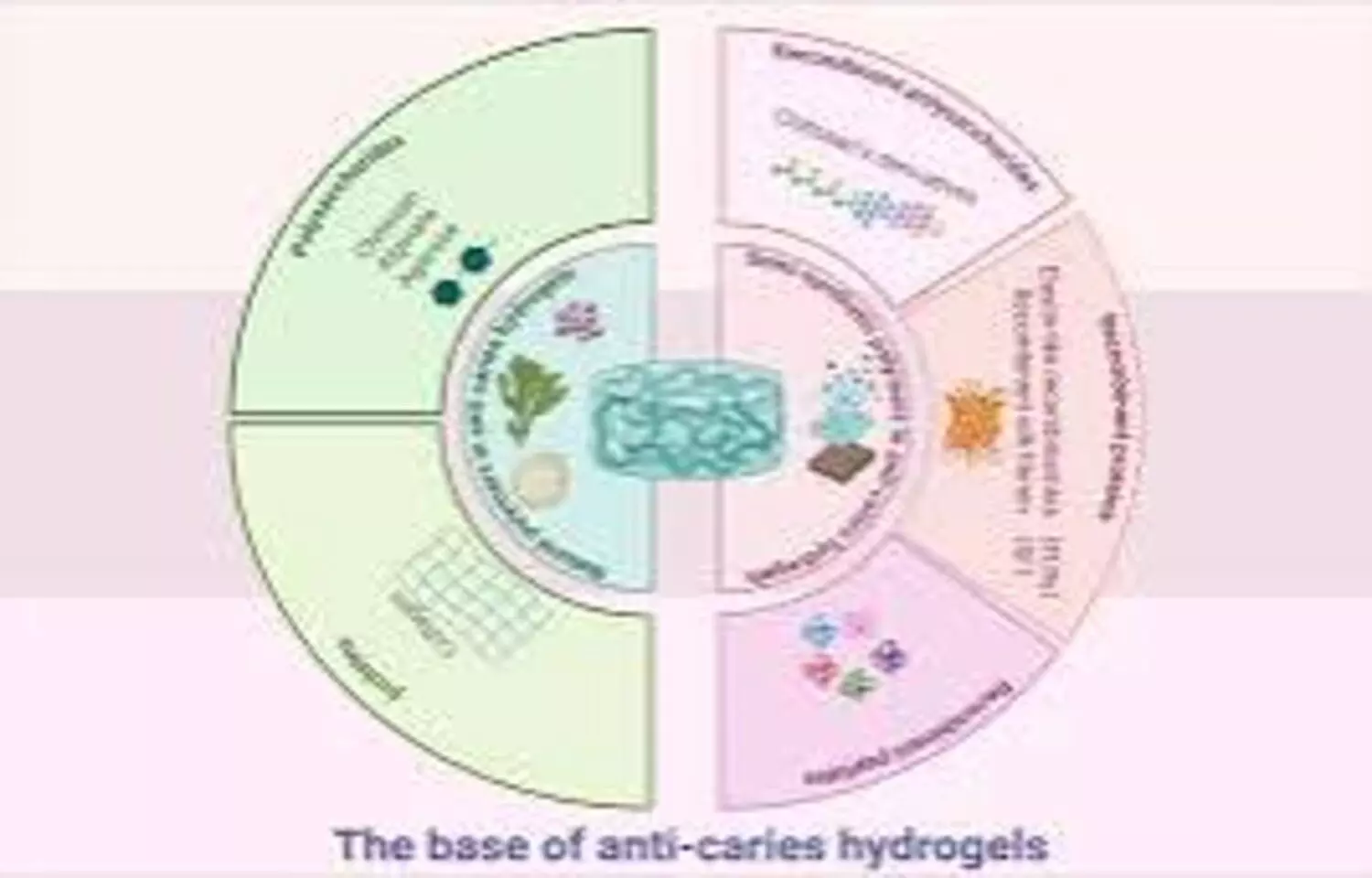


A recent in vitro study demonstrated that the fCS/nSPS nanocomposite hydrogel significantly inhibited the formation of cariogenic biofilms while promoting the remineralization of artificial enamel caries lesions. These dual antibacterial and mineralizing properties suggest that this novel hydrogel may serve as an effective, minimally invasive approach for managing early enamel caries. The findings highlight its potential clinical application as a preventive treatment strategy, particularly for patients at high risk of dental caries, although further clinical studies are needed to confirm its efficacy and long-term benefits.
A study was done to evaluate the antibiofilm and remineralising effects of a functionalised chitosan/nano-strontium phosphosilicate hydrogel (fCS/nSPS) on enamel caries.
Human enamel blocks were treated with fCS/nSPS and incubated with Streptococcus mutans, Actinomyces naeslundii, and Lactobacillus acidophilus. Biofilm morphology, viability, and bacterial surface charge were assessed using scanning electron microscopy (SEM), colony-forming unit (CFU) counting, and a cytochrome C binding assay, respectively. After a cariogenic challenge, surface morphology, crystal characteristics, lesion depth, elastic modulus, and nanohardness were evaluated by SEM, X-ray diffraction (XRD), micro-computed tomography, and nanoindentation. Silver diamine fluoride (SDF) and deionised water served as positive and negative controls.
Dense bacterial biofilms formed on water-treated enamel, whereas only sparse biofilm growth was observed on fCS/nSPS- and SDF-treated surfaces. Biofilm viability and bacterial surface charge in the fCS/nSPS and SDF groups were significantly lower than in the water group. A mineral-rich surface layer covered fCS/nSPS- and SDF-treated enamel, while enamel prisms remained exposed on water-treated enamel. XRD revealed stronger crystalline apatite on fCS/nSPS- and SDF-treated enamel, in contrast to poorly crystalline apatite on water-treated enamel. Lesion depths in fCS/nSPS- and SDF-treated enamel were significantly shallower than in water-treated enamel. The elastic modulus and nanohardness of fCS/nSPS- and SDF-treated enamel were significantly higher than those of water-treated enamel. The fCS/nSPS hydrogel effectively inhibits cariogenic biofilms and promotes remineralisation of artificial enamel caries lesions in vitro. This antibacterial and mineralising nanocomposite hydrogel shows promising potential as a minimally invasive preventive treatment for early enamel caries, particularly in high-caries-risk patients.
Reference:
Iris Xiaoxue Yin, Veronica Ruiyu Ma, Chun Hung Chu. Preventive Effects of a Strontium‑Containing Nano Bioactive Glass Hydrogel Against Enamel Caries: An In Vitro Study, Journal of Dentistry, 2026, 106874, ISSN 0300-5712,. https://doi.org/10.1016/j.jdent.2026.106874.
(https://www.sciencedirect.com/science/article/pii/S0300571226005440)
Keywords:
Nanocomposite, Hydrogel, Significantly, Inhibits, Cariogenic, Biofilms, Promotes, Enamel, Remineralization, Study, Nanoparticles, hydrogel, caries, enamel, remineralisation, Iris Xiaoxue Yin, Veronica Ruiyu Ma, Chun Hung Chu