
Pre-Extraction Mobility and Furcation Involvement Predict Implant Failure, suggests study
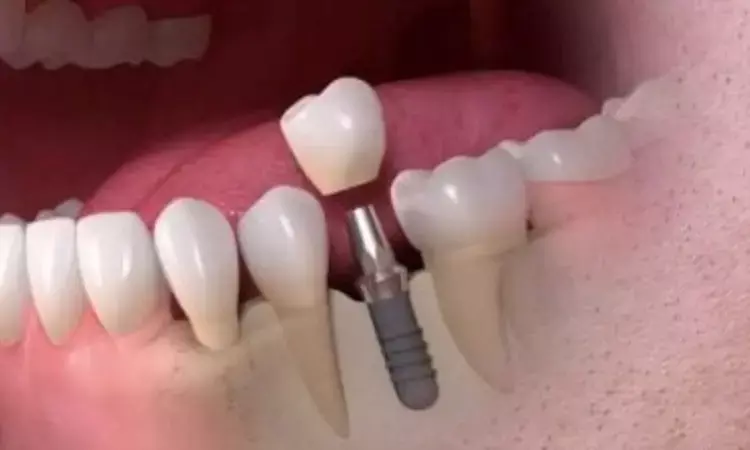


A new study published in the journal of Clinical Oral Implants Research showed that a history of severe tooth mobility or advanced furcation involvement at an implant site is significantly associated with increased long-term implant failure. These factors likely reflect prior severe bone loss and susceptibility to periodontitis, and should be carefully considered during risk assessment and treatment planning.
This retrospective cohort study analyzed thousands of patient records from a collaborative academic network. Dental implants were grouped according to the condition of the original tooth site prior to extraction. These included moderate mobility (M2), severe mobility (M3), and advanced furcation involvement (G3 and G4), which refers to bone loss which affects the roots of multi-rooted teeth. The control group consisted of implants placed in sites without these risk factors.
This study applied a 1:4 propensity score matching method, which balanced the key patient characteristics like age, sex, smoking status, diabetes, and implant location, between the risk groups and controls.
After matching, the study evaluated 3,925 implants, which included 785 in risk-affected sites and 3,140 in the control group. Over a 10-year period, the survival rate for implants in the control group was notably high at 98.9%. However, implants placed in previously compromised sites showed reduced survival rates. The implants in sites with moderate mobility (M2) had a survival probability of 94.6%, while those in the most severe furcation category (G4) had a 95.5% survival rate.
When compared to controls, the risk of failure was more than doubled for M2 sites and increased nearly 4-fold for M3 and G4 categories. These findings were consistent across all groups and reached strong statistical significance. The study suggests that these pre-existing conditions like severe mobility and furcation involvement, may not directly cause implant failure. But, they likely act as indicators of deeper underlying issues, such as significant localized bone loss and a higher susceptibility to periodontal disease.
While dental implants remain a highly successful treatment option, their long-term outcomes can be influenced by the biological and structural history of the implant site. Customized risk assessment and treatment planning may be crucial to improve success rates for patients with complex dental histories.
Reference:
Chatzopoulos, G. S., & Wolff, L. F. (2026). Prior tooth mobility and furcation involvement are associated with higher dental implant failure rates: A propensity-matched cohort study. Clinical Oral Implants Research, clr.70127. https://doi.org/10.1111/clr.70127

