
Splint Design and Thickness may influence load distribution in TMJ system: Study
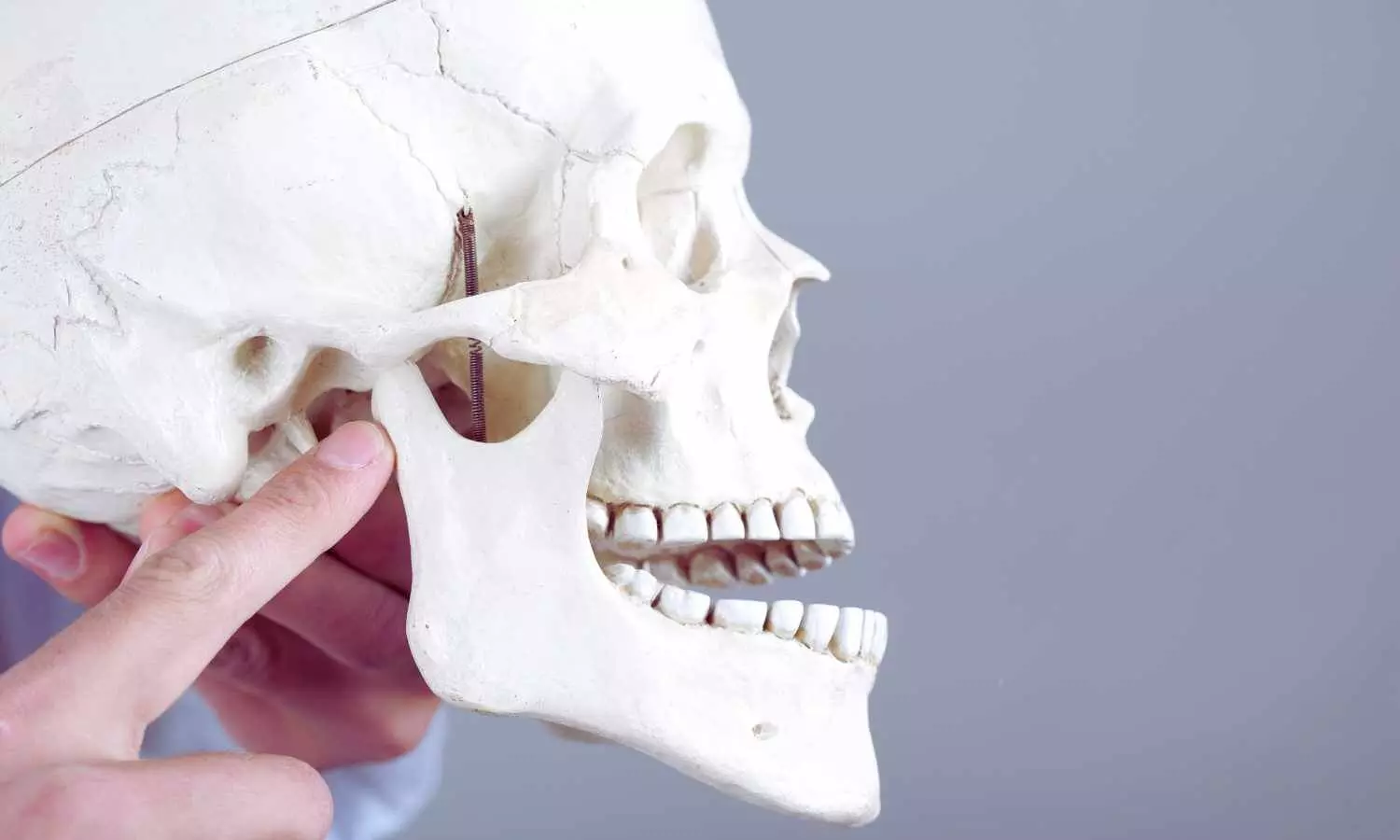


A new study published in the BMC Oral Health revealed that splint design and thickness significantly influence load distribution within the temporomandibular system. Non-permissive splints, especially those with a thickness of 5 mm, were found to reduce stress on the temporomandibular joint (TMJ) but increased loading on the periodontal ligament.
Temporomandibular disorders (TMD) affect the jaw joint and chewing muscles, often causing pain, headaches, jaw stiffness, and difficulty chewing. Occlusal splints or bite splints, are widely used to reduce strain on the temporomandibular joint, but questions remain about how different splint designs and thicknesses influence joint mechanics.
This study used advanced finite element analysis which simulates how physical forces interact with biological structures. The study compared the Michigan stabilization splints and non-permissive splints, in thicknesses of 3 millimeters and 5 millimeters. The research team created detailed three-dimensional digital models of the jaw system using data from the Visible Human Project. These models included the maxilla, mandible, teeth, periodontal ligament, and the articular disc inside the TMJ. Functional muscle forces were then applied to mimic real jaw movements during biting and chewing.
This study found that the model without a splint experienced the highest stress levels across all jaw and dental structures, which confirmed the protective role of splint therapy in reducing mechanical strain. Among the splint designs tested, non-permissive splints produced the greatest reduction in stress within the mandible and TMJ. The lowest mandibular stress was approximately 32.3 megapascals, which suggests these splints may offer superior protection for patients experiencing significant joint loading or clenching-related symptoms.
While non-permissive splints reduced joint stress more effectively, they transferred greater forces to the periodontal ligament around the teeth. Increased periodontal ligament loading could potentially contribute to dental discomfort or tooth-related strain if not carefully managed. Michigan splints generated lower periodontal ligament stresses and distributed forces more evenly throughout the articular disc of the temporomandibular joint.
The study also examined whether increasing splint thickness improved therapeutic performance and found that increasing thickness from 3 mm to 5 mm enhanced stress reduction primarily in the non-permissive splint model, while thicker Michigan splints did not show substantial additional benefit. Overall, these findings suggest that splint choice should be guided by the primary treatment objective, while using the minimum effective splint thickness to balance benefits and potential adverse effects.
Source:
Topdağı, B., Sultanoğlu, E. G., Şişman, A. Ç., Aktürk, H., & Karaosmanoğlu, K. (2026). Effect of occlusal splint design and thickness on temporomandibular joint loading: a finite element study. BMC Oral Health. https://doi.org/10.1186/s12903-026-08376-6

