Standardized Smartphone Photography May Match DSLR Performance in Dental Documentation: Study
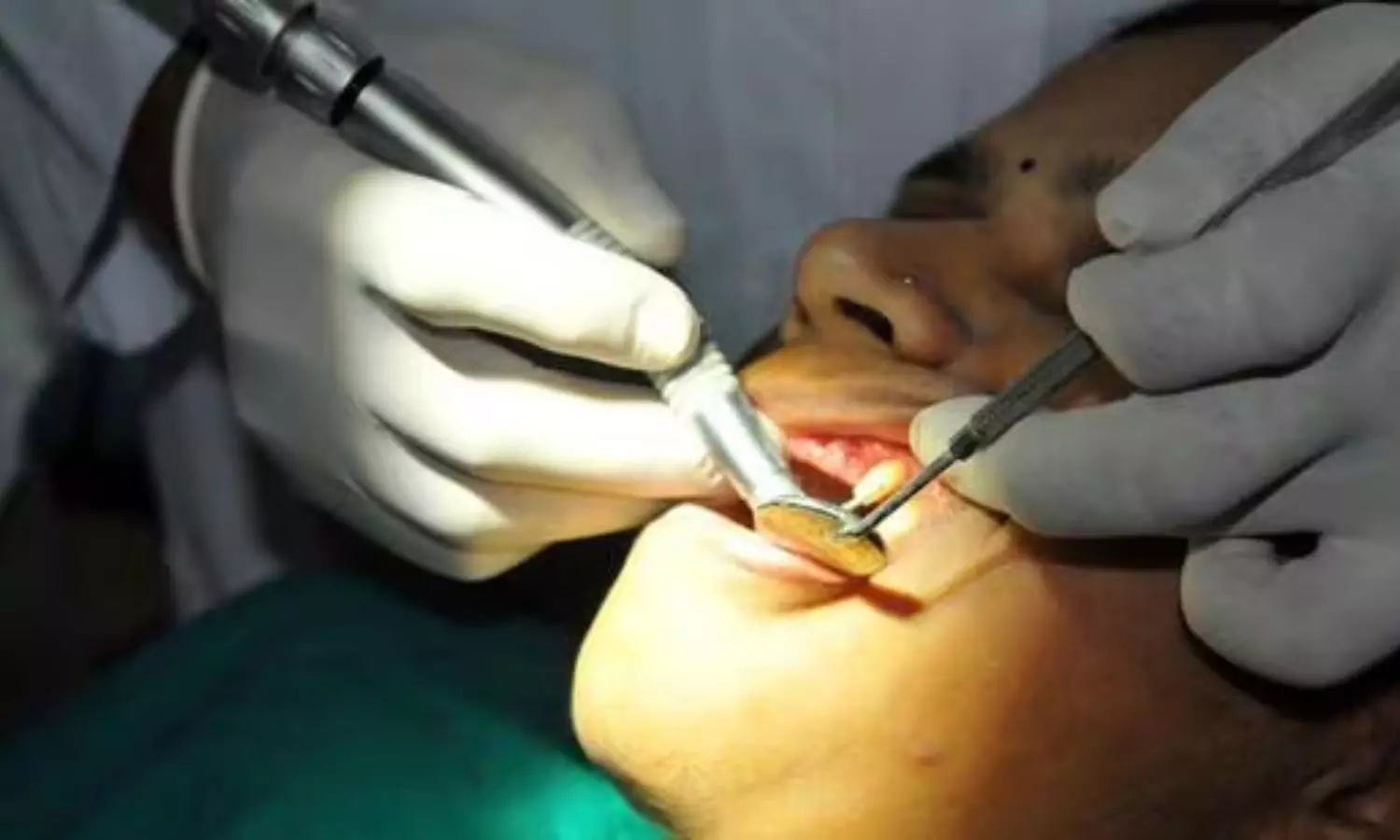


A new study published in the journal of Clinical Oral Investigations showed that smartphone photography attained color accuracy and dimensional consistency on par with digital single-lens reflex (DSLR) cameras thanks to a standardized approach that included suitable optical zoom, professional dentistry illumination, and gray-card-based color calibration.
In contemporary dentistry, clinical dental photography is a vital tool for precise documentation, treatment planning, medico-legal records, and patient communication. With its macro lens and ring light, the digital single-lens reflex camera has long been considered the gold standard.
DSLRs provide outstanding depth of field, color reproduction, and picture resolution. However, many practitioners face considerable obstacles due to their bulky design, expensive cost, and steep learning curve.
Recently, a very practical and affordable substitute has been made possible by the quick development of smartphone camera technology. With their high-megapixel cameras and advanced computational photography, modern smartphones can take precise intraoral and extra oral pictures.
To verify if the widely available smartphone can function as a valid, clinically acceptable substitute for conventional digital dental photography without sacrificing patient care, this comparison is essential. Using a defined methodology that includes color calibration and optical zoom, this study sought to ascertain if flagship smartphones could match the capabilities of professional DSLR cameras.
For each of the 25 participants, nine typical extra oral and intraoral views were recorded using three DSLR cameras (Canon EOS 5D Mark IV, Canon EOS 80D, Nikon D610) and two smartphones (iPhone 17 Pro Max, Galaxy S24 Ultra). Color accuracy, dimensional correctness, and picture quality were assessed. One-way repeated-measures analysis of variance and paired t-tests were used for statistical analysis, and Bonferroni correction (α = 0.05) was used for multiple comparisons.
Smartphone picture ΔE values were considerably lower after gray-card calibration (P<0.001) when compared to the DSLR group with normalized white balance (P<0.001).
Images taken with the iPhone 17 Pro Max at 4× optical zoom did not substantially differ from DSLR cameras in terms of dimensional accuracy (P = 0.178), however the Samsung device considerably overestimated arch width (P = 0.041). Samsung received the highest BRISQUE score.
Overall, smartphone photography achieved gray-card-based color correctness and relative dimensional consistency equivalent to DSLR cameras under a standardized workflow that included color calibration and suitable optical zoom, offering a more practical image choice.
Source:
Yuan, J., Cui, J., Ma, H., Li, X., & Li, S. (2026). Comparison of accuracy and reliability between smartphone and digital single-lens reflex camera in clinical dental photography: an in vivo study. Clinical Oral Investigations, 30(8). https://doi.org/10.1007/s00784-026-07025-0