
Sweet tooth: How blood sugar migration in diabetes affects cavity development?
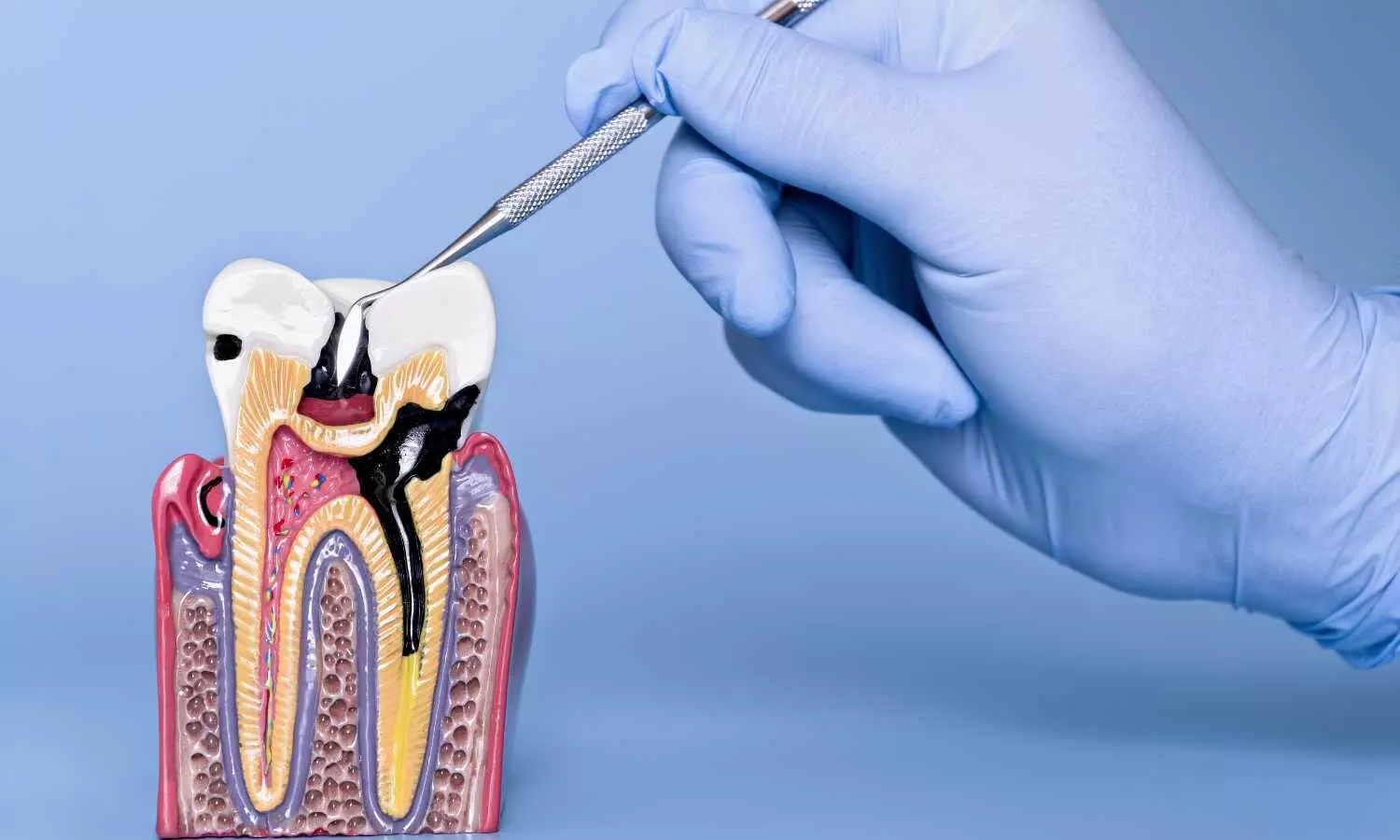


Individuals with type 2 diabetes often have a higher incidence of tooth decay, but the underlying mechanisms remain unclear. Recent evidence indicates that hyperglycemia could lead to the overwhelming presence of sugars not only in urine but also in saliva, yet its contribution to the development, or pathogenesis, of tooth decay is still unknown.
Researchers have now been able to demonstrate that this is directly influenced by blood sugar migration to saliva, changing the bacterial populations in the mouth to promote cavity development. In a study recently published in Microbiome, researchers from The University of Osaka have revealed that blood sugar migration to saliva, induced by hyperglycemia, caused shifts in the oral microbiome that fueled cavity-associated bacteria. This migration of blood sugar was increased in individuals with dental caries, commonly known as cavities, and more dental plaque, but reduced with improved blood sugar control.
“We developed a novel method for untargeted metabolomic profiling of gland-derived saliva that preserves intact metabolite profiles before modification by the oral microbiome,” explains Masae Kuboniwa, senior author of the study. “This allowed us to understand the changes in these metabolites between the blood and saliva, and their subsequent changes after exposure to the oral microbiome.”
The team compared gland-derived saliva metabolite profiles, which provides information about an individual’s metabolic status without bacteria present, against whole saliva and plasma samples from individuals living with and without type 2 diabetes. It was found that the migration of fructose and glucose from blood to saliva was induced by hyperglycemia. Through microbial sequencing, they were then able to see the effect that this migration had on the oral microbiome.
“The increase of these metabolites in saliva fueled changes in the oral microbiome, enriching cariogenic bacteria such as Streptococcus mutans and reducing the abundance of health-associated species like Streptococcus sanguinis, shifting oral biofilm metabolism toward glycolysis and carbohydrate degradation,” says Akito Sakanaka, lead author. “This shift in the microbial population increases acid production, which erodes tooth enamel and strongly links diabetes to dental caries.”
Importantly, the team found that improved glycemic control reduces the plasma-to-saliva transfer of sugars, particularly fructose, reversing this microbiome imbalance and reducing the risk of tooth decay. In fact, a co-culture biofilm experiment with S. mutans and S. sanguinis demonstrated that the proportion of S. mutans markedly increased in a nutrient-rich medium containing fructose, indicating that the combination of glucose and fructose favors S. mutans under co-culture conditions. Together, these findings help to reveal the role of blood sugar migration to saliva in the pathogenesis of tooth decay and plaque buildup in individuals with type 2 diabetes. The findings indicate that glycemic control could be an effective strategy to reduce the risk of not only periodontal disease, an established oral comorbidity, but also tooth decay, helping to improve oral health and quality of life.
Reference:
Sakanaka, A., Furuno, M., Ishikawa, A. et al. Diabetes alters the supragingival microbiome through plasma-to-saliva migration of glucose and fructose. Microbiome (2025). https://doi.org/10.1186/s40168-025-02256-x
