Tenoxicam Shows Potential for Pain Relief and Improved Mouth Opening in Temporomandibular Disorder: Study
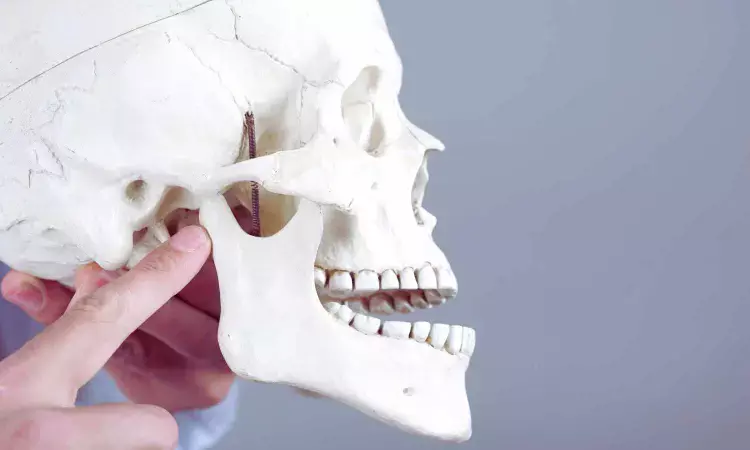


Researchers have found in a new study that Tenoxicam demonstrated promising results in reducing pain and improving maximum mouth opening (MMO) in Temporomandibular disorder. Other approaches showing benefit include Opioids and the combination of Hyaluronic Acid with Platelet-Rich Plasma Therapy used alongside Arthrocentesis. However, further high-quality studies are required to confirm their clinical effectiveness. The study was published in the journal of Oral Diseases by Mateus G. S. and colleagues.
Temporomandibular joint disorders are a frequent cause of chronic orofacial pain and functional impairment, especially in patients with temporomandibular joint osteoarthritis and internal derangement. These disorders cause pain, limited opening of the mouth, and dysfunction of jaw movement, which significantly impacts eating and speaking. Minimally invasive intra-articular procedures, such as arthrocentesis and intra-articular injection, are often employed when conservative treatments have failed.
The study was carried out as a systematic review and meta-analysis of randomized clinical trials (RCTs) evaluating the effectiveness of minimally invasive intra-articular treatments for patients diagnosed with painful temporomandibular joint disorders. The inclusion criteria for the studies considered were RCTs evaluating the following: arthrocentesis and intra-articular injection treatments, with outcomes measured in terms of pain relief and increased maximum mouth opening.
For the meta-analysis, the seven RCTs had a standardized follow-up period of six months. In addition to these studies, 23 clinical trials with varying follow-up periods were analyzed for a broader perspective of the available information.
Key findings:
This systematic review and meta-analysis comprised seven randomized clinical trials with a six-month follow-up for quantitative analysis and 23 trials for qualitative analysis.
The findings revealed that the intra-articular injection of tenoxicam had the highest pain reduction with a mean difference of 7.44 (95% CI 6.28-8.60).
Opioid injection came in second with a mean difference of 5.93 (95% CI 5.03-6.83).
The combination of hyaluronic acid and platelet-rich plasma had a mean difference of 5.10 (95% CI 4.52-5.68), and platelet-rich plasma alone had a mean difference of 4.99 (95% CI 3.13-6.85) for pain relief.
For maximum mouth opening, tenoxicam had the largest increase of +11.50 mm (95% CI 15.47-7.53), followed by platelet-rich plasma with +10.46 mm (95% CI 14.89-6.02) and the combination of hyaluronic acid and platelet-rich plasma with +10.10 mm (95% CI 11.89-8.31).
Tenoxicam intra-articular injection had the most promising results in pain relief and maximum mouth opening in patients with painful temporomandibular joint disorders, followed by opioid injections and the combination of hyaluronic acid and platelet-rich plasma. Although the evidence is still limited, more randomized clinical trials are necessary to prove the clinical applicability of these minimally invasive techniques.
Reference:
Dos Santos, M. G., da Rosa, W. L. O., Sbardelotto, C., de Araújo, J. S. G., da Silva Rodrigues, C., & Boscato, N. (2026). Efficacy and Safety of Intra-Articular Therapies for Temporomandibular Disorders: A Systematic Review and Meta-Analysis. Oral diseases, 10.1111/odi.70284. Advance online publication. https://doi.org/10.1111/odi.70284