
Tonsillolith presence and Size linked to Periodontal Bone and tooth Loss: Study
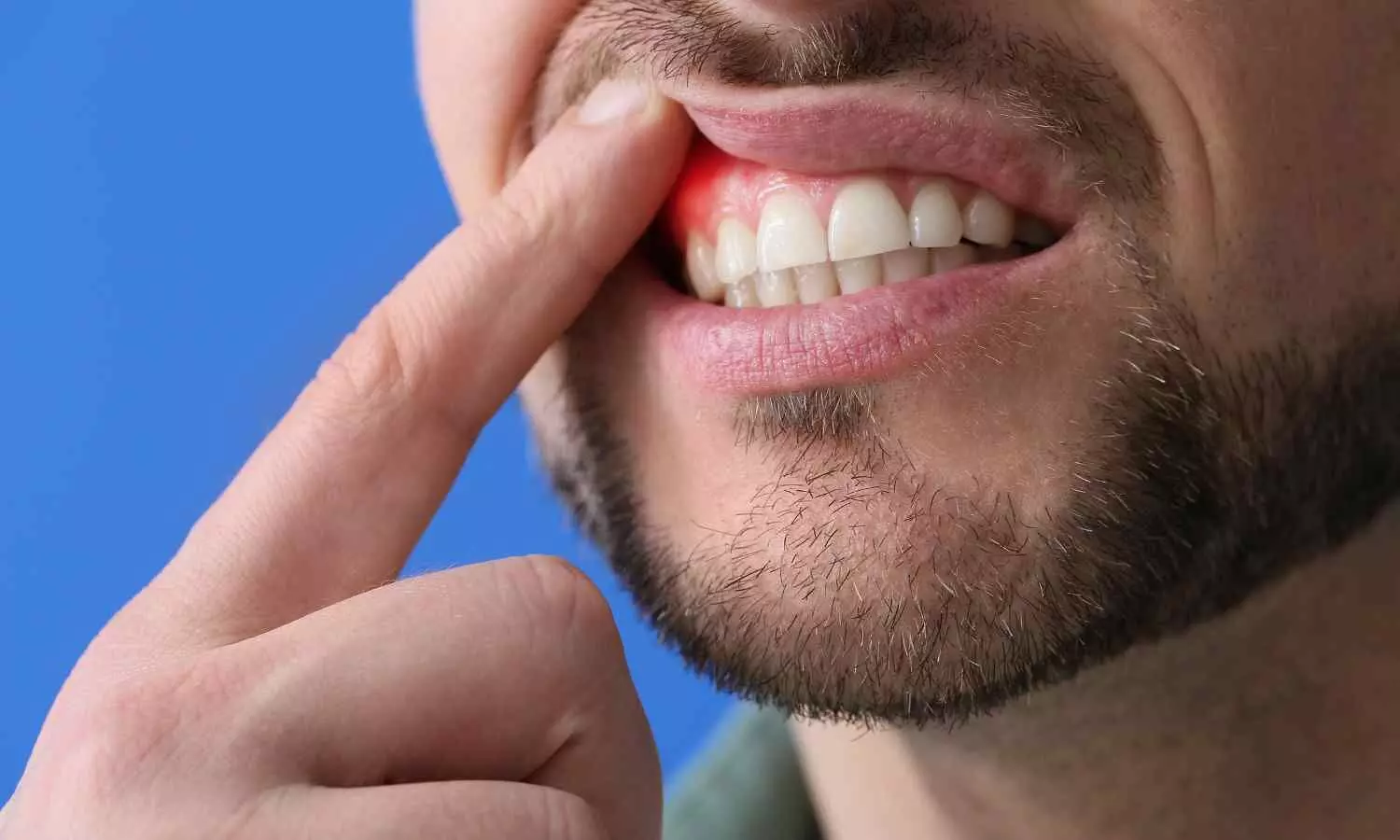


A new study published in the journal of Nature Scientific Reports showed that cone-beam computed tomography (CBCT) is a valuable tool for full multidisciplinary periodontal examination since tonsillolith presence and size may be linked to more advanced periodontal bone loss and tooth loss.
Tonsilloliths, also known as tonsil stones, are created when food particles, bacteria, and exfoliated epithelial cells calcify inside the tonsillar crypts. Emerging research indicates that the features like size, quantity, and degree of calcification, may be connected to more general oral health problems, despite the fact that they are frequently regarded as innocuous findings. Increased generation of volatile sulfur compounds, altered oral microbiota, and chronic inflammation can all be caused by bacterial colonization linked to tonsilloliths.
These mechanisms may thereby affect the integrity of periodontal tissue and hasten the loss of bone. Furthermore, a number of dental diseases, such as caries and periapical infections, have been linked to tonsillolith-related microbial activity. Comprehending these correlations can help doctors with risk assessment, early identification, and thorough dental care planning.
Thus, this study assessed the relationship between periodontal bone loss, furcation involvement, and other oral diseases and the quantity, size, and existence of tonsilloliths found on cone-beam computed tomography images.
342 systemically healthy individuals' CBCT scans from November 2020 to October 2024 were retrospectively analyzed. Each scan was evaluated for tonsillolith features and dental abnormalities, and participants were split into two equal groups (n = 171) based on the presence of tonsilloliths. Cementoenamel junction-alveolar crest lengths were used to measure periodontal bone loss, which was then divided into 3 severity categories.
With a mean size of 3.98 ± 1.78 mm, tonsilloliths were more commonly seen bilaterally or on the right side. There were no significant differences seen for apical periodontitis, decaying teeth, or repaired teeth, however the tonsillolith group had a substantially greater mean number of missing teeth (p = 0.040).
The tonsillolith group had higher rates of bone loss between 1/3 and 2/3 of the ideal bone height and bone loss greater than 2/3 of the ideal bone height (p < 0.001). Larger tonsilloliths were substantially linked to furcation abnormalities (p < 0.001), and tonsillolith size was strongly correlated with bone loss severity (ρ = 0.274, p < 0.001).
Overall, the presence and amount of tonsilloliths may be associated with tooth loss and advanced periodontal bone loss, underscoring the potential use of CBCT in multidisciplinary periodontal evaluation.
Source:
Ustaoğlu, G., Göller Bulut, D., & Aydin, B. (2025). Association of tonsillolith characteristics with periodontal bone loss and dental pathologies: A retrospective study based on cone-beam computed tomography. Scientific Reports, 1–10. https://doi.org/10.1038/s41598-025-30796-7

