Unilateral Pain Pointed Out by Patients May Indicate Joint-Related TMD Pain, suggests study
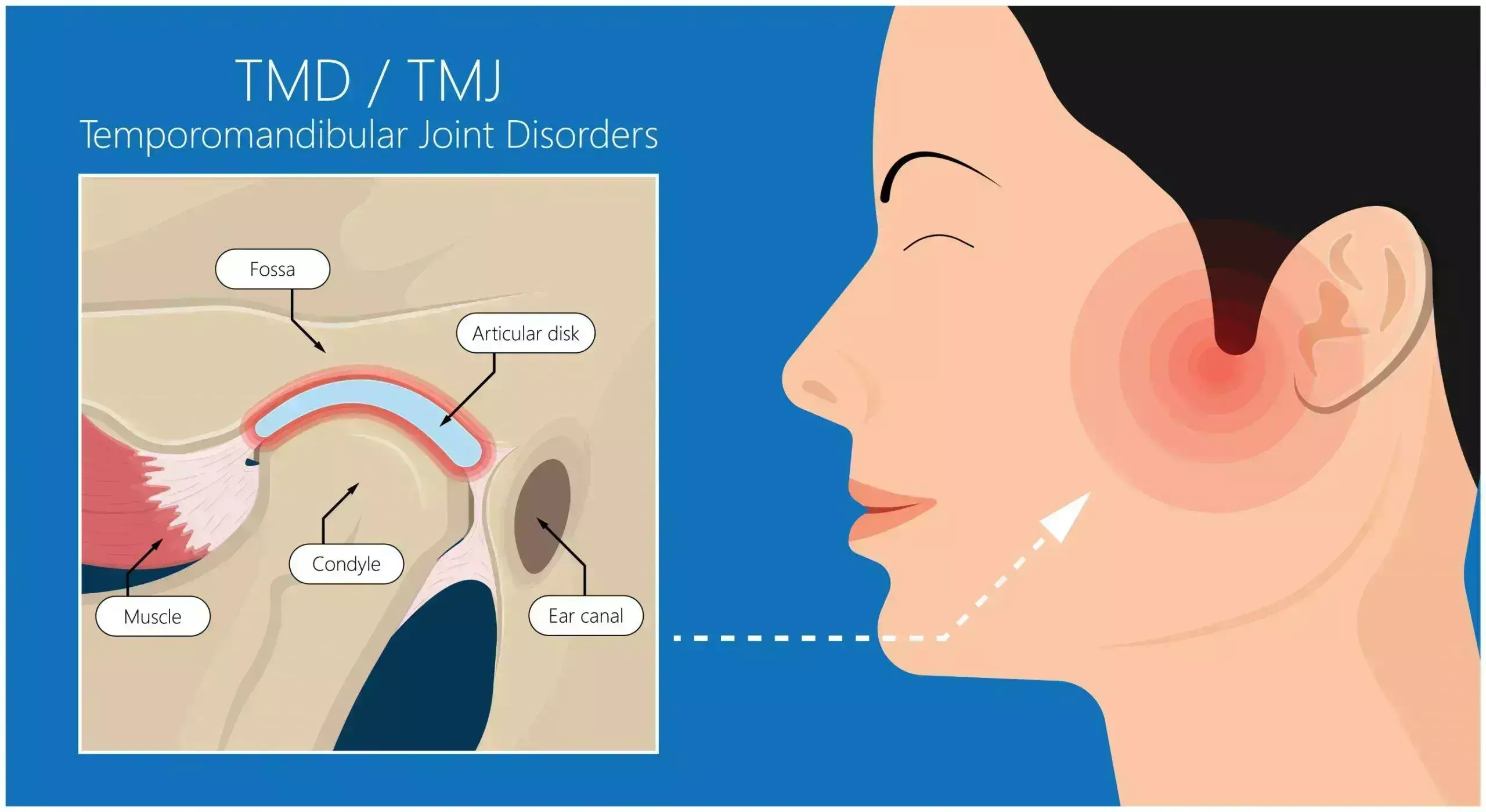


A new study published in the Journal of Oral and Maxillofacial Surgery showed that arthrogenous pain, or pain coming from the temporomandibular joint (TMJ) rather than the muscles, is more common in individuals who describe unilateral discomfort and can pinpoint the uncomfortable spot with a finger.
Myogenous or arthrogenous face discomfort is a typical symptom of temporomandibular disorders. A precise diagnosis is essential for a successful course of therapy. However, it is still clinically difficult to depend only on patient-reported pain location. Optimizing targeted therapy results requires determining if pain location reliably distinguishes between these two different etiologies. This study assessed the relationship between the diagnosis of myogenous or arthrogenous temporomandibular disorders (TMDs) and three patient-reported pain features, both separately and in combination.
Medical records were used to identify patients with TMD diagnoses who visited Studio Dentistico Prati (Goito, Mantova, Italy) between January 2020 and January 2024. Subjects with painful TMD who are at least 18 years old, regardless of gender, are eligible. Myogenous-arthrogenous TMD, orthodontic therapy within 3 years, gnathological, physiotherapeutic, or pharmacological therapy, neurological diseases, and head and neck cancer are the exclusion criteria. The self-reported pain profile of the subjects was evaluated according to location (preauricular, masseteric, intra-auricular, temporal, and craniofacial mass), modality of indication (hand vs. finger), and unilaterality versus bilaterality of pain. The TMD diagnosis of myogenous or arthrogenous pain causes using the TMD Diagnostic Criteria was the outcome variable.
The sample consisted of 479 women (79.8%) and 121 males (20.2%), with a mean age of 40.6 ± 17.4. There were 244 myogenous TMDs (40.7%) and 356 arthrogenous TMDs (59.3%). Masseteric or temporal pain is statistically significantly correlated with myogenous TMD (P <.001), whereas arthrogenous TMD is statistically correlated with preauricular and intra-auricular pain (P <.001).
Unilateral pain is reported by arthrogenous individuals in all locations (P <.001), whereas bilateral discomfort is suggestive of myogenous TMD (P <.001). Additionally, there is a statistically significant correlation between indication modality and localization; arthrogenous individuals were more likely to finger-point (P <.001). Overall, arthrogenous pain, whether in the cranial or masticatory regions, is more likely to be linked to self-reported unilateral discomfort with finger indication.
Source:
Prati, S., Pagano, S., Valenti, C., Lacchini, T. B., Falocci, N., Tartaglia, G. M., & Gianni, A. B. (2026). Does pain localization in patients with temporomandibular disorders discriminate between myogenous and arthrogenous sources? Journal of Oral and Maxillofacial Surgery: Official Journal of the American Association of Oral and Maxillofacial Surgeons, 84(6), 830–841. https://doi.org/10.1016/j.joms.2026.02.020