Zirconia and Fiber-Reinforced Composite Cantilever IR-FDPs Show Excellent 5-Year Outcomes: Study
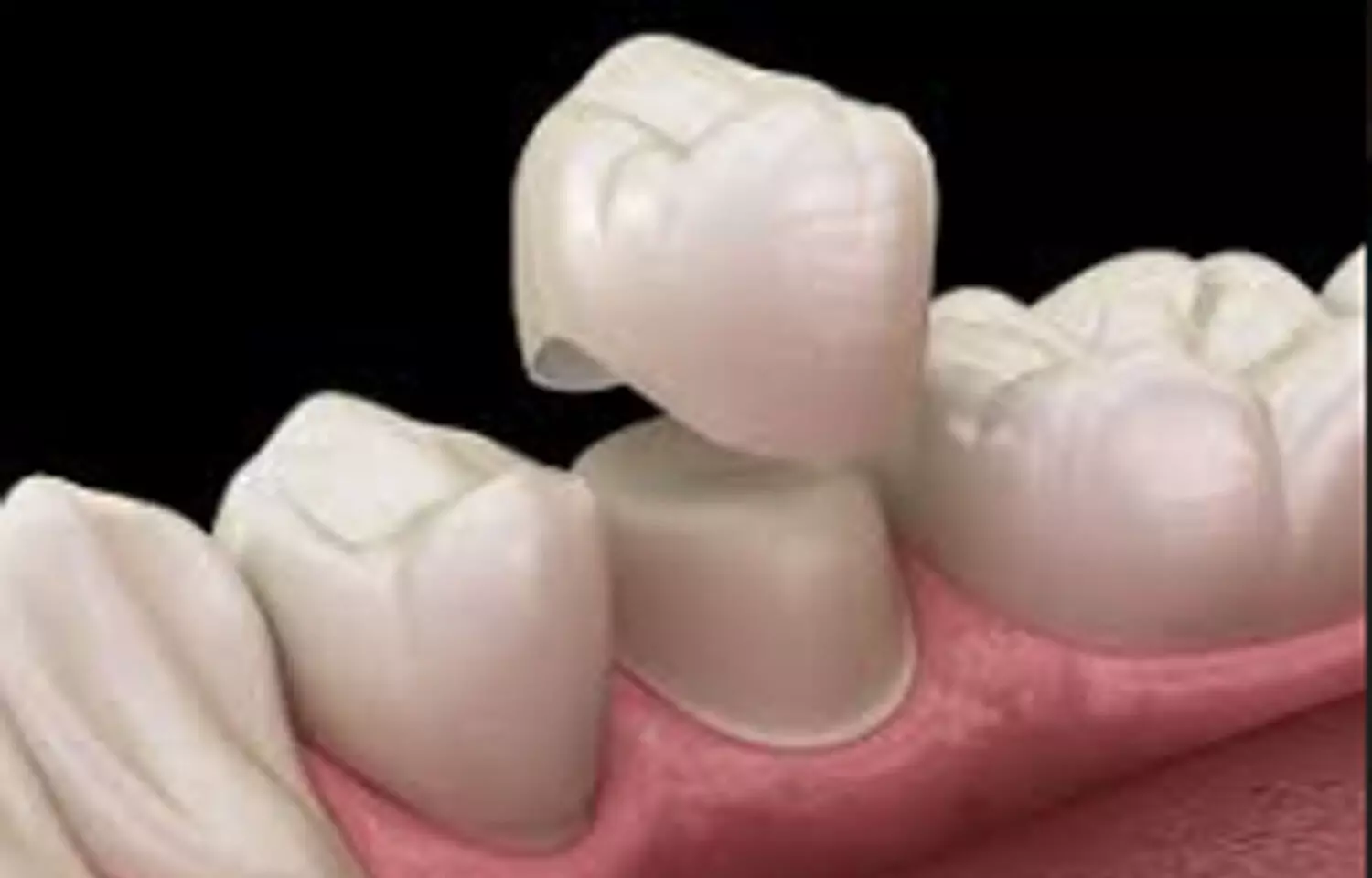


A randomized controlled clinical trial has found that both zirconia and fiber-reinforced composite (FRC) cantilever inlay-retained fixed dental prostheses (IR-FDPs) demonstrated favorable clinical performance over a 5-year follow-up period, with high survival rates. Although some differences in failure patterns were observed between the two materials, these findings should be interpreted cautiously due to the limited number of failures. The study supports the use of cantilever IR-FDPs with various retainer designs, including the inlay-ring configuration, as reliable, minimally invasive, and durable options for posterior tooth replacement, offering a conservative long-term restorative treatment strategy. The study was published in the Journal of Dentistry by Ammar T. and colleagues.
In total, 47 individual patients with a clinical requirement of 60 different IR-FDPs replacing lost mandibular second premolars participated in the investigation. In order to investigate the influence of geometrical structure and material composition in a systematic way, all subjects were randomized into three separate experimental groups of 20 individual restorations each according to the particular design of the retainer structure: inlay ring (IR), lingual coverage (LC), and occlusal coverage (OC). Additionally, each of the main groups was divided into two equal subgroups of 10 individual restorations each according to the type of used material: polycrystalline zirconia (Z) or fiber-reinforced composite (FRC).
Randomization was performed according to a computer-generated list of numbers, and allocation concealment was guaranteed by using sealed opaque envelopes. All manufactured restorations were adhesively fixed to prepared teeth under strictly controlled preparation and conditioning protocol. Throughout the whole 60-months period of observation, blinded clinical and radiographic assessments were conducted at regular time intervals according to the modified World Dental Federation (FDI) criteria. Qualitative data between groups was analyzed using Monte Carlo tests, and changes over more than two follow-up times were analyzed using Cochran's Q tests.
Key findings:
- No statistically significant differences have been noticed between the groups (P > 0.05) with respect to clinical performance with satisfactory esthetics, function, and biology according to the modified FDI criteria.
- Five failures necessitating replacements have been found, which include two zirconia connector fractures, two debonding failures, and one irreversible framework deformation.
- Additionally, six complications have been observed, which include debonding, plastic deformation, veneering composite delamination, veneering chip, and secondary caries, but all of these complications have been solved without replacement.
- Failures of the zirconia group included connector fractures and debonding or loss of retention, while FRC group mostly had complications that could be repaired and rarely had progressive deformations.
- The survival rate was 91.7% and success rate was 81.7%.
In summary, zirconia and FRC cantilever IR-FDPs showed good five-year clinical behavior with high survival rates. Any possible dissimilarities in the modes of failure among different materials must be taken to be tentative due to the small number of failures recorded. The hard evidence provided by the clinical study is invaluable for the future of conservative dentistry.
Reference:
Kasem, A. T., Tribst, J. P. M., Abo-Madina, M., & Al-Zordk, W. (2026). Five-year outcomes of Zirconia and fiber-reinforced composite cantilever inlay-retained fixed dental prostheses with different retainer designs: A randomized controlled clinical trial. Journal of Dentistry, 106877, 106877. https://doi.org/10.1016/j.jdent.2026.106877