
Zirconia and Titanium Dental Implants Show Comparable 3-Year Outcomes: Study
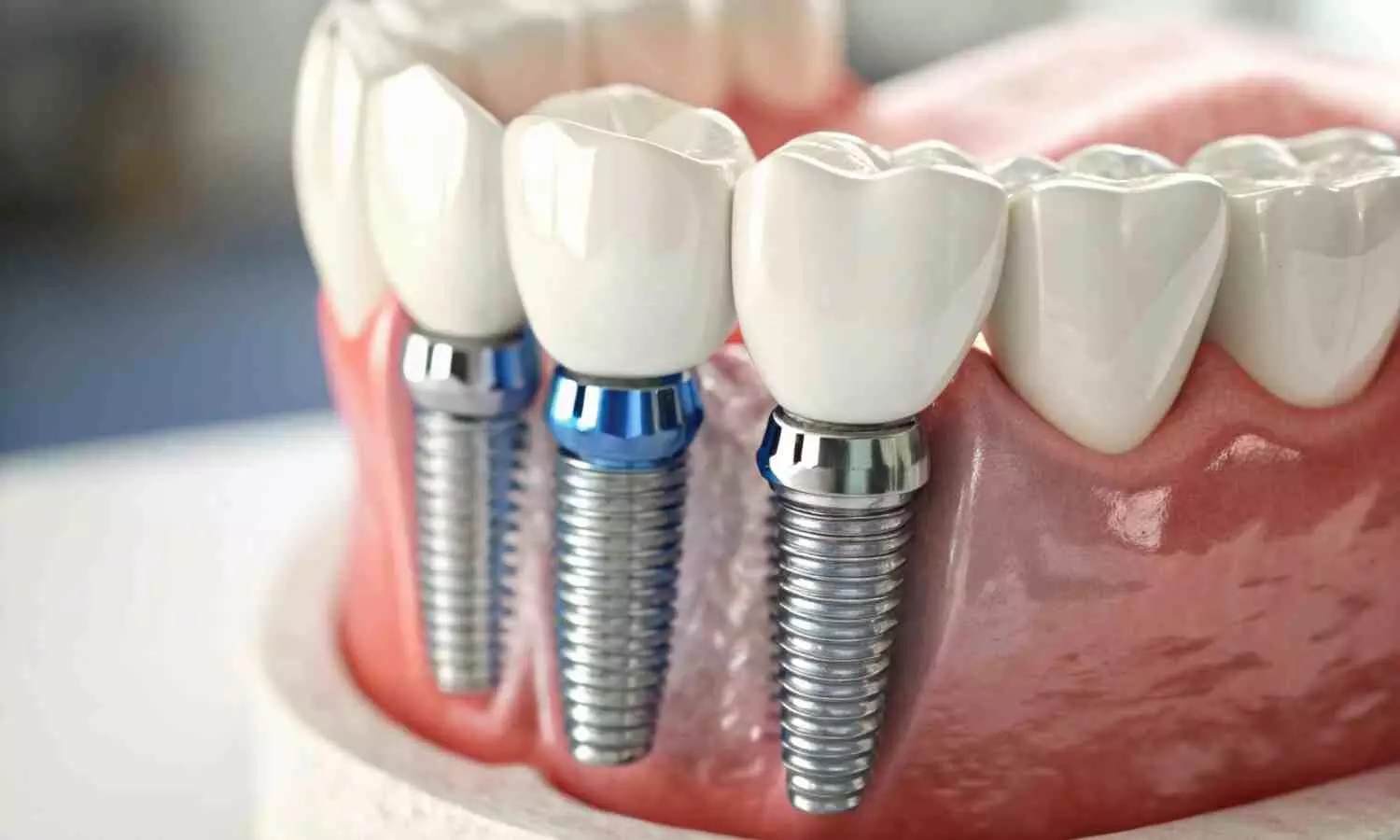


A new study published in the journal of Clinical Oral Implants Research showed that dental implants made of zirconia (ZrO₂) and titanium (Ti) showed equivalent marginal bone level (MBL) alterations, suggesting that the supporting bone around the implants was similarly preserved.
Although titanium is still the gold standard in implant dentistry, zirconia implants are becoming more and more common because of its better aesthetics, lack of corrosive deterioration, and metal-free composition, especially when it comes to preventing mucosal discolouration. In terms of biomechanics, ZrO2 exhibits osseointegration and short-term survival rates that are quite similar to those of Ti. Additionally, both materials exhibit comparable short-to-medium-term results in terms of peri-implant tissue health and changes in MBL.
Despite these benefits, solid randomized controlled studies and long-term data comparing the two materials are lacking. This study offers a 3-year randomized controlled trial assessing single-tooth replacements in the maxillary premolar area in order to close this clinical gap. When comparing MBL variations between ZrO2 and Ti implants during three years of clinical loading is the main goal. Implant survival, peri-implant health, cosmetic outcomes, technical issues, and patient-reported metrics are examples of secondary outcomes.
Three months following implant insertion, 50 patients were randomly assigned to receive either a titanium bone-level (Ti, n = 25) or zirconia one-piece (ZrO2, n = 25) implant, restored with a lithium disilicate crown. The main result was a shift in MBL. Examinations were conducted three years following crown implantation, and secondary outcomes included implant survival, peri-implant tissue health, technical issues, aesthetic results, and PROMs.
The mean MBL change after three years was −0.02 mm (SD = 0.78) for ZrO2 and −0.04 mm (SD = 0.36) for Ti; there was no statistically significant difference (p = 0.635). One ZrO2 implant did not osseointegrate. Both implant types had favorable clinical metrics, while ZrO2 had somewhat greater bleeding ratings.
There were differences in PROMs and cosmetic results that favored the ZrO2 implant group. These differences were not statistically significant. Overall, in terms of MBL stability throughout a three-year period of clinical function, the ZrO2 one-piece implant and the Ti bone level implant type for single tooth replacement in the maxillary premolar area, as used in this study, perform similarly.
Reference:
de Beus, J. H. W., Cune, M. S., Muijselaar, L., Slot, J. W. A., Jensen-Louwerse, C., la Bastide-van Gemert, S., Meijer, H. J. A., Raghoebar, G. M., & Schepke, U. (2026). A randomised controlled trial comparing a one-piece Zirconia tissue-level implant and two-piece titanium bone-level implant for maxillary single tooth replacement-3 year results. Clinical Oral Implants Research, clr.70148. https://doi.org/10.1111/clr.70148

