
Baricitinib Shows Promise for Nail Involvement in Alopecia Areata, suggests study
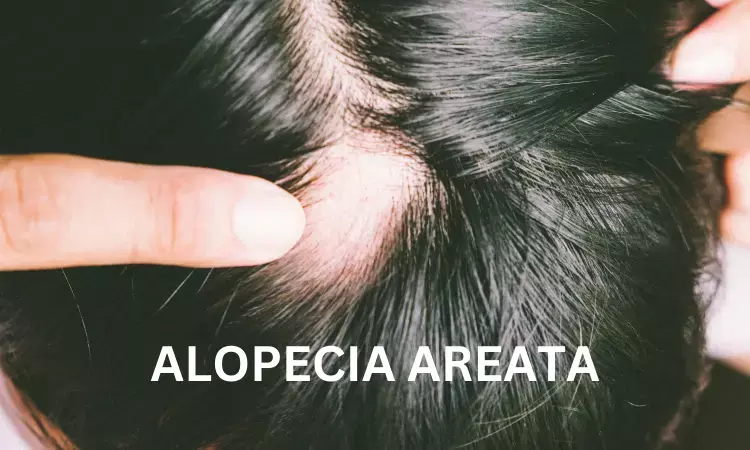


A new study published in journal of Clinical Drug Investigation suggest that baricitinib may be an effective treatment for nail involvement in alopecia areata (AA), highlighting the importance of routine nail assessment and the need for more refined evaluation tools. However, conclusions are limited by a small sample size and the absence of long-term outcome data.
Alopecia areata is a chronic autoimmune disorder that causes patchy hair loss and, in severe cases, can lead to complete loss of scalp hair (alopecia totalis) or all body hair (alopecia universalis). While hair loss is the most visible symptom, nail abnormalities affect children and individuals with severe disease. These nail problems (pitting, ridging, and brittleness) can impair daily functioning and quality of life but are often underdiagnosed and undertreated.
Thus, this study examined the effectiveness of Baricitinib, a Janus kinase (JAK) 1/2 inhibitor, in treating nail manifestations in patients with very severe alopecia areata. This research followed 37 patients with extensive disease, defined by a Severity of Alopecia Tool (SALT) score above 50, all of whom showed clear signs of nail involvement when the study started.
The participants received a daily dose of baricitinib (4 mg) and were monitored over 48 weeks. Clinical evaluations were conducted at regular intervals to track both hair regrowth and nail improvement. Physicians assessed nail conditions such as trachyonychia (rough nails), pitting, leukonychia (white discoloration), and other structural changes using clinical scoring and onychoscopic examination.
By the end of the study period, the patients demonstrated marked improvement in both hair and nail symptoms. The average SALT score measuring the scalp hair loss severity, dropped dramatically from 100 to 16.3, which indicated substantial hair regrowth. At the same time, nail involvement improved significantly, with the average number of affected nails declining from 6.4 to 2.1.
Clinician-based assessments confirmed that nail appearance improved consistently over the treatment period. Statistical analysis showed strong overall treatment effects, which pointed that baricitinib may be effective not only for restoring hair but also for addressing nail damage linked to severe alopecia areata.
This study found only a weak correlation between hair regrowth and nail recovery. This suggests that hair follicles and nail units may respond differently to treatment, which illuminates the complexity of autoimmune mechanisms involved in the disease. Overall, these findings suggest that baricitinib could represent an important therapeutic option for patients with severe alopecia areata who experience both hair loss and debilitating nail changes.
Source:
Starace, M., Pampaloni, F., Quadrelli, F., Olivoni, G., Cedirian, S., Rapparini, L., Bruni, F., & Piraccini, B. M. (2026). Effectiveness of baricitinib on nail alopecia areata: A 48-week single-center retrospective study. Clinical Drug Investigation. https://doi.org/10.1007/s40261-026-01533-3

