Bimekizumab Shows Durable Long-Term Skin Clearance in Plaque Psoriasis: Study
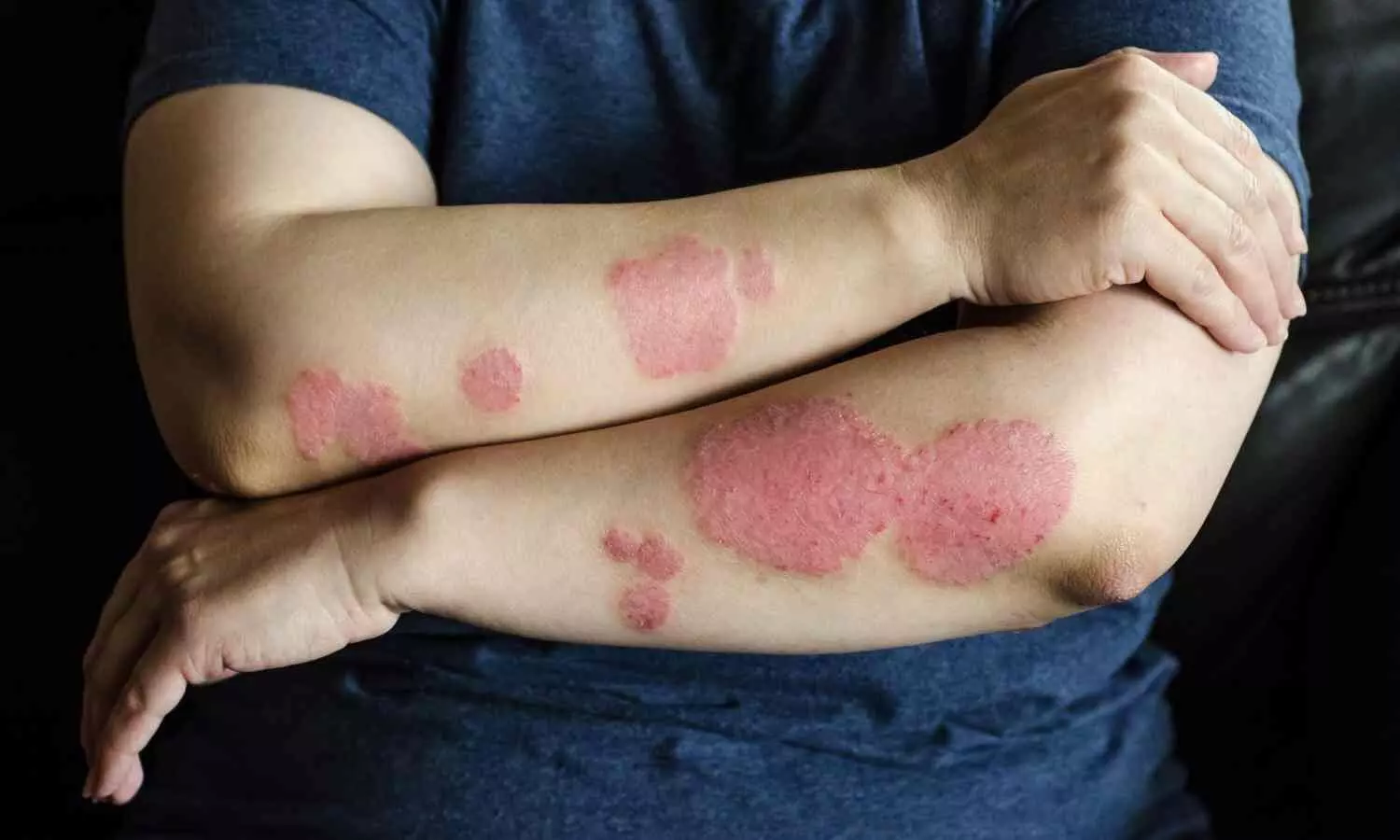


A new study published in The Journal of Allergy and Clinical Immunology showed that in patients with moderate to severe plaque psoriasis who reached total skin clearance after 16 weeks of bimekizumab therapy, 73% sustained complete clearance for 4 years.
Biological treatments that target IL-17A and IL-23 have enhanced results in individuals with moderate to severe plaque psoriasis, providing swift or lasting improvement in skin condition. Nevertheless, there is still a necessity for treatments that deliver quick effectiveness and long-lasting outcomes and require less frequent administration. Prolonged improvement in skin condition might involve adjusting the activity of disease-causing tissue-resident memory (TRM) cells, which play a role in the persistence and reappearance of the condition.
Bimekizumab (BKZ), a monoclonal antibody that targets both IL-17A and IL-17F, has shown better skin improvement in comparison to secukinumab and lasting clinical benefits. The speedy return to normal levels of inflammatory gene activity may clarify its effectiveness. This research delves into the long-term effectiveness of BKZ treatment over four years, the responses observed after stopping and restarting treatment, and the biological processes that support continuous skin improvement.
Data from three 1-year phase 3 feeder studies (BE VIVID, BE READY, and BE SURE) and their 3-year open-label extension (BE BRIGHT) were combined for analysis. Transcriptomic assessments were performed on three separate sets of single-cell RNA-sequencing data from psoriasis biopsies and bulk RNA-sequencing data from a phase 2a trial.
Patients who had clear skin after 16 weeks and continued to receive double-blind BKZ treatment and joined BE BRIGHT, 73.0% maintained this improvement by the end of year 4 (N = 503; modified nonresponder imputation). Single-cell transcriptomic studies uncovered a cluster of TRM cells in affected skin producing IL17A and/or IL17F, a subset believed to be pathogenic and rarely found in healthy skin.
This study identified prosurvival molecules in TRM cells in affected skin, highlighting that IL7R was more abundant in IL17F+ TRM cells when compared to IL17A+ cells. Changes in the expression of these prosurvival molecules and a general TRM gene pattern were observed in overall transcriptomic studies after 8 weeks of treatment (2 BKZ doses). Overall, individuals with psoriasis who reached full skin clearance following 16 weeks of bimekizumab treatment sustained elevated clearance rates for as long as 4 years.
Reference:
Krueger, J. G., Cutcutache, I., Lebwohl, M., Gudjonsson, J. E., Pinter, A., Langley, R. G., Merola, J., Tada, Y., Skelton, A., Rastrick, J., Ferecskó, A. S., Page, M., Davies, O., López Pinto, J. M., Warham, R., Shaw, S., & Warren, R. B. (2026). Bimekizumab long-term response in psoriasis: Mechanistic insights into efficacy level and durability. The Journal of Allergy and Clinical Immunology, 157(4), 905–916. https://doi.org/10.1016/j.jaci.2025.12.1013