
CAB Gel Safe and Effective in Moderate-to-Severe Acne: Study
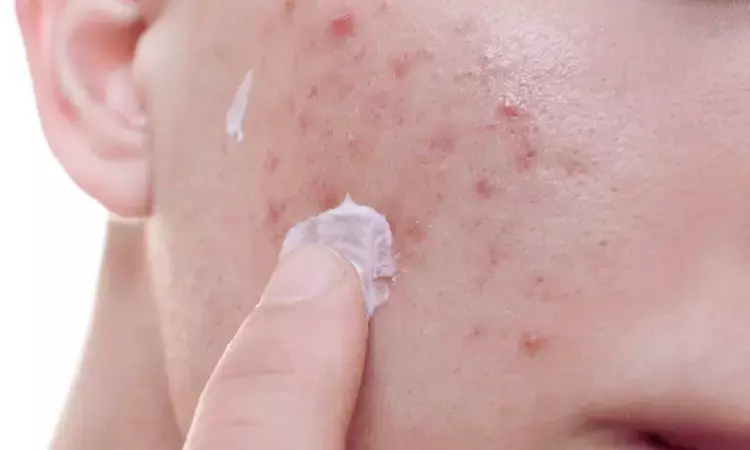


USA: Researchers have found in a new study that Clindamycin phosphate 1.2% / adapalene 0.15% / benzoyl peroxide 3.1% (CAB) gel was safe and effective for treating moderate-to-severe acne in Hispanic and Latino populations.
Acne vulgaris remains one of the most common dermatological conditions worldwide, often requiring combination therapy to target multiple pathogenic pathways. Traditional regimens frequently involve layering separate products, which may compromise adherence and increase the risk of irritation or antibiotic resistance.
Against this backdrop, investigators evaluated a novel fixed-dose, triple-combination topical formulation that integrates an antibiotic, an antibacterial agent, and a retinoid into a single, once-daily gel.
The phase II study, published in the American Journal of Clinical Dermatology, was led by Dr. Linda Stein Gold from Henry Ford Hospital, Detroit, and colleagues. The researchers conducted a 12-week, double-blind, multicenter, randomized trial involving participants aged 9 years and older with moderate to severe acne.
Eligible participants were randomly assigned to receive either the triple-combination gel (IDP-126), a vehicle gel, or one of three dual-combination comparator gels containing two of the active components.
The study assessed two coprimary endpoints: overall treatment success at week 12 and absolute changes from baseline in inflammatory and noninflammatory lesion counts. Treatment success was defined as achieving at least a two-grade improvement on the Evaluator’s Global Severity Score along with clear or almost clear skin. Safety and tolerability were evaluated through monitoring treatment-emergent adverse events and local cutaneous reactions.
The key findings were as follows:
- Among the 741 participants enrolled, outcomes clearly favored the triple-combination IDP-126 gel over the vehicle and all dual-combination comparators.
- By week 12, over half of the participants treated with IDP-126 achieved treatment success, significantly outperforming the vehicle group, in which fewer than 10% met the success criteria.
- Treatment success rates with the dual-combination gels were notably lower than with IDP-126, ranging between approximately 28% and 31%.
- Participants receiving IDP-126 showed markedly greater reductions in both inflammatory and noninflammatory lesion counts compared with those using the vehicle or dyad gels.
- These reductions corresponded to improvements of more than 70% from baseline, reflecting the strong clinical effectiveness of the triple-combination therapy.
- Clinically meaningful decreases in lesion counts were evident as early as week two, indicating a relatively rapid onset of therapeutic benefit.
- The triple-combination gel was generally well tolerated, with most treatment-emergent adverse events reported as mild to moderate in severity.
- No unexpected safety signals were identified during the study, and the favorable tolerability profile was consistent across pediatric, adolescent, and adult participants.
The authors noted that combining three guideline-recommended acne therapies into a single formulation may simplify treatment regimens, enhance adherence, and reduce prolonged exposure to topical antibiotics. As the first fixed-dose, triple-combination topical therapy evaluated for acne, IDP-126 represents a promising addition to the current treatment landscape.
"Overall, the findings suggest that once-daily CAB gel offers superior efficacy and acceptable safety compared with vehicle and dual-combination therapies, positioning it as a potential new option for managing moderate-to-severe acne," the authors concluded.
Reference:
Stein Gold, L., Baldwin, H., Kircik, L.H. et al. Efficacy and Safety of a Fixed-Dose Clindamycin Phosphate 1.2%, Benzoyl Peroxide 3.1%, and Adapalene 0.15% Gel for Moderate-to-Severe Acne: A Randomized Phase II Study of the First Triple-Combination Drug. Am J Clin Dermatol 23, 93–104 (2022). https://doi.org/10.1007/s40257-021-00650-3

Next Story