Enpatoran Improves Skin Disease Activity in Lupus and Shows Favorable Safety Profile: Lancet
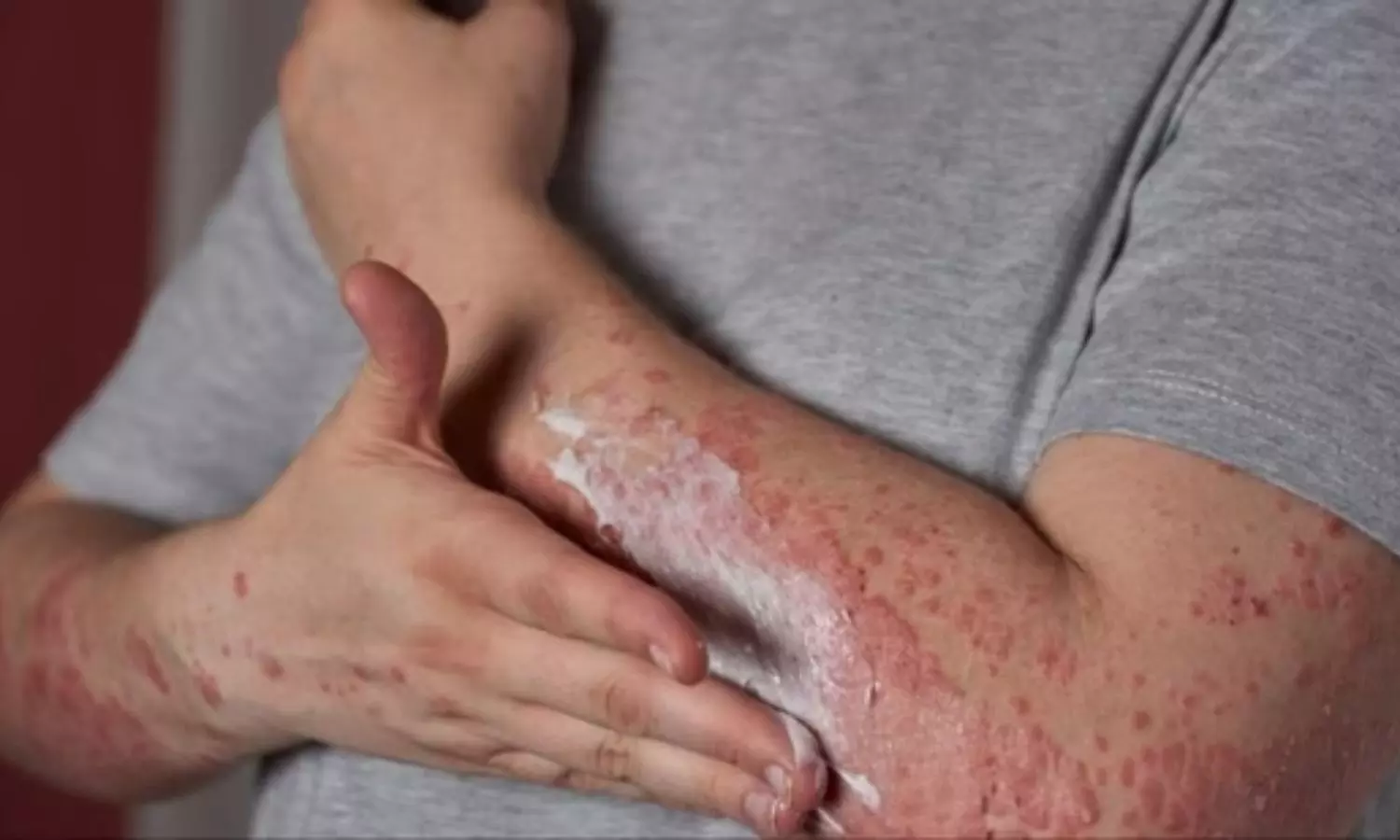


In a study published in Lancet Rheumatology, enpatoran demonstrated significant improvements in skin disease activity among patients with cutaneous lupus erythematosus and systemic lupus erythematosus (SLE) with skin involvement. All three evaluated doses, 25 mg, 50 mg, and 100 mg, performed better than placebo in improving skin outcomes. The treatment was also well tolerated across dosing groups, with safety data indicating a favorable tolerability profile. These findings suggest that enpatoran may represent a promising new therapeutic option for managing lupus-related skin diseases. The study was conducted by Prof Eric F Morand and colleagues.
Researchers conducted WILLOW, which is a phase 2, randomized, double-blind, placebo-controlled, basket, dose-finding clinical study. The enormous process of running the study involved 132 highly specialized clinical research centers across 22 countries recruiting two groups of patients for the purpose of assessing various phases of the condition. The publication of Cohort A assessed patients between 18 and 75 years with either isolated CLE or SLE without additional organ activity or with minimal organ involvement as characterized by BILAG-2004 scores of 1B, C, or D.
To ensure that there was an active baseline state of skin involvement, all patients recruited for the study had a baseline CLASI-A score of 8 or more. Subjects were randomly allocated in an equally balanced 1:1:1:1 manner to a daily placebo or active drug in doses of 25 mg, 50 mg, or 100 mg taken orally twice per day over a period of 24 weeks while continuing their baseline standard therapy. The key objective of the study was to find out the dose-response relationship using changes in CLASI-A score by 16 weeks compared to the baseline level.
Key findings:
- A total number of 463 participants were evaluated for inclusion into either cohort, out of which 102 patients successfully enrolled and received treatment under the Cohort A efficacy assessment arm.
- Although 102 patients formed part of the safety evaluations, 2 participants were excluded from analysis on account of their varying screen scores; hence, forming the final complete analysis set of 100 patients for efficacy assessments.
- Efficacy patient population was equally distributed among four separate arms of the efficacy assessment; 26 patients were enrolled in the placebo group, 23 patients received a dose of 25mg enpatoran, 25 patients took 50mg, and 26 received a higher dose of 100mg.
- The analyzed participant population consisted of patients with a median age of 47 years, interquartile ranges of 36-55 years and a distribution of 77 females (77%) and 48 White patients (48%).
- At week 16, enpatoran achieved a highly significant, dose-dependent drop-in skin disease activity (p = 0.0002), yielding an adjusted mean change in CLASI-A scores of –64 percentage points in the 25 mg group, –68 percentage points in the 50 mg group, and –72 percentage points in the high-dose 100 mg group, compared to a modest –44 percentage points in the placebo control arm.
- The most common treatment-emergent adverse event reported across all groups was an upper respiratory tract infection, occurring in 8% of the 25 mg group (2 out of 24), 15% of the 50 mg group (4 out of 26), 19% of the 100 mg group (5 out of 26), and 8% of the placebo group (2 out of 26).
- Serious adverse events remained exceptionally rare and well-distributed, affecting 8% of the 25 mg cohort (2 patients), 4% of the 100 mg cohort (1 patient), 4% of the placebo group (1 patient), and registering an absolute 0% within the 50 mg treatment arm.
In summary, enpatoran demonstrated a dose-dependent response in terms of reducing disease activity among individuals with active cutaneous features of either CLE or SLE. The impressive findings of the WILLOW trial phase 2 are of paramount importance to the field of clinical immunology, since they prove beyond any shadow of doubt that inhibition of internal nucleic acid pathways is a very effective approach.
Reference:
Morand, E. F., Werth, V. P., Wenzel, J., Furie, R., Dall’Era, M., Sanchez-Guerrero, J., Roy, S., Goodson, S. G., Moreau, F., Gühring, H., Sgouroudi, E., Klopp-Schulze, L., & Pearson, D. R. (2026). Efficacy and safety of enpatoran, a Toll-like receptor 7/8 inhibitor, in patients with skin manifestations of cutaneous lupus erythematosus or systemic lupus erythematosus: findings from Cohort A of a multicentre, international, double-blind, placebo-controlled, dose-finding phase 2 trial. The Lancet. Rheumatology. https://doi.org/10.1016/S2665-9913(25)00337-6