
- Home
- Medical news & Guidelines
- Anesthesiology
- Cardiology and CTVS
- Critical Care
- Dentistry
- Dermatology
- Diabetes and Endocrinology
- ENT
- Gastroenterology
- Medicine
- Nephrology
- Neurology
- Obstretics-Gynaecology
- Oncology
- Ophthalmology
- Orthopaedics
- Pediatrics-Neonatology
- Psychiatry
- Pulmonology
- Radiology
- Surgery
- Urology
- Laboratory Medicine
- Diet
- Nursing
- Paramedical
- Physiotherapy
- Health news
- Fact Check
- Bone Health Fact Check
- Brain Health Fact Check
- Cancer Related Fact Check
- Child Care Fact Check
- Dental and oral health fact check
- Diabetes and metabolic health fact check
- Diet and Nutrition Fact Check
- Eye and ENT Care Fact Check
- Fitness fact check
- Gut health fact check
- Heart health fact check
- Kidney health fact check
- Medical education fact check
- Men's health fact check
- Respiratory fact check
- Skin and hair care fact check
- Vaccine and Immunization fact check
- Women's health fact check
- AYUSH
- State News
- Andaman and Nicobar Islands
- Andhra Pradesh
- Arunachal Pradesh
- Assam
- Bihar
- Chandigarh
- Chattisgarh
- Dadra and Nagar Haveli
- Daman and Diu
- Delhi
- Goa
- Gujarat
- Haryana
- Himachal Pradesh
- Jammu & Kashmir
- Jharkhand
- Karnataka
- Kerala
- Ladakh
- Lakshadweep
- Madhya Pradesh
- Maharashtra
- Manipur
- Meghalaya
- Mizoram
- Nagaland
- Odisha
- Puducherry
- Punjab
- Rajasthan
- Sikkim
- Tamil Nadu
- Telangana
- Tripura
- Uttar Pradesh
- Uttrakhand
- West Bengal
- Medical Education
- Industry
Home-Use Low-Level Laser Therapy Improves Androgenetic Alopecia Over 12 Months: Study
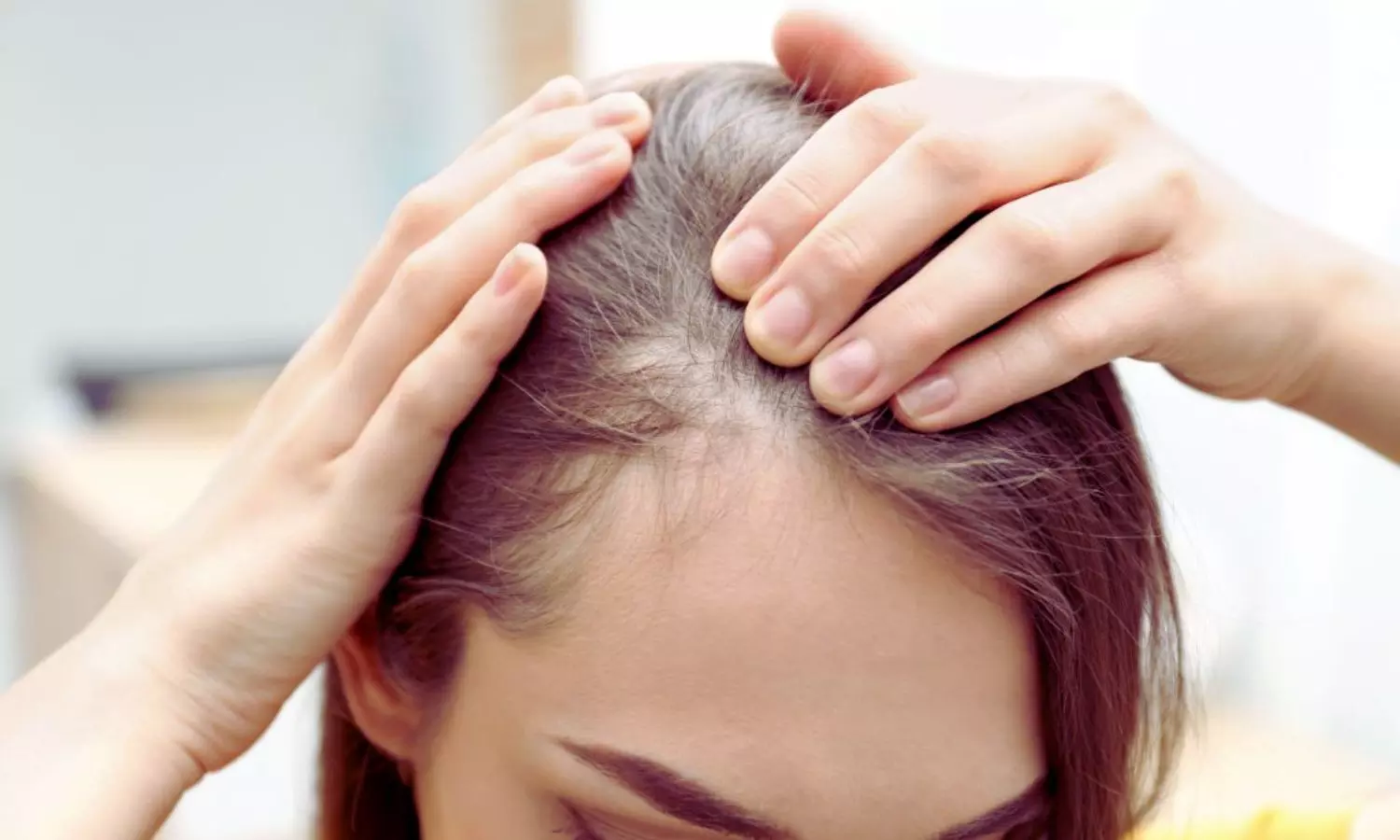
According to a 48-week study, home-based, helmet-type low-level laser therapy (LLLT) used three times weekly significantly improved hair density and thickness in patients with androgenetic alopecia. Participants experienced an average increase of 25 hairs/cm² and a 15% rise in hair thickness, with high satisfaction, good adherence, and no reported adverse events, supporting the safety and sustained efficacy of long-term Low-level laser therapy use at home.
Low-level laser therapy (LLLT) has emerged as a nonpharmacologic intervention for androgenetic alopecia (AGA), but evidence on its long-term efficacy remains limited. A study was done to evaluate the 12-month effectiveness and safety of a home-use helmet-typeLow-level laser therapy device in individuals withandrogenetic alopecia. This prospective, open-label study enrolled 68 patients (51 men, 17 women) with mild to severe androgenetic alopecia. Participants used a helmet-type Low-level laser therapy device emitting red light (646–675 nm) three times per week for 20 min over 48 weeks.
Hair density and shaft thickness were assessed using phototrichogram at predefined intervals. Additional evaluations included blinded global photographic assessments and patient-reported outcomes. Results: Hair density increased significantly from a baseline mean of 99.2 ± 27.7 to 124.2 ± 33.1 hairs/cm2 at 48 weeks (mean change +25.0 ± 28.1, p < 0.0001). Mean hair shaft thickness rose from 65.1 ± 11.8 to 74.9 ± 12.6 μm (p < 0.0001), reflecting an approximate 15% improvement. Gains were consistent across sexes and androgenetic alopecia severity levels. By Week 48, 59% of participants were rated as improved based on global photographs, and over 85% expressed satisfaction with treatment. No adverse events related to the device were reported, and adherence was high throughout the study.
Shin, Jung-Won, Paik, Kyungho, Na, Jung-Im, Lew, Bark-Lynn, Huh, Chang-Hun, Long-Term Efficacy and Safety of Low-Level Laser Therapy for Androgenetic Alopecia: A 12-Month Prospective Trial, Dermatologic Therapy, 2026, 6621458, 8 pages, 2026. https://doi.org/10.1155/dth/6621458
Dr. Shravani Dali has completed her BDS from Pravara institute of medical sciences, loni. Following which she extensively worked in the healthcare sector for 2+ years. She has been actively involved in writing blogs in field of health and wellness. Currently she is pursuing her Masters of public health-health administration from Tata institute of social sciences. She can be contacted at editorial@medicaldialogues.in.
Dr Kamal Kant Kohli-MBBS, DTCD- a chest specialist with more than 30 years of practice and a flair for writing clinical articles, Dr Kamal Kant Kohli joined Medical Dialogues as a Chief Editor of Medical News. Besides writing articles, as an editor, he proofreads and verifies all the medical content published on Medical Dialogues including those coming from journals, studies,medical conferences,guidelines etc. Email: drkohli@medicaldialogues.in. Contact no. 011-43720751

