
Photobiomodulation Shows Promise as Safe Adjunct in Scar Management: Study
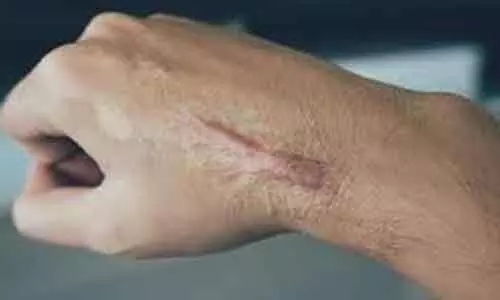


A new study published in the journal of Lasers in Medical Science reveled that red and near-infrared photobiomodulation (PBM) is a safe, non-invasive option for managing early burn and post-surgical scars. However larger trials are needed to establish optimal treatment parameters.
Scars from burns, surgery, or injury, can lead to persistent pain, itching (pruritus), limited mobility, and cosmetic distress. Standard treatments, including topical agents, compression therapy, and corticosteroid injections, often yield inconsistent results. Now, studies are turning their attention to photobiomodulation, a non-invasive technique that uses specific wavelengths of light to influence tissue repair.
This review examined 7 clinical studies involving 297 patients, which focused on red light (633–670 nm) and near-infrared light (808–830 nm) delivered through light-emitting diodes (LEDs) or low-level laser therapy (LLLT). This study determined whether PBM could meaningfully improve scar appearance and symptoms across burn, hypertrophic, and post-surgical cases.
These findings indicate that red-light PBM may significantly improve several aspects of burn scars, including pigmentation, thickness, and overall appearance, as measured by the Vancouver Scar Scale (VSS). The patients with newer scars experienced greater benefits, which suggested early intervention may be key.
In post-surgical scars, red LED therapy was linked to reduced tissue hardness (induration) and better patient-reported outcomes using the Patient and Observer Scar Assessment Scale (POSAS). This research observed a biphasic dose-response, where moderate light doses were more effective than either low or high doses.
Near-infrared PBM also showed encouraging results, particularly in hypertrophic scars. The patients experienced improvements in scar color and elasticity, along with reductions in thickness, stiffness, pain, and itching. These benefits were reported across various surgical contexts, including hernia repair, thyroid surgery, and cosmetic eyelid procedures.
Across all studies, PBM was generally well tolerated. The most common side effects were mild and temporary, such as redness and warmth at the treatment site. Rare cases of blistering were reported, primarily at higher energy levels.
Despite these findings, this research caution that the current evidence base remains limited. The included studies were relatively small and varied widely in their treatment parameters, making it difficult to establish standardized guidelines. Differences in wavelength, dosage (fluence), treatment frequency, and patient characteristics all contribute to the challenge of drawing definitive conclusions.
Overall, these findings highlight that light-based therapy could become a mainstream tool in improving both the physical and psychological burden of scarring.
Reference:
Gaumond, S. I., Dreifus, E. M., Mittal, A., & Eber, A. E. (2026). Red and near-infrared photobiomodulation for burn, hypertrophic, and post-surgical scars: a scoping review of clinical trials. Lasers in Medical Science, 41(1). https://doi.org/10.1007/s10103-026-04875-8

