Ritlecitinib Effective and Well-Tolerated for Severe Alopecia Areata, suggests study
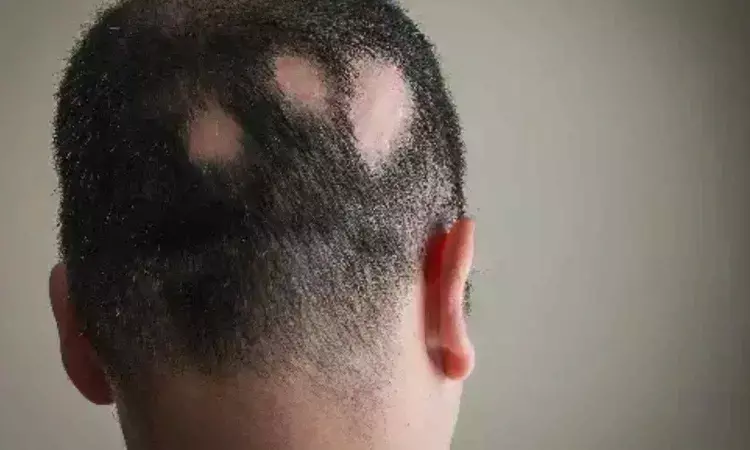


Researchers have found in a multicentre real-world study that ritlecitinib 50 mg/day was found to be an effective and well-tolerated treatment for patients with severe alopecia areata. The study was published in the American Journal of Clinical Dermatology by Michela S. and colleagues. In this multicenter observational study, significant clinical improvement was seen in 40.2% of patients after 24 weeks, showing a marked reduction in the severity of the condition and improvement in quality of life.
Alopecia areata, especially in its severe form, is a challenging autoimmune condition for which there are few effective and long-lasting treatments. Recently, approval for ritlecitinib has paved the way for interest in its use in the real world. Ritlecitinib is a small-molecule inhibitor of Janus kinase 3 and the TEC kinase family. These kinases have shown immunomodulatory potential in interrupting the autoimmune cascade in alopecia areata.
This was an Italian multicenter retrospective observational study undertaken over 24 weeks. A total of 102 patients ≥12 years of age with severe alopecia areata were included in this study. All of these patients had a Severity of Alopecia Tool (SALT) score of ≥50 and a disease duration of ≥6 months, making them eligible for systemic therapy.
Oral administration of 50 mg/day of ritlecitinib, as per national treatment guidelines, was administered to the patients. The percentage of patients achieving a SALT score of ≤20 at 24 weeks of therapy was considered the primary outcome measure of this study. Achievement of SALT ≤10, change in SALT, trichoscopic findings, quality of life, psychological effects, and effects on eyebrows, eyelashes, and nails were considered secondary outcome measures of this study. In addition, safety and tolerability were also assessed in this study.
Key findings:
• It is noted that 40.2% of patients reached the primary endpoint of SALT ≤ 20 at 24 weeks.
• In addition, the response rate of adolescents receiving ritlecitinib was higher than that of adults.
• In the adult group, only 21.9% of patients reached the endpoint of SALT ≤ 20, whereas 48.6% of patients in the adolescent group reached the endpoint.
• Such results may indicate the potential age difference in the response rate.
• In addition, the SALT score decreased significantly from 86.2 ± 18.5 at baseline to 40.8 ± 37.1 at 24 weeks.
• More clinical improvements have been noted.
• In addition to the hair on the scalp, ritlecitinib showed its efficacy beyond hair loss. Its efficacy has been noted on the eyebrows, eyelashes, and nails.
Ritlecitinib 50 mg/day was shown to be effective and safe in patients with severe alopecia areata. There was a significant improvement in the severity and quality of life in patients after 24 weeks of treatment. Ritlecitinib is a useful drug in clinical practice.
Reference:
Starace, M., Rapparini, L., Pampaloni, F. et al. Ritlecitinib for Severe Alopecia Areata: A 24-Week, Multicentre, Real-World Study. Am J Clin Dermatol (2026). https://doi.org/10.1007/s40257-026-01022-5