Topical PCO proved safe and effective for xanthelasma treatment: Study
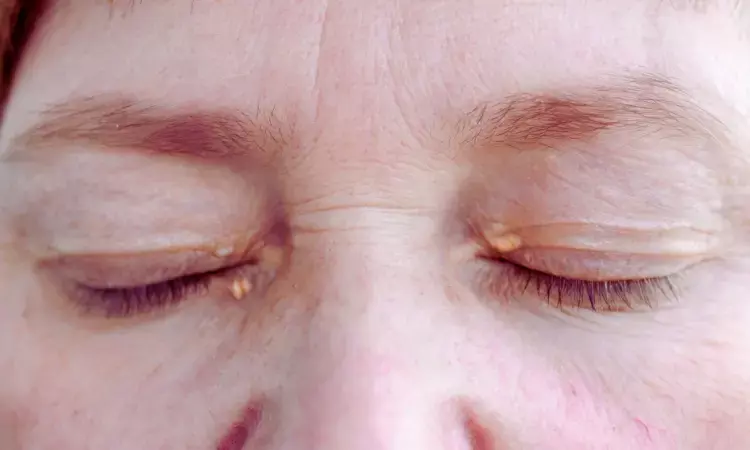


The use of topical phenol-croton oil has been proven to be safe, easy to apply, and inexpensive, with only a few sessions required for the treatment of xanthelasma palpebrarum, thus endorsing its practical role in therapy. Xanthelasma palpebrarum is a benign lipid deposition disorder of the eyelids that is often associated with considerable cosmetic concern and psychosocial distress, yet there is no generally accepted standard of care treatment for this disease. A recent study was published in the Journal of Cosmetic Dermatology by Gulsen A. and colleague.
The main purpose of the research was to evaluate the clinical and cosmetic outcomes of the application of phenol–croton oil in patients with xanthelasma palpebrarum, focusing on lesion clearance, reduction in the severity of lesions, satisfaction of patients, and adverse effects resulting from the procedures.
This was a retrospective analysis conducted on 10 patients treated with a solution containing 60% phenol and 1% croton oil by topical application. The cohort consisted of five males and five females aged between 30 and 62 years. Clinical assessment regarding XP severity, the extent of lesion involvement, and post-treatment response was performed by reviewing photographic documentation and medical records. Cosmetic outcomes were measured using physician-reported VAS scores, ranging from 1 to 6, and patient self-reported VAS scores.
Results
• The severity scores of xanthelasma ranged from 5 to 10, with 60% of participants categorized as having severe disease.
• A total of 90% of patients demonstrated clinical benefit from the treatment, with complete cure observed in 60% and more than 60% improvement noted in an additional 30% following one to three treatment sessions.
• Three patients developed postprocedural erythema, which resolved spontaneously over time.
• Four patients developed postinflammatory hypopigmentation, although this was said to be barely noticeable during follow-up.
• Most patients rated their cosmetic satisfaction with a VAS score of 5 or higher. Except for one patient who expressed dissatisfaction due to dyspigmentation, all others indicated willingness to recommend the procedure to other individuals seeking treatment for XP.
It was confirmed in this study that topical application of 60% phenol and 1% croton oil could be a safe, effective, and inexpensive treatment for xanthelasma palpebrarum; it yielded high rates of lesion clearance and cosmetic satisfaction, with minimal and transient side effects. Such findings have supported its potential as a practical therapeutic option in the management of XP, especially for patients prioritizing nonsurgical and easily applicable treatments.
Reference: