
Vagus Nerve Stimulation Shows Promise for Treating Facial Redness in Rosacea: Study
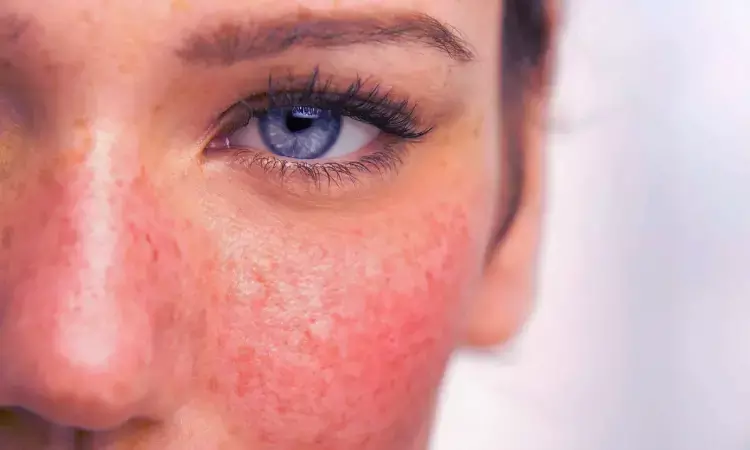


China: A noninvasive neuromodulation technique may offer a promising new treatment option for patients with erythematotelangiectatic rosacea (ETR), a subtype of rosacea marked by persistent facial redness and frequent flushing.
According to a randomized clinical trial led by Jian Li from the Department of Dermatology at The Third Affiliated Hospital of Chongqing Medical University, transcutaneous auricular vagus nerve stimulation (taVNS) significantly improved both skin-related symptoms and associated systemic complaints in patients with ETR. The findings, published in JAMA Dermatology, support taVNS as an effective and well-tolerated therapeutic approach for this challenging condition.
Managing facial erythema and flushing in ETR remains difficult, as current therapies often provide incomplete or temporary relief. Growing evidence suggests that dysregulation of the neuroimmune system and autonomic nervous system plays a role in rosacea pathogenesis, prompting interest in vagus nerve–based interventions. While taVNS has shown benefit in other inflammatory and neuropsychiatric conditions, its role in ETR had not previously been evaluated in a rigorously designed randomized trial.
To address this gap, the investigators conducted a single-center, randomized, double-blind, sham-controlled device trial at a dermatology center in China. Enrollment began in February 2024 and concluded in August 2024, with follow-up completed by February 2025. The study included adult patients diagnosed with ETR who had at least moderate erythema, defined by a Clinician’s Erythema Assessment (CEA) score of 2 or higher.
Seventy-two participants were randomly assigned in equal numbers to receive either active taVNS or sham stimulation. The taVNS protocol involved daily 30-minute sessions using stimulation pulses delivered to the auricular branch of the vagus nerve at a frequency of 30 Hz and a pulse width of 200 microseconds. Both groups underwent three weeks of treatment, followed by a 24-week observation period.
Key Findings:
- Patients treated with transcutaneous auricular vagus nerve stimulation showed a significant reduction in facial erythema compared with the sham group, reflected by notably lower mean Clinician’s Erythema Assessment scores and clinically meaningful improvement in redness severity.
- In addition to improving skin symptoms, taVNS was associated with fewer flushing episodes and overall improvement in several common comorbid manifestations of erythematotelangiectatic rosacea.
- Participants receiving taVNS reported significant and sustained reductions in anxiety and depressive symptoms throughout the follow-up period.
- Improvements were also observed in sleep quality, migraine frequency, and fatigue, indicating broader systemic benefits beyond cutaneous symptom control.
- Adverse events were uncommon and mild in both the taVNS and sham groups, supporting the safety and good tolerability of this noninvasive treatment approach.
"Overall, the study demonstrates that taVNS can effectively reduce facial erythema while simultaneously alleviating associated neuropsychological and systemic symptoms in patients with ETR. These findings position taVNS as a novel and promising therapeutic option in rosacea management and warrant further investigation to confirm its long-term efficacy and integration into routine dermatologic care," the authors concluded.
Reference:
Li J, Wei J, Zhang M, et al. Transcutaneous Auricular Vagus Nerve Stimulation Treatment for Erythematotelangiectatic Rosacea: A Randomized Clinical Trial. JAMA Dermatol. 2025;161(12):1229–1237. doi:10.1001/jamadermatol.2025.3796

Next Story