136 million Indians Are Living with Prediabetes: Are We Screening Early Enough?-Dr Aniket Oswal
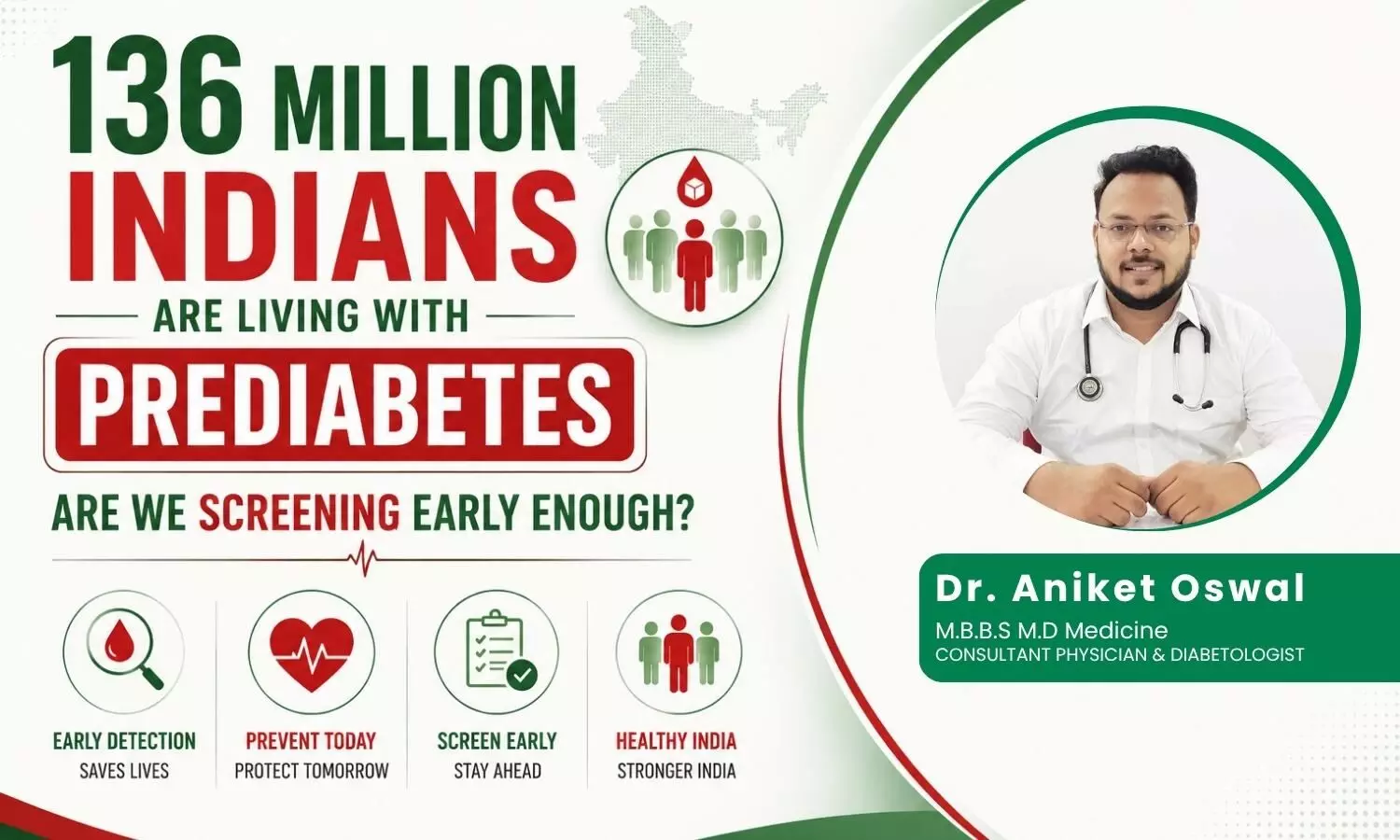


India has overtaken many countries in the burden of diabetes, but an even larger, often overlooked challenge is prediabetes. According to the Indian Council of Medical Research–India Diabetes (ICMR-INDIAB) study, an estimated 136 million Indian adults (15.3%) are living with prediabetes, exceeding the number of people already diagnosed with diabetes (1). Prediabetes encompasses impaired fasting glucose (IFG), impaired glucose tolerance (IGT), or both, representing an intermediate metabolic state where blood glucose levels are higher than normal but not yet in the diabetes range (2). While the condition is largely asymptomatic, it signals ongoing metabolic dysfunction and offers perhaps the greatest opportunity to halt the diabetes epidemic before irreversible damage occurs. Unfortunately, millions remain undiagnosed because routine screening is still not widely implemented in high-risk populations (2).
Prediabetes is defined by fasting plasma glucose of 100–125 mg/dL, 2-hour plasma glucose of 140–199 mg/dL following a 75-g oral glucose tolerance test, or HbA1c of 5.7–6.4%, according to the American Diabetes Association (ADA) (2).
Why Are Indians More Vulnerable to Prediabetes & Related Metabolic Risks?
South Asians develop insulin resistance and beta-cell dysfunction at a younger age and lower body mass index than many Western populations due to genetic predisposition, increased visceral adiposity, and reduced insulin secretory capacity (3). Coupled with carbohydrate-rich diets, sedentary lifestyles, chronic stress, and rapid urbanisation, these factors accelerate progression toward diabetes (3).
The concern is not merely the high prevalence of prediabetes but its rapid progression. Studies suggest that 5–10% of individuals with prediabetes progress to type 2 diabetes annually, while the risk is substantially higher among those with combined IFG and IGT or multiple metabolic risk factors (4). Conversely, timely lifestyle intervention could support the return of many individuals to normoglycaemia, highlighting the reversible nature of the condition (5).
Why Early Screening for Prediabetes Matters?
One of the greatest challenges in prediabetes is that most individuals remain asymptomatic. Unlike overt diabetes, prediabetes rarely presents with classic symptoms such as excessive thirst, frequent urination or unexplained weight loss, allowing the condition to go undetected for years. Despite the absence of symptoms, it frequently coexists with metabolic abnormalities including central obesity, hypertension, dyslipidaemia, metabolic dysfunction-associated steatotic liver disease (MASLD), polycystic ovary syndrome (PCOS) [now, PMOS], obstructive sleep apnea (OSA) and erectile dysfunction (ED), all of which indicate an elevated cardiometabolic risk (2,6–8).
Importantly, prediabetes is far more than a state of mildly elevated blood glucose. Evidence suggests that metabolic and vascular damage begins well before diabetes is diagnosed, with prediabetes being associated with cardiovascular disease, chronic kidney disease, cognitive impairment and increased all-cause mortality (2,4).
Recognising these risks early provides a critical opportunity for timely screening, risk stratification and interventions to delay or prevent progression to type 2 diabetes and its complications.
Cardiovascular disease deserves particular attention. A meta-analysis of 129 prospective studies involving more than 10 million participants showed that prediabetes is associated with a 15% higher risk of cardiovascular disease, a 16% higher risk of coronary heart disease, and a 14% higher risk of stroke, along with a 13% increase in all-cause mortality, compared with normoglycaemia (10).
Long before diabetes is diagnosed, prediabetes is characterized by insulin resistance, chronic low-grade inflammation, endothelial dysfunction, and atherogenic dyslipidaemia, all of which contribute to early vascular injury and increased cardiovascular risk (4).
This growing body of evidence reinforces that prediabetes is not merely a warning sign—it is an active disease state requiring clinical attention.
Lifestyle Interventions Are Important, But Are They Sufficient in the Real World?
Lifestyle modification remains the cornerstone of preventing progression from prediabetes to type 2 diabetes. The Diabetes Prevention Program (DPP) demonstrated that intensive lifestyle intervention reduced diabetes incidence by 58%, highlighting its effectiveness under structured conditions (11). Current recommendations include achieving 5–10% weight loss, engaging in at least 150 minutes of moderate-intensity physical activity each week, adopting a healthy diet rich in fibre and low in refined carbohydrates, and avoiding tobacco use (2,9).
However, sustaining these lifestyle changes in routine clinical practice remains challenging. Lifestyle modification requires long-term motivation, behavioural support and consistent adherence, which are often difficult to maintain outside structured programmes. Real-world Indian data highlight this gap: the ICMR-INDIAB study found that 54.4% of adults were physically inactive and fewer than 10% participated in recreational physical activity, underscoring the challenges of achieving sustained lifestyle change at the population level (12). Consequently, while lifestyle intervention remains the foundation of prediabetes management, many high-risk individuals may require additional individualized strategies alongside continued lifestyle modification (2,9).
Figure: Prediabetes- Burden, Risks and Vulnerabilities in Indian Context
Proactive Intervention in Prediabetes – A Responsibility Towards Society as a Metabolic Clinician
Prediabetes represents perhaps the last opportunity to prevent lifelong diabetes and its complications. Every delayed diagnosis increases the likelihood of irreversible vascular damage.
While lifestyle intervention should always be the first-line approach, metformin may be considered in selected high-risk individuals, including younger adults with obesity, women with prior gestational diabetes and those with worsening glycaemia despite lifestyle modification, as recommended by the ADA and Indian expert consensus and supporting evidence from recent review (2,9,13).
It is noteworthy that metformin is approved for the prevention or delay of type 2 diabetes in people with prediabetes in nearly 66 countries (14).
Routine screening using fasting glucose or HbA1c during annual health check-ups can identify high-risk individuals’ years before diabetes develops. Earlier diagnosis also creates opportunities to simultaneously address hypertension, dyslipidaemia, obesity and fatty liver disease, thereby reducing long-term cardiovascular risk.
Quick Take
• 136 million Indians have prediabetes, more than diabetes itself.
• Prediabetes is an active cardiometabolic disease, not a benign precursor.
• Screen high-risk individuals early using fasting glucose and/or HbA1c.
• Lifestyle intervention is first-line; consider metformin in eligible high-risk patients.
• Early detection and intervention can delay or prevent type 2 diabetes and its complications.
Expert Point of View
Every consultation with a high-risk patient is an opportunity to prevent diabetes rather than simply diagnose it later. Earlier detection of prediabetes, coupled with structured lifestyle intervention and appropriate evidence-based pharmacotherapy with metformin in selected individuals, has the potential to transform India's diabetes trajectory.
Practice Takeaways
- India's prediabetes burden now exceeds 136 million people, making it one of the country's largest preventable public health challenges.
- The condition is silent, reversible and frequently overlooked despite its association with cardiovascular disease and several other chronic disorders.
- Screening high-risk individuals earlier, increasing public awareness and implementing evidence-based lifestyle interventions could prevent millions of future diabetes cases. As increasingly emphasised, prediabetes should no longer be viewed as "borderline diabetes" but as a critical window for prevention that healthcare systems cannot afford to miss.
Abbreviations: ICMR-INDIAB- Indian Council of Medical Research–India Diabetes; PCOS- Poly-Cystic Ovary Syndrome; IFG- Impaired Fasting Glucose; IGT- Impaired Glucose Tolerance; ADA- American Diabetes Association; DPP- Diabetes Prevention Program
- 1. Metabolic non-communicable disease health report of India: the ICMR-INDIAB National Cross-sectional Study.Lancet Diabetes Endocrinol.11474-489
- 2. American Diabetes Association Professional Practice Committee. 2. Diagnosis and Classification of Diabetes: Standards of Care in Diabetes—2025.Diabetes Care.27-49
- 4. Prediabetes: a high-risk state for diabetes developmentLancet.2279-2290
- 5. Reduction in the incidence of type 2 diabetes with lifestyle intervention or metformin.N Engl J Med.393-403
- 6. Polycystic ovary syndrome and type 2 diabetes mellitus: A state-of-the-art review.World J Diabetes.135-26
- 7. Sleep apnea and type 2 diabetesSleep apnea and type 2 diabetes9991-997
- 8. Erectile dysfunction and diabetes: A melting pot of circumstances and treatments.Diabetes Metab Res Rev.38
- 9. An Expert Group Consensus Statement on Approach and Management of Prediabetes in India.J Assoc Physicians India.11-12
- 10. Association between prediabetes and risk of all cause mortality and cardiovascular disease: updated meta-analysis.BMJ.
- 11. Diabetes Prevention Program Research Group. Long-term effects of lifestyle intervention or metformin on diabetes development and microvascular complications over 15-year follow-up: the Diabetes Prevention Program Outcomes Study.Lancet Diabetes Endocrinol. 20153866-875
- 12. ICMR-INDIAB Collaborative Study Group. Physical activity and inactivity patterns in India: results from the ICMR-INDIAB study (Phase-1) [ICMR-INDIAB-5].Int J Behav Nutr Phys Act.
- 13. Metformin use in prediabetes: A review of evidence and a focus on metabolic features among peri-menopausal women.Diabetes Obes Metab.3-15
- 14. Metformin in prediabetes: opportunity or over-treatment?4513-23