CYP24A1 Overexpression and Vitamin D Deficiency Linked to Malignant Thyroid Nodules, Indian Study Finds
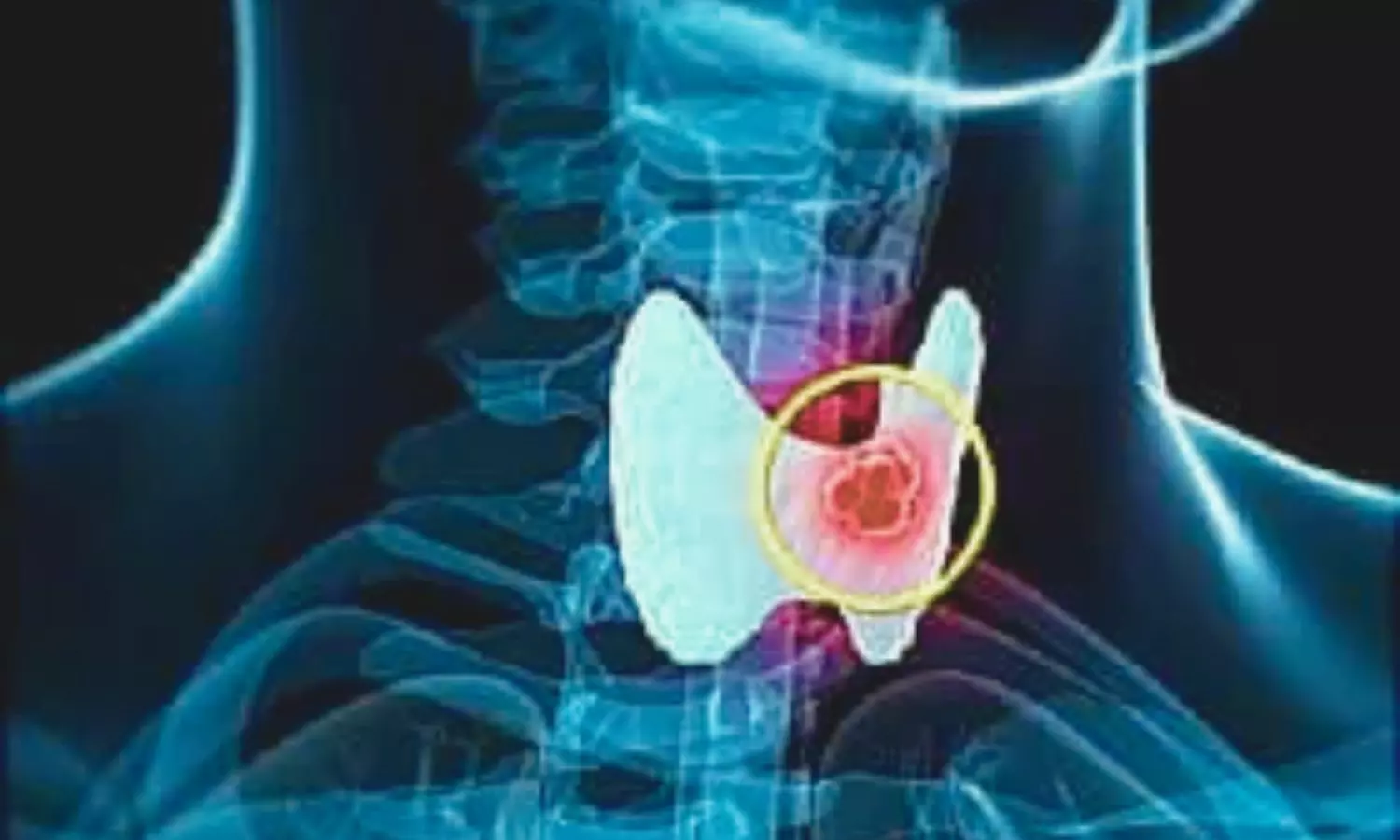


A recent study published in the Indian Journal of Endocrinology and Metabolism in August 2026 uncovered a vital oncogenic biomarker axis linking CYP24A1 messenger RNA overexpression with 25-hydroxyvitamin D deficiency in thyroid nodules. Researchers found significant CYP24A1 upregulation in 35% of papillary thyroid carcinoma cases, alongside concomitant vitamin D deficiency in 52.5% of patients.
Although thyroid nodules are detected in up to 68% of adults by high-resolution ultrasonography (USG) and prior research links impaired vitamin D signaling to thyroid carcinogenesis, the relationship between vitamin D inactivation and malignancy risk across cytological grades remains underexplored. To bridge this gap, Prof. Rijuneeta Gupta and colleagues from Post Graduate Institute of Medical Education and Research (PGIMER), Chandigarh, evaluated preoperative serum vitamin D levels and CYP24A1 mRNA expression in thyroid nodules classified by the Bethesda System for Reporting Thyroid Cytopathology.
Therefore, the prospective study evaluated 40 adults with thyroid nodules using fine-needle aspiration cytology and TIRADS scoring paired with histological verification. Quantitative real-time PCR was then used to compare tissue CYP24A1 gene expression against serum vitamin D, calcium, and TSH levels.
Key Clinical Findings of the Study Includes:
- Elevated Tumor CYP24A1 Expression: Investigators noted that CYP24A1 expression was significantly upregulated in thyroid nodules relative to normal tissue (p = 0.001), with marked overexpression in papillary thyroid carcinoma.
- High Vitamin D Deficiency Burden: Researchers observed that 52.5% of participants had decreased serum vitamin D levels, present in 63.2% (12/19) of malignant cases versus 31.6% (6/19) of benign cases.
- Concomitant Hypocalcemia Risk: Authors documented low serum calcium in 47.5% of patients, including 57.9% (11/19) of malignant cases compared to 21.1% (4/19) of benign cases.
- Diagnostic Stratification Synergy: Study data demonstrated high risk stratification capacity pairing TIRADS with Bethesda categories, accurately identifying 43% malignant pathology post-surgery.
- Biomarker Intercorrelations: Investigators established a positive correlation between serum calcium and CYP24A1 expression in nodule tissue (p = 0.003) and normal tissue (p = 0.031), alongside serum vitamin D and calcium (p = 0.008, r = 0.416).
The results suggest that CYP24A1 overexpression acts as a pivotal metabolic driver accelerating vitamin D inactivation in thyroid tissue, contributing to high burdens of vitamin D deficiency (52.5%) and hypocalcemia (47.5%) in malignant nodules. Consequently, targeting the CYP24A1 axis alongside routine preoperative screening could improve prognostic precision in thyroid malignancies.
Thus, the study concludes that clinicians evaluating patients with thyroid nodules may consider routine measurement of preoperative serum vitamin D and calcium levels alongside Bethesda cytopathology and TIRADS scoring to enhance malignant risk stratification and identify candidates for adjuvant vitamin D pathway-targeted management.
While the modest sample size of 40 patients from a single center represents a main constraint, further multi-center prospective studies with larger cohorts are warranted to validate CYP24A1 mRNA expression as a prognostic biomarker and therapeutic target in thyroid neoplasms.
Reference
Gupta R, Ravichandran N, Basotia A, Bakshi J, Nahar U, Banerjee S, Dutta P, Bhadada SK, Dey P. CYP24A1 Overexpression and Vitamin D deficiency: A potential prognostic axis in thyroid nodules classified by the Bethesda System. Indian J Endocr Metab 2026;30:363-8.