Higher TyG Index Associated With Increased Risk of Sarcopenia: Study
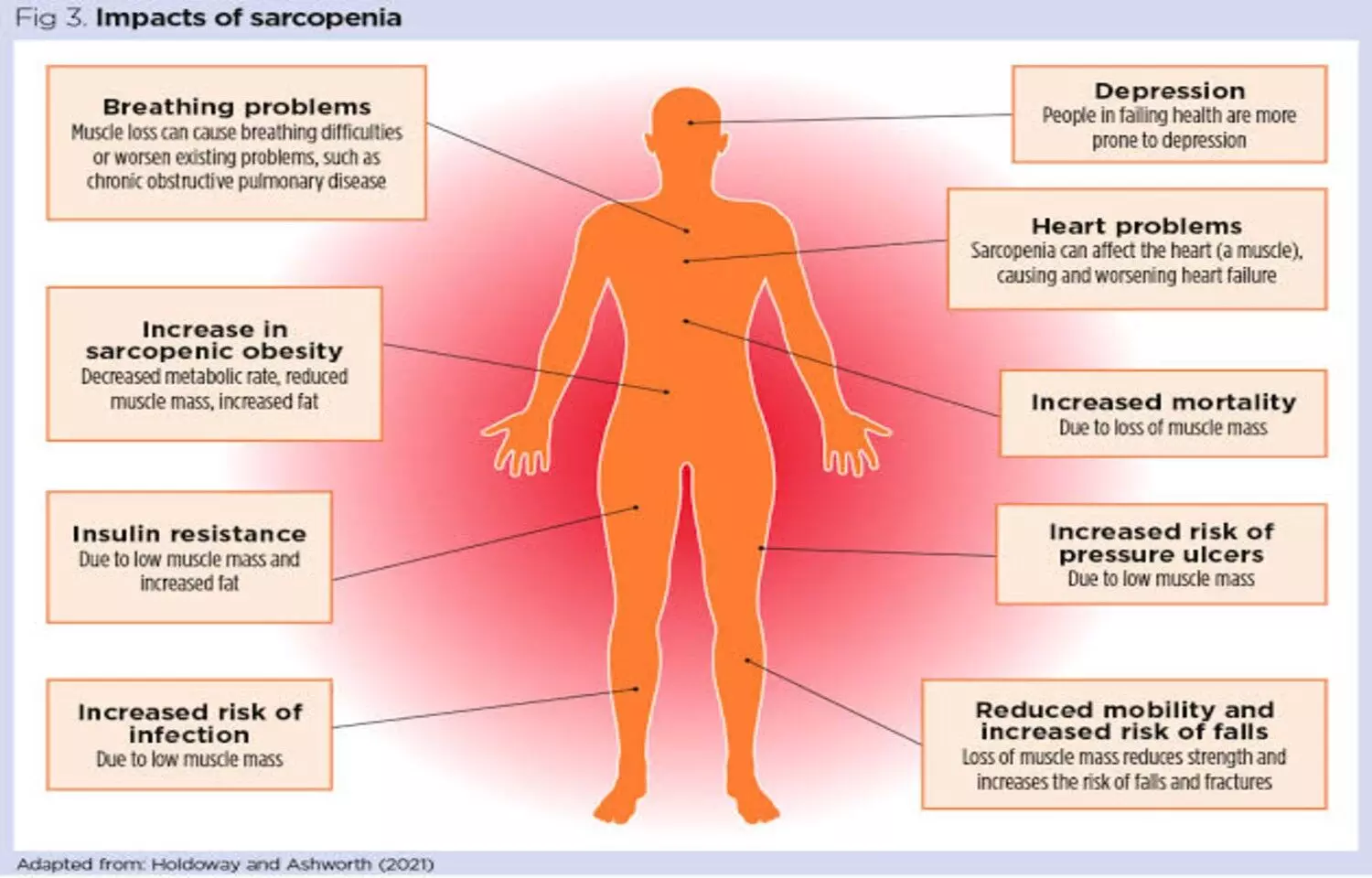


A meta-analysis found a significant association between a higher triglyceride-glucose (TyG) index and an increased risk of sarcopenia. As the TyG index rises, the prevalence of sarcopenia also increases, highlighting its potential as a simple and useful marker for early screening and timely intervention to prevent muscle loss.
With accelerating population aging, sarcopenia has become increasingly common in the elderly. Because the triglyceride-glucose index is correlated with sarcopenia, this study aims to investigate the association between the triglyceride-glucose index and sarcopenia.
A systematic search of PubMed, Web of Science, Embase, and Cochrane Library databases was conducted for relevant studies published up to June 15, 2025. Pooled odds ratios (ORs) with 95% confidence intervals (CIs) were calculated using a random-effects model in STATA 15.0.
Analysis of 14 studies (n = 82,798) revealed a significant association between the triglyceride- glucose index (TyG index) and sarcopenia. A significant correlation was also observed in the TyG quartile groups. The TyG-BMI index demonstrated a stronger association, with the strength of this association increasing significantly as the quartile level rose. Subgroup analyses revealed that the Asian Working Group for Sarcopenia 2019 (AWGS 2019) diagnostic criteria, middle-aged individuals, individuals with comorbidities, and different TyG measurement methods were also significantly associated with sarcopenia.
This meta-analysis confirms a significant association between the TyG index and sarcopenia. The prevalence of sarcopenia increases with the elevation of the TyG index. This highlights the potential value of the TyG index as a key indicator for sarcopenia screening and early intervention.
Reference:
Zou, Shuying, et al. "Association Between Triglyceride-glucose Index and Sarcopenia: a Meta-analysis." PeerJ, vol. 14, 2026, pp. e21424.
Keywords:
Higher, TyG, Index, Associated, Increased, Risk, Sarcopenia, Study, Zou, Shuying