
Needle-free sugar monitoring developed using wearable Raman spectroscopy
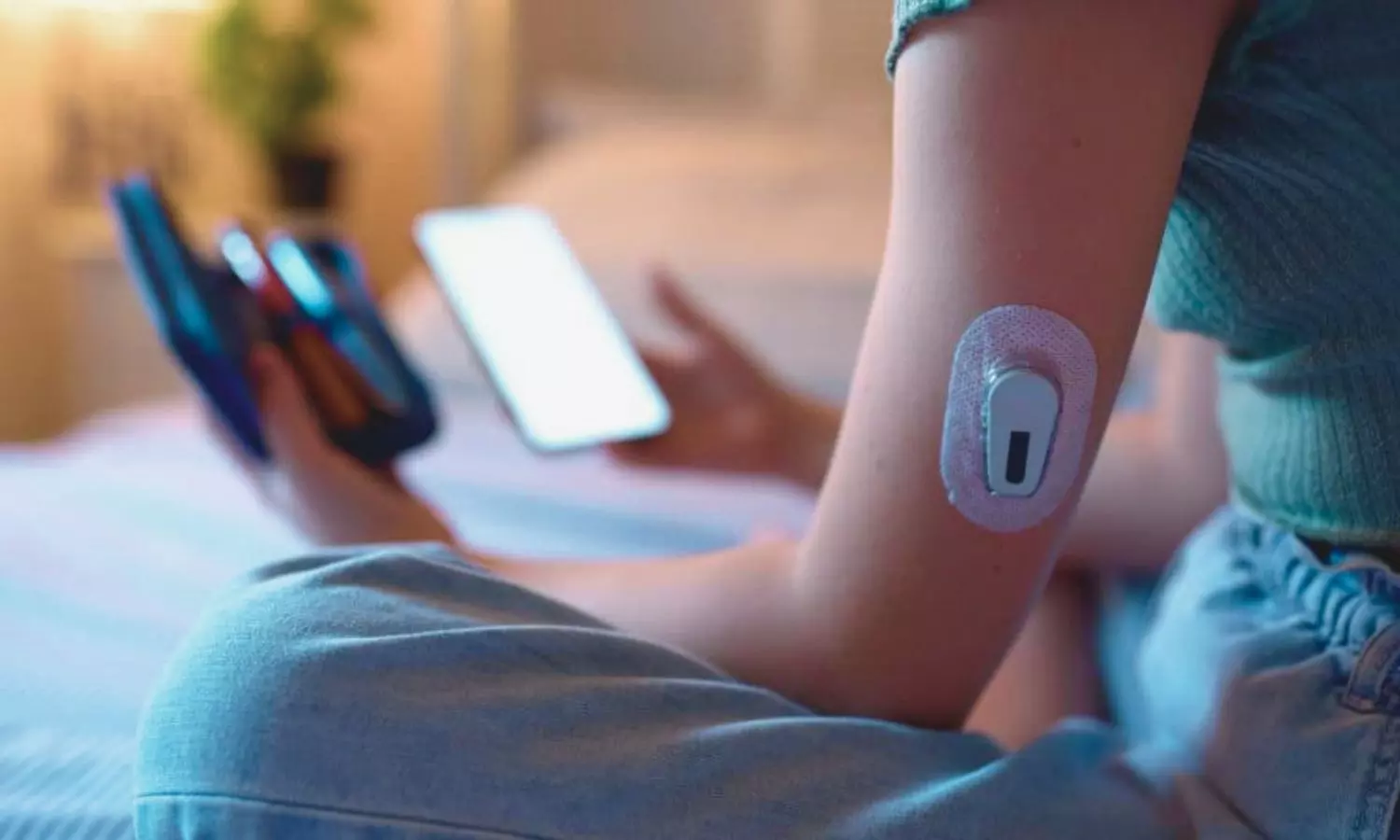


USA: MIT researchers have developed a noninvasive method to monitor glucose using Raman spectroscopy and have created a wearable prototype currently undergoing testing, raising hopes for needle-free diabetes management.
Currently, many individuals with diabetes rely on continuous glucose monitors (CGMs) that require a small sensor inserted under the skin, which typically must be replaced every 10–15 days. Others continue to use fingerstick tests, drawing blood multiple times a day to track glucose levels. Both approaches, while effective, are invasive and can be inconvenient for patients seeking more seamless glucose monitoring.
The new approach, published in Analytical Chemistry by Arianna Bresci and colleagues from MIT, employs band-pass Raman spectroscopy to detect glucose levels in the skin without the need for needles or implanted sensors. Raman spectroscopy uses light scattering to identify molecular signatures, and the researchers’ technique focuses on the specific glucose-related signals while filtering out background noise.
By employing off-axis 830 nm near-infrared light and intraspectrum referencing, the team successfully amplifies the glucose signal and compensates for variations in the surrounding tissue, enabling precise measurements even in a compact device.
One of the major innovations of this method is its miniaturization. Traditional Raman spectroscopy setups require bulky diffraction gratings and expensive CCD cameras, limiting their practical use outside a laboratory. The MIT team’s system bypasses these constraints, making the device smaller, more affordable, and suitable for point-of-care or personal use. In addition, the device captures measurements in under one minute, allowing for quick, repeated glucose monitoring throughout the day.
Validation studies included both tissue phantoms and tests on human skin, confirming that the portable system can reliably detect glucose levels at physiologically relevant concentrations. Early clinical data from healthy participants showed consistent results, although the researchers note that larger studies will be essential to fully assess the technology’s accuracy and real-world applicability.
The streamlined data processing pipeline is another key feature, focusing on relative changes within the spectrum rather than requiring the full spectral data. This makes the system more robust to varying conditions and enhances its usability outside controlled laboratory environments.
If successfully scaled and clinically validated, this wearable Raman spectroscopy device could transform diabetes management by offering a truly noninvasive, continuous glucose monitoring option. Its potential benefits include improved patient comfort, easier adherence to monitoring routines, and the ability to track glucose trends without the burden of daily fingersticks or frequent sensor replacements.
The MIT team’s work represents a significant step toward practical, noninvasive CGM technology, combining accuracy, portability, and speed. With further testing and refinement, this approach could pave the way for more accessible and convenient glucose monitoring, benefiting millions of people living with diabetes worldwide.
Reference: https://doi.org/10.1021/acs.analchem.5c01146

Next Story