
- Home
- Medical news & Guidelines
- Anesthesiology
- Cardiology and CTVS
- Critical Care
- Dentistry
- Dermatology
- Diabetes and Endocrinology
- ENT
- Gastroenterology
- Medicine
- Nephrology
- Neurology
- Obstretics-Gynaecology
- Oncology
- Ophthalmology
- Orthopaedics
- Pediatrics-Neonatology
- Psychiatry
- Pulmonology
- Radiology
- Surgery
- Urology
- Laboratory Medicine
- Diet
- Nursing
- Paramedical
- Physiotherapy
- Health news
- Fact Check
- Bone Health Fact Check
- Brain Health Fact Check
- Cancer Related Fact Check
- Child Care Fact Check
- Dental and oral health fact check
- Diabetes and metabolic health fact check
- Diet and Nutrition Fact Check
- Eye and ENT Care Fact Check
- Fitness fact check
- Gut health fact check
- Heart health fact check
- Kidney health fact check
- Medical education fact check
- Men's health fact check
- Respiratory fact check
- Skin and hair care fact check
- Vaccine and Immunization fact check
- Women's health fact check
- AYUSH
- State News
- Andaman and Nicobar Islands
- Andhra Pradesh
- Arunachal Pradesh
- Assam
- Bihar
- Chandigarh
- Chattisgarh
- Dadra and Nagar Haveli
- Daman and Diu
- Delhi
- Goa
- Gujarat
- Haryana
- Himachal Pradesh
- Jammu & Kashmir
- Jharkhand
- Karnataka
- Kerala
- Ladakh
- Lakshadweep
- Madhya Pradesh
- Maharashtra
- Manipur
- Meghalaya
- Mizoram
- Nagaland
- Odisha
- Puducherry
- Punjab
- Rajasthan
- Sikkim
- Tamil Nadu
- Telangana
- Tripura
- Uttar Pradesh
- Uttrakhand
- West Bengal
- Medical Education
- Industry
Prune Supplementation Did Not Improve Bone Density in Older Men with Low Bone Mass: Randomized Trial
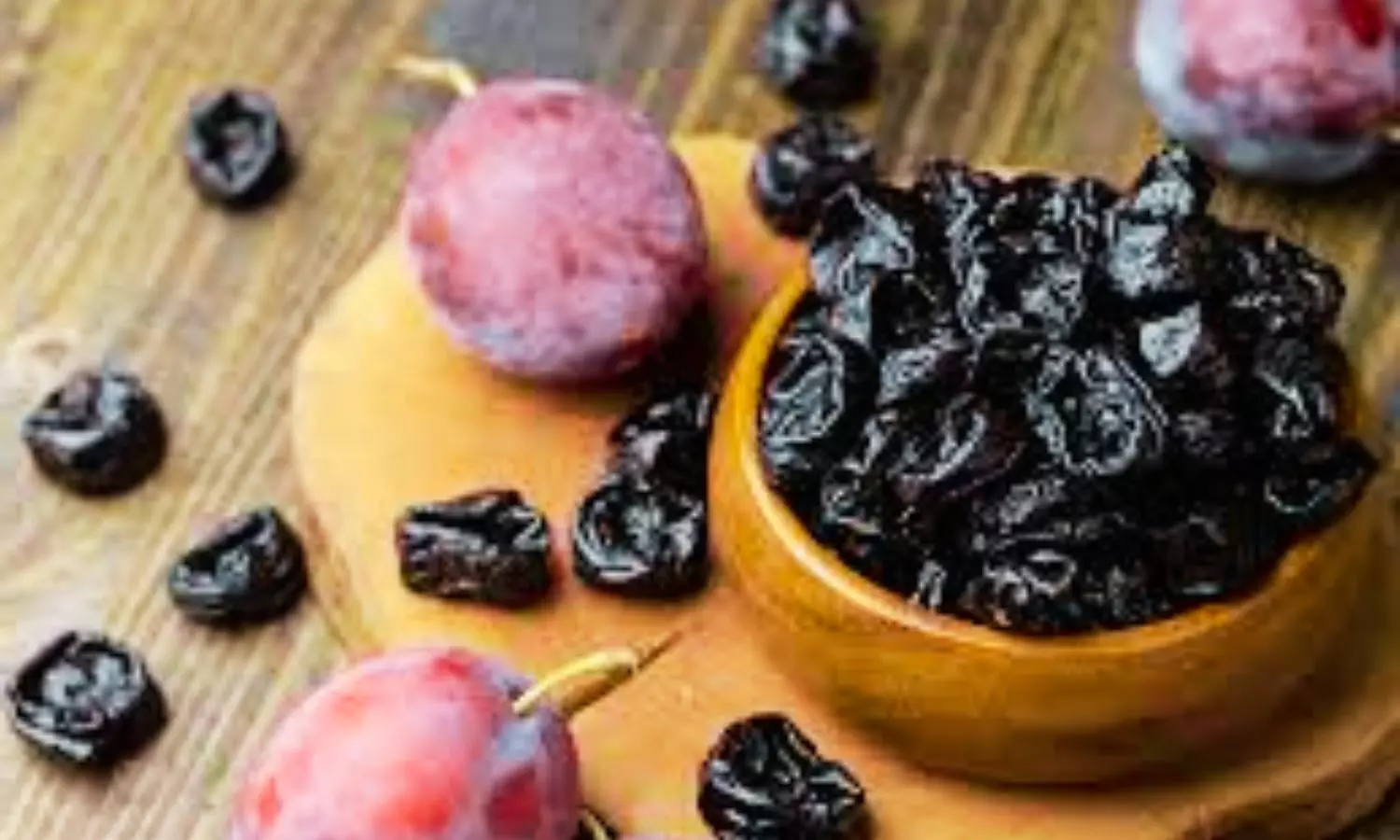
USA: A year-long randomized controlled trial published in the journal Nutrients has found that daily prune consumption did not significantly improve bone mineral density (BMD) in older men who were susceptible to, or already had, osteopenia. While some differences were observed in markers of bone metabolism, these changes did not translate into measurable improvements in bone health.
The study included 59 men aged 55–80 years with lumbar spine BMD T-scores ranging from -0.1 to -2.5. Participants were randomly assigned to consume 100 g of prunes daily, 50 g of prunes daily, or no prunes. At the same time, all groups received a multivitamin providing 450 mg of calcium and 800 IU of vitamin D3.
Bone health was evaluated using DXA scans at baseline, 3, 6, and 12 months. Blood samples were collected at the same time points to assess markers of bone formation, bone resorption, and inflammation.
- After 12 months, no significant changes were observed in total body bone mineral density (BMD) or lumbar spine BMD in any of the study groups.
- Daily prune consumption, whether 50 g or 100 g, did not provide additional benefits for maintaining or improving bone density beyond those achieved with calcium and vitamin D supplementation.
- Osteoprotegerin (OPG) levels declined in all groups over the study period.
- The reduction in OPG was significantly greater in the control group than in the groups consuming prunes.
- Tartrate-resistant acid phosphatase-5b (TRAP5b), a marker of bone resorption, increased in all groups during the study.
- The increase in TRAP5b was significantly greater in the control group compared with the group consuming 100 g of prunes daily.
- Sclerostin (SOST), a protein that inhibits bone formation, increased significantly over time in all participants.
- Researchers suggested that age-related increases in sclerostin levels may have contributed to the lack of measurable bone-density benefits from prune supplementation in older men.

MSc. Biotechnology
Medha Baranwal holds a Bachelor’s degree in Biomedical Sciences from the University of Delhi and a Master’s degree in Biotechnology from Amity University. Since May 2018, she has been contributing to Medical Dialogues, writing and editing medical news articles that translate complex research into clear, accessible information for healthcare professionals.
Dr Kamal Kant Kohli-MBBS, DTCD- a chest specialist with more than 30 years of practice and a flair for writing clinical articles, Dr Kamal Kant Kohli joined Medical Dialogues as a Chief Editor of Medical News. Besides writing articles, as an editor, he proofreads and verifies all the medical content published on Medical Dialogues including those coming from journals, studies,medical conferences,guidelines etc. Email: drkohli@medicaldialogues.in. Contact no. 011-43720751

