
Vegan diet-even with 'unhealthy' plant-based foods better for weight loss than Mediterranean diet, finds new study
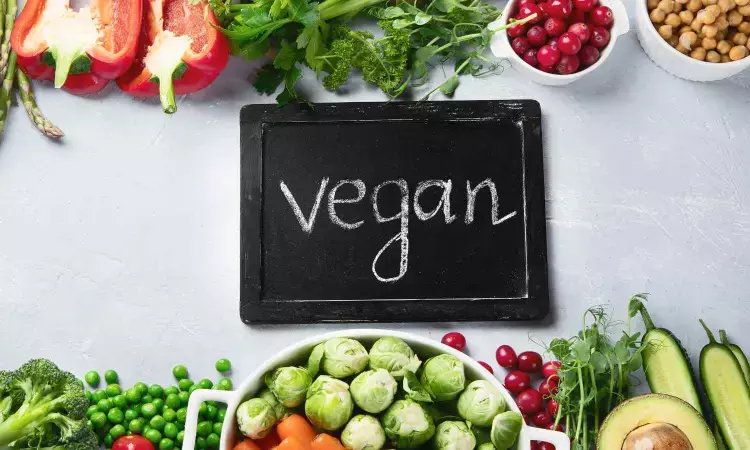


Eating a vegan diet increases consumption of plant-based foods-including those defined as "unhealthy" by the plant-based diet index-leading to greater weight loss than the Mediterranean diet, finds a new analysis by the Physicians Committee for Responsible Medicine published in Frontiers in Nutrition.
Avoiding animal products; eating foods like potatoes and refined grains, which are defined as “unhealthy” by the plant-based diet index; and avoiding added oils and nuts, which are defined as “healthy” by the plant-based diet index, all contributed to weight loss.
“Our research shows that even when a low-fat vegan diet includes so-called unhealthy plant-based foods-as defined by the plant-based diet index—like refined grains and potatoes, it’s better than the Mediterranean diet for weight loss, because it avoids animal products and added oils,” says Hana Kahleova, MD, PhD, director of clinical research at the Physicians Committee for Responsible Medicine and lead author of the study.
The new research is a secondary analysis of a previous Physicians Committee study comparing a low-fat vegan diet to a Mediterranean diet. The study randomly assigned 62 overweight adults to either a low-fat vegan diet, which consisted of fruits, vegetables, grains, and beans, or a Mediterranean diet, which focused on fruits, vegetables, legumes, fish, low-fat dairy, and extra-virgin olive oil, for 16 weeks. Neither group had a calorie limit. Participants then went back to their baseline diets for a four-week washout period before switching to the opposite group for an additional 16 weeks. The study found that a vegan diet is more effective for weight loss than a Mediterranean diet, and has better outcomes for weight, body composition, insulin sensitivity, and cholesterol levels.
In this secondary analysis, the participants’ dietary records were used to assess the relationship of a plant-based diet index (PDI), healthful PDI (hPDI), and unhealthful PDI (uPDI) with weight loss on both the vegan diet and Mediterranean diet. “Healthful” plant-based foods, as defined by the PDI system, include fruits, vegetables, whole grains, nuts, legumes, oils, coffee, and tea. “Unhealthful” plant-based foods include fruit juice, sugar-sweetened beverages, refined grains, potatoes, and sweets. The PDI system assigns scores as follows:
• PDI: Score increases with more plant-based foods overall.
• hPDI: Score increases with more “healthful” plant-based foods and fewer “unhealthful” plant-based foods.
• uPDI: Score increases with more “unhealthful” plant-based foods and fewer “healthful” plant-based foods.
In the analysis, the PDI score increased significantly on the vegan diet and did not change on the Mediterranean diet; the hPDI score increased on both diets; and uPDI increased on the vegan diet and decreased on the Mediterranean diet.
The increases in the PDI and uPDI scores, which were seen only the low-fat vegan diet, were associated with weight loss. The changes in hPDI, which were seen on both diets, were not associated with changes in body weight.
The majority of the increases in the PDI, hPDI, and uPDI scores came from avoiding animal foods on a vegan diet. Reducing the consumption of oils and nuts further increased the uPDI score by points on a vegan diet. These findings suggest that replacing animal products with plant-based foods, and reducing the consumption of oil and nuts, may be successful strategies for weight loss.
Reference:
Hana Kahleova, Reagan Smith, Plant-based dietary index on the Mediterranean and a vegan diet: a secondary analysis of a randomized, cross-over trial, Frontiers in Nutrition, https://doi.org/10.3389/fnut.2025.1666807
