
Modified Sub-Periosteal Infiltration Technique Provides Safe, Reliable Local Anesthesia for Middle Ear Surgery, Suggests Study
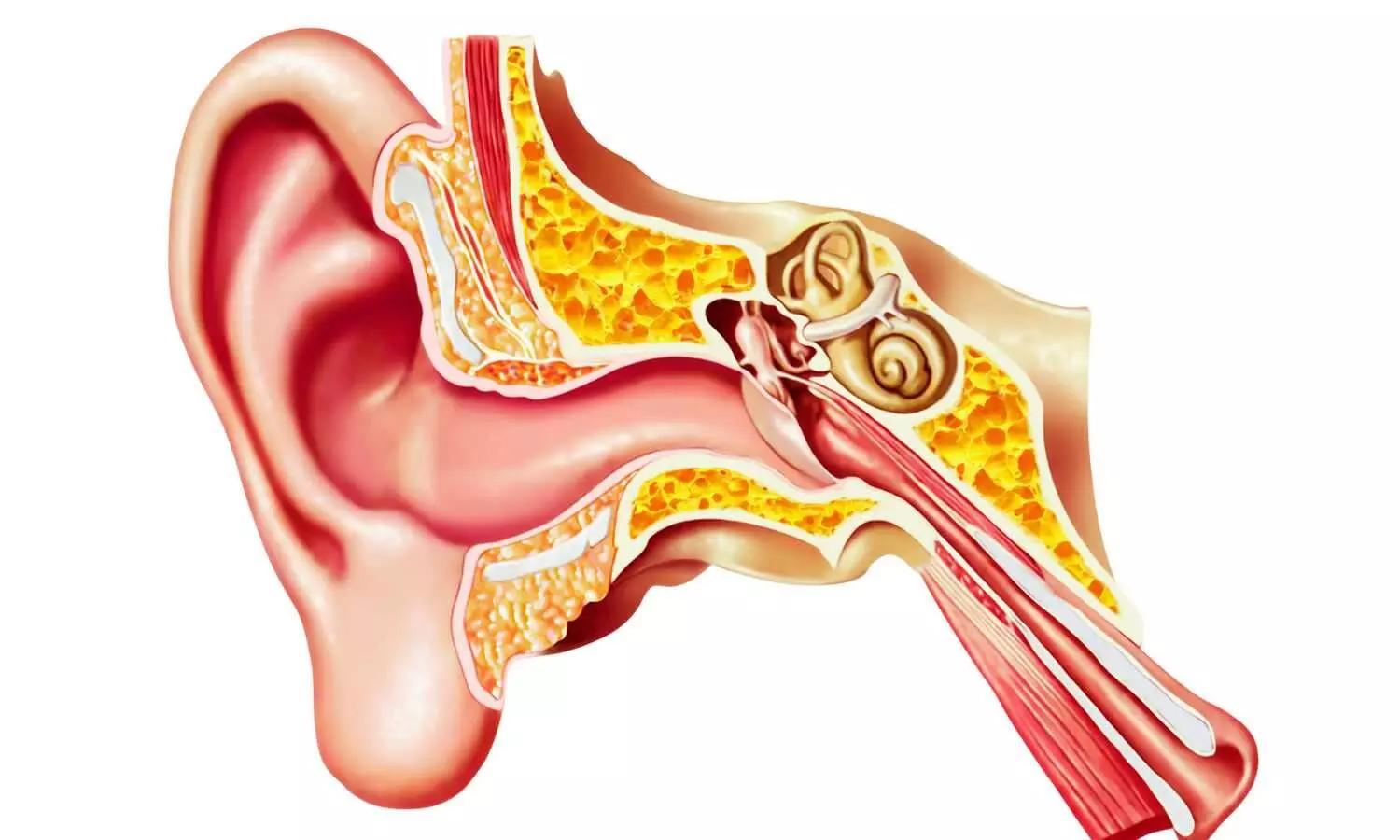


A recent prospective pilot study published in the Indian Journal of Otolaryngology and Head & Neck Surgery in July 2026 highlights a highly reliable, modified sub-periosteal infiltration technique for local anesthesia in middle ear surgeries. By achieving an optimal mean intraoperative bleeding score of 1.75 and zero adverse events, the refined approach resulted in a remarkable 100% patient willingness rate for future procedures.
Although local anesthesia (LA) offers significant clinical advantages for middle ear surgeries—such as reduced bleeding, faster recovery, and real-time functional assessment—conventional techniques like Plester’s can be technically challenging and risk inadequate pain control or canal wall trauma. To address this gap, Goyal and colleagues evaluated a modified sub-periosteal infiltration method to optimize overall efficacy, patient comfort, and surgical conditions.
Therefore, a prospective pilot study of 20 adults evaluated a modified local anesthesia technique for middle ear surgeries. By adjusting the injection angle for precise vertical delivery in the external auditory canal, researchers assessed both patient comfort—including pain, anxiety, and noise perception—and surgeon-reported outcomes like anesthetic adequacy and procedural complications.
Key Clinical Findings of the Study Includes:
• Patient Demographics: Data showed a predominantly female cohort (65%) with an average age of 39.45 years, establishing a solid baseline for the clinical outcomes.
• Optimal Pain Management: Researchers noted that intraoperative and postoperative pain scores remained exceptionally low, with zero patients experiencing dominant distressing symptoms.
• Controlled Hemorrhage: Analysis revealed a highly favorable mean intraoperative bleeding Boezaart score of 1.75 (ranging from 1 to 3), successfully preventing severe hemorrhage or canal wall bleb formation.
• Excellent Safety Profile: Investigations confirmed an absolute absence of postoperative facial nerve dysfunction or other adverse events, underscoring the procedure's remarkable clinical safety.
• High Patient Acceptance: Findings demonstrated that every single patient expressed complete willingness to undergo future otologic surgeries utilizing this refined anesthetic approach.
The results suggest that the modified sub-periosteal infiltration technique consistently delivers reliable anesthesia with a highly tolerable bleeding profile, ultimately achieving a complete 100% willingness among patients for repeat procedures.
Thus, the study concludes that clinicians integrating the relatively simple and reproducible refinement of Plester’s technique could seamlessly support enhanced surgical workflows and encourage a broader, more confident adoption of LA within specialized otologic practice.
Although designed as a pilot study with a focused sample size of 20 adults, the findings provide a strong clinical foundation, and future multi-center research would gently build upon these insights to further corroborate the technique's efficacy in broader populations.
Reference
Goyal, S., Madan, T., Ravunnikutty, M., Singh, R., Dawn, S., & Bhalla, V. (2026). A Prospective Observational Study from A Tertiary Care Centre to Validate the Efficacy of Modified Technique of Local Anaesthesia for Middle Ear Surgeries. Indian Journal of Otolaryngology and Head & Neck Surgery.
