
Musical Training Enhances Auditory Rehabilitation in Children with Cochlear Implants: Study
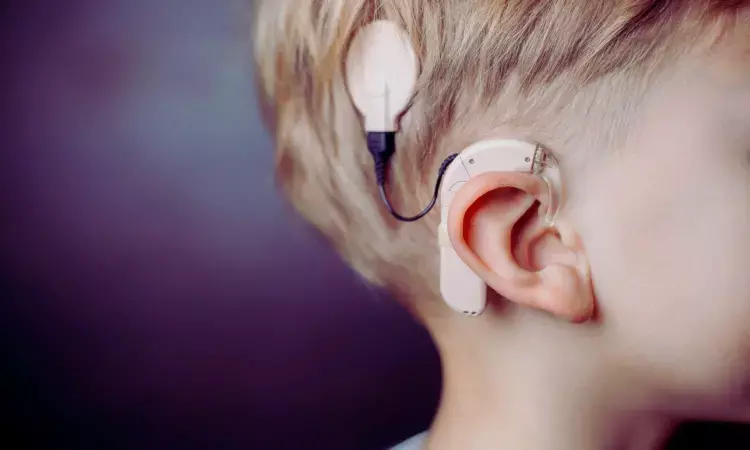


A recent study published in the International Journal of Pediatric Otorhinolaryngology found that active musical training programs, based on structured musical learning processes, show promise as effective interventions for improving auditory outcomes in children with cochlear implants.
This research aimed to identify which types of musical training protocols are most effective for children up to 12 years old who use cochlear implants due to sensorineural hearing loss. Rather than relying on a single statistical synthesis, this study was conducted a detailed qualitative review after determining that a meta-analysis was not feasible. The decision was due to considerable variation across existing studies in terms of methods, intervention designs, and outcome measurements.
Following the Preferred Reporting Items for Systematic Reviews and Meta-Analyses (PRISMA) guidelines, the study was registered in an international database and included a comprehensive search strategy without restrictions on publication date or language. Researchers initially identified 1,876 studies across multiple scientific databases.
After removing duplicate entries and screening titles and abstracts, only 27 studies qualified for full-text evaluation. From these, 21 were excluded for failing to meet strict inclusion criteria like focusing on participants older than 12 or not directly assessing musical training outcomes. Ultimately, just 6 studies met all requirements and were included in the final review.
Despite the relatively small number of qualifying studies, consistent patterns emerged. The review found that active musical training, where the children participate directly in making music through singing, rhythm exercises, or instrument play, showed the most potential. These approaches appeared to support improvements in auditory perception, speech recognition, and overall listening skills.
The passive exposure to music, such as simply listening to songs, was found to be less effective. The findings suggest that the learning process including engagement, repetition, and interaction with musical elements, is a key driver of auditory development in children using cochlear implants.
This research emphasize that while the results are encouraging, the field still faces limitations due to the diversity of study designs and small sample sizes. They call for more standardized research to better compare outcomes and establish clear clinical guidelines. Overall, the study reinforces a growing recognition of music as more than just an art form as it may also serve as a powerful therapeutic tool.
Reference:
Martins-Said, P., Lehmann, A., Amorim, A. A. L., Baumgartner, F. M., Razabone, L. C., Araújo, E. S., Jacob, L. C. B., Silva, B. C. S., & Alvarenga, K. F. (2026). Effective musical training protocols for the rehabilitation of children with cochlear implants: A systematic review. International Journal of Pediatric Otorhinolaryngology, 204(112793), 112793. https://doi.org/10.1016/j.ijporl.2026.112793

