
Study suggests children with ear tubes may safely swim in treated pools
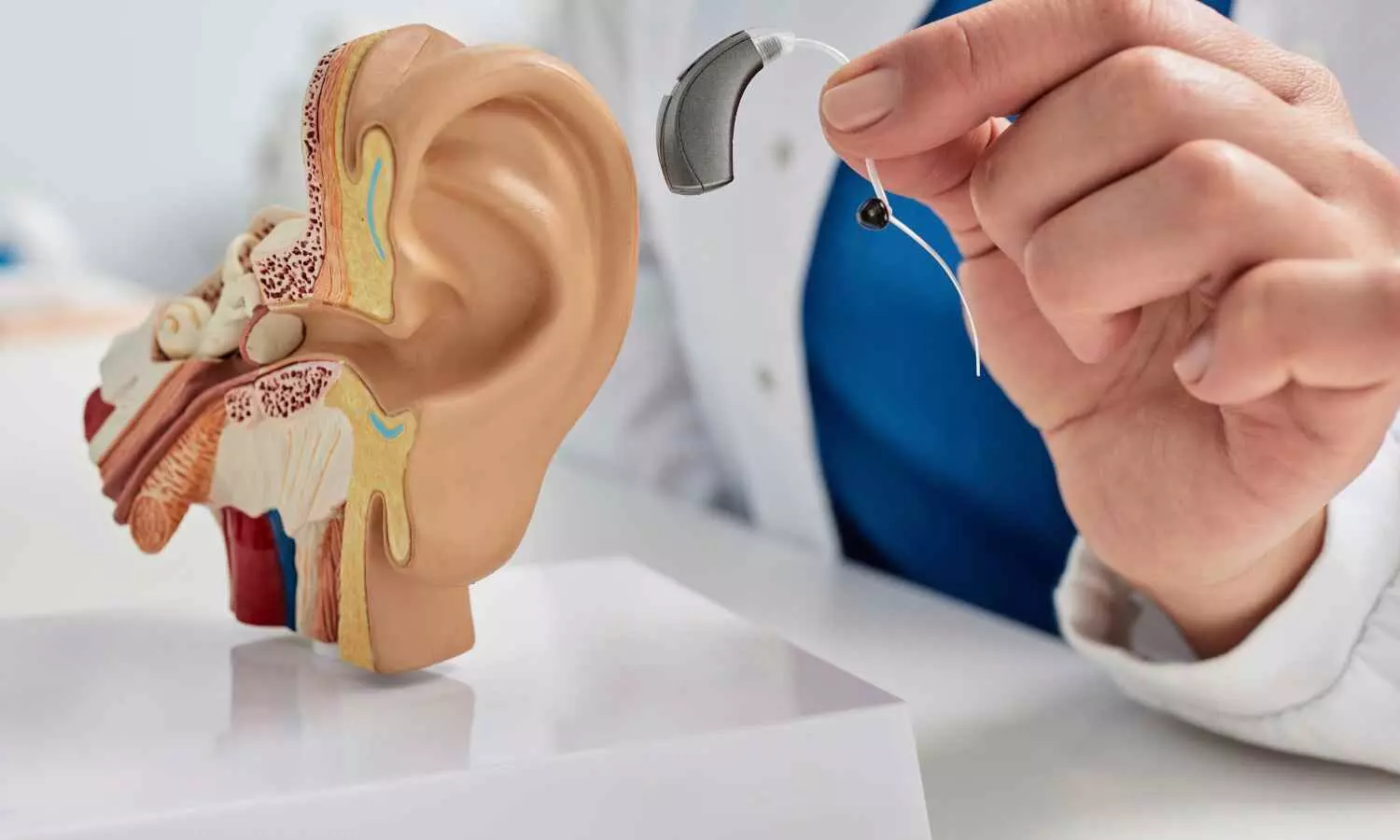


A new study published in Otolaryngology-Head and Neck Surgery, the peer-reviewed journal of the American Academy of Otolaryngology-Head and Neck Surgery Foundation (AAO-HNSF), finds that children with tympanostomy tubes who swim in treated pools are not at increased risk of ear drainage, while those exposed to untreated or natural bodies of water face significantly higher odds of developing recurrent otorrhea.
Tympanostomy tube placement, commonly known as ear tube surgery, is one of the most frequently performed surgical procedures in children in the United States, typically recommended for those with recurrent ear infections or persistent fluid in the middle ear.
“The role of water precautions in tympanostomy tubes has been extensively debated, yet empirical evidence regarding the impact of water type and otorrhea risk is limited,” said Kavita Dedhia, MD, MSHP, Assistant Professor, Department of Otorhinolaryngology Head & Neck Surgery, Perelman School of Medicine at the University of Pennsylvania. “We identified an association between increased otorrhea episodes and exposure to untreated water. Although this is not a definitive study, it can guide providers to counsel families on when to consider water precautions.”
These findings are consistent with the AAO-HNSF's 2022 Clinical Practice Guideline on Tympanostomy Tubes in Children (Update), which are specified in Key Action Statement 15, Clinicians should not encourage routine, prophylactic water precautions (use of earplugs or headbands, avoidance of swimming or water sports) for children with tympanostomy tubes. The CPG notes that water precautions are best reserved for select children rather than applied routinely, with the preferred approach being to allow unrestricted water activity first and introduce precautions only if problems arise. Exceptions include children with recurrent or persistent otorrhea — particularly those with P. aeruginosa or S. aureus in middle ear cultures — those with immune dysfunction, those who experience ear discomfort during swimming, and those exposed to heavily contaminated water or engaging in deep diving.
The authors acknowledge several limitations, including the potential for recall bias among caregivers and the observational nature of the study design, which limits causal conclusions. They call for prospective studies and interventional trials to further clarify the biological mechanisms underlying water-related ear drainage and to identify additional modifiable risk factors. The study also found that younger children were more likely to experience recurrent ear drainage regardless of water exposure type, consistent with prior research on acute otitis media in early childhood.
The authors call for prospective studies and interventional trials to further clarify the biological mechanisms underlying water-related ear drainage and to identify additional modifiable risk factors.
Reference:
Alexandria L. Irace, Terri Giordano, Ashley Williams, Jillian Karpink, Mimi Kim, Outcomes and Characteristics of Water Exposure in Children with Tympanostomy Tubes, Otolaryngology,https://doi.org/10.1002/ohn.70093
