Fact Check: Can Ginger, Cinnamon and Honey Cure Hypothyroidism?
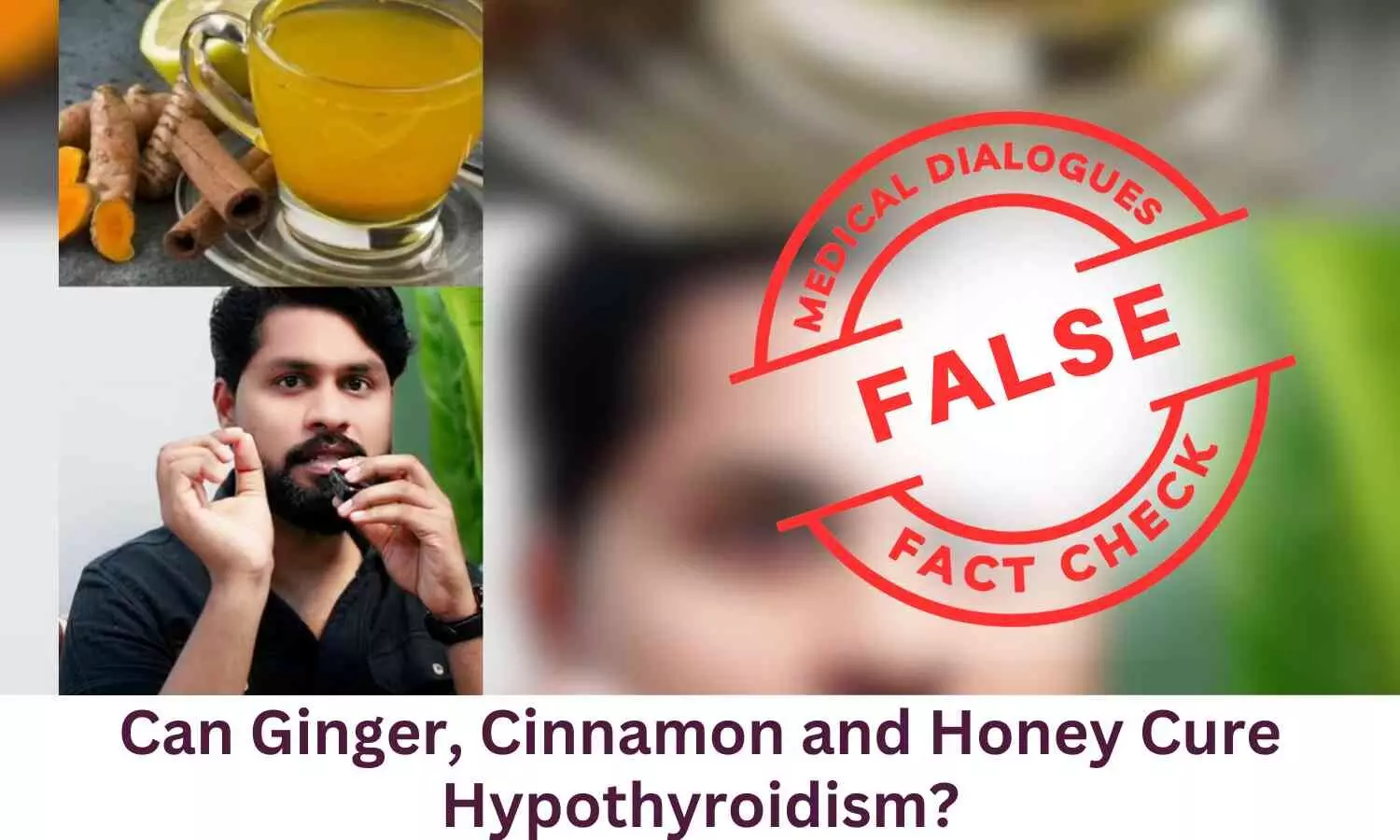


An Instagram reel it is claimed that Ginger, Cinnamon and Honey Cures Hypothyroidism. The claim is FALSE.
Claim
In an Instagram reel it is claimed that Ginger, Cinnamon and Honey Cures Hypothyroidism. In a reel by ansari_healthtips it is said, "Three things can completely cure your hypothyroidism problem. Take a small piece of ginger and crush it well. Take a small piece of cinnamon and boil both in one cup of water for about 5 to 7 minutes. Once it cools down, strain it and mix one teaspoon of honey. Drink this once or twice daily as per your convenience—on an empty stomach in the morning and before dinner in the evening. Start this from today itself.
This remedy is specifically for hypothyroidism because in this condition, the body temperature tends to drop, you start feeling cold, and the body becomes sluggish.
Hypothyroidism is the most common type of thyroid disorder, especially in women. In this condition, the thyroid gland produces less hormone, which slows down metabolism and reduces energy levels.
What are the symptoms? Weight gain, reduced sleep, hair fall, slow heart rate, low mood, depression, lack of energy, and easy fatigue. All these are signs of hypothyroidism.
This remedy that I have shared may help in hypothyroidism but not in other thyroid disorders. So you can try this at home and take benefit from it, especially women. It is easy to prepare, and you may start noticing relief within a few days."
The claim can be accessed here.
Fact Check
The claim is FALSE. There is no scientific evidence that ginger, cinnamon, and honey can cure hypothyroidism. While these ingredients may support general health, hypothyroidism is a medical condition that typically requires lifelong management with prescribed thyroid hormone replacement therapy.
What is Hypothyroidism?
Hypothyroidism is a condition characterized by an underactive thyroid gland, meaning it does not produce enough thyroid hormone to support the body's normal functions. This deficiency leads to slowed metabolic processes and various symptoms. Common causes of hypothyroidism include autoimmune diseases like Hashimoto’s thyroiditis, surgical removal of the thyroid gland, and radiation therapy. Insufficient levels of thyroid hormone in the blood can affect overall health, requiring medical evaluation and management. Early diagnosis and treatment are crucial to prevent complications.
Can Hypothyroidism Be Cured?
Hypothyroidism cannot be cured, but it can be effectively managed in nearly all patients. Treatment involves replacing the deficient thyroid hormone with synthetic thyroxine (T4) to normalize T4 and TSH levels. This approach restores the body’s thyroid hormone levels and its functions. Synthetic T4 pills are identical to the hormone produced by the thyroid gland.
What are the Nutritional Benefits of Ginger, Cinnamon and Honey?
Ginger also known as Zingiber officinale is widely recognized for its numerous health benefits and medicinal properties. Rich in bioactive compounds, ginger is valued for its potent antioxidant and anti-inflammatory effects, which help protect the body from oxidative stress and support the immune system. It plays a significant role in reducing inflammation and promoting muscle relaxation, making it beneficial for managing pain and discomfort. Additionally, ginger aids in improving immunity and overall well-being through its immune-modulating properties. Its natural compounds provide therapeutic support, contributing to improved health and relief from various ailments, making it a valuable addition to a balanced diet.
Cinnamon, often referred to as the “eternal tree of tropical medicine,” is a widely used spice with a rich history in daily health practices. It contains powerful bioactive compounds such as cinnamaldehyde, cinnamic acid, and cinnamate, which are responsible for its many therapeutic effects. These include antioxidant, anti-inflammatory, antidiabetic, antimicrobial, and cardioprotective properties. Cinnamon may also aid in reducing cholesterol and promoting cardiovascular wellness. Emerging studies further indicate that it could offer neuroprotective benefits, potentially helping in neurodegenerative disorders like Parkinson’s and Alzheimer’s disease.
Honey, derived from the nectar of flowers and produced by the honeybee species Apis mellifera, has long been recognized for its nutritional, therapeutic, and practical uses. Civilizations such as the ancient Greeks, Egyptians, and Chinese esteemed honey not only as a source of sustenance but also for its medicinal benefits—a legacy that continues into modern times. Commonly added to drinks, honey remains remarkably shelf-stable thanks to its low water activity (ranging from 0.56 to 0.62) and mildly acidic pH of approximately 3.9, which allows it to be stored for extended periods without refrigeration. In addition to its culinary appeal, honey is known for its antioxidant, anti-inflammatory, and antimicrobial qualities, as well as its supportive effects on the respiratory, digestive, cardiovascular, and nervous systems.
Can Ginger, Cinnamon and Honey Cure Hypothyroidism?
Hypothyroidism is a condition caused by insufficient production of thyroid hormones, most commonly due to autoimmune disease (Hashimoto’s thyroiditis), iodine deficiency, or thyroid gland dysfunction. There is no scientific evidence or medical consensus that ginger, cinnamon, or honey can restore thyroid hormone production or reverse the underlying cause of hypothyroidism.
Ginger has been found to offer potential preventive benefits. A cross-sectional study published in Nutrition revealed that ginger may help prevent certain chronic diseases, particularly hypertension and coronary heart disease, while also lowering the risk of illness.
Cinnamon, a commonly used spice, is increasingly studied for its potential health-promoting properties. A review by Sharon Sam et. al. suggests that cinnamon may serve as a complementary therapy due to its antioxidant, anti-inflammatory, and anti-diabetic effects, with additional benefits noted in cardiovascular health, weight management, and antimicrobial activity.
Honey has been shown to possess multiple biological properties. According to a study by Saeed Samarghandian et. al. honey exhibits antioxidant, antimicrobial, anti-inflammatory, and antiproliferative effects.
Ginger, cinnamon, and honey may offer general health benefits, but there is no scientific evidence or established medical consensus supporting their ability to cure hypothyroidism.
Dr. Nisha Mangal, Senior Consultant, Obstetrics & Gynecology, Cocoon Hospital Jaipur in a conversation said, "Hypothyroidism is especially important to address, as thyroid hormones play a crucial role in menstrual health, pregnancy-related concerns, metabolism, and overall hormonal balance. It typically occurs when the thyroid gland produces lower-than-normal levels of thyroid hormones, most commonly due to autoimmune conditions.
While ingredients such as ginger, cinnamon, and honey may offer general antioxidant benefits, they cannot correct the underlying hormonal deficiency. The evidence-based treatment remains thyroid hormone replacement with Levothyroxine, which helps normalize hormone levels, improve metabolism, and relieve symptoms.
Avoiding prescribed medication in favour of home remedies can worsen symptoms such as fatigue, weight gain, hair loss, low mood, and irregular periods. In pregnant women, it may also increase risks for both the mother and the baby.
Certain symptoms like weight gain, hair fall, low energy, and menstrual irregularities can be associated with hypothyroidism, but improvement primarily depends on proper hormone correction and regular monitoring—not herbal remedies alone.
Women, especially those planning pregnancy or who are already pregnant, should consult their doctors promptly for timely diagnosis, appropriate dosage, and regular thyroid function monitoring."
Dr. Rohit Sharma, Consultant in Internal Medicine, Apollo Spectra Hospital, Jaipur further added, "Hypothyroidism occurs due to reduced thyroid hormone production, often from Hashimoto’s Thyroiditis, and cannot be reversed by home remedies. While ginger, cinnamon and honey may support general health, they do not restore hormone levels. The standard treatment is Levothyroxine, which corrects deficiency and controls symptoms. Relying on such remedies instead of medication can worsen fatigue, weight gain, and other complications. Consult a doctor and follow evidence-based treatment."
Medical Dialogues Final Take
The claim that ginger, cinnamon, and honey can cure hypothyroidism is FALSE. While these ingredients may offer general health benefits, they cannot replace medically prescribed thyroid hormone therapy.
Hence, the claim is FALSE.