Fact Check: Can Insulin Plant Cures Diabetes?
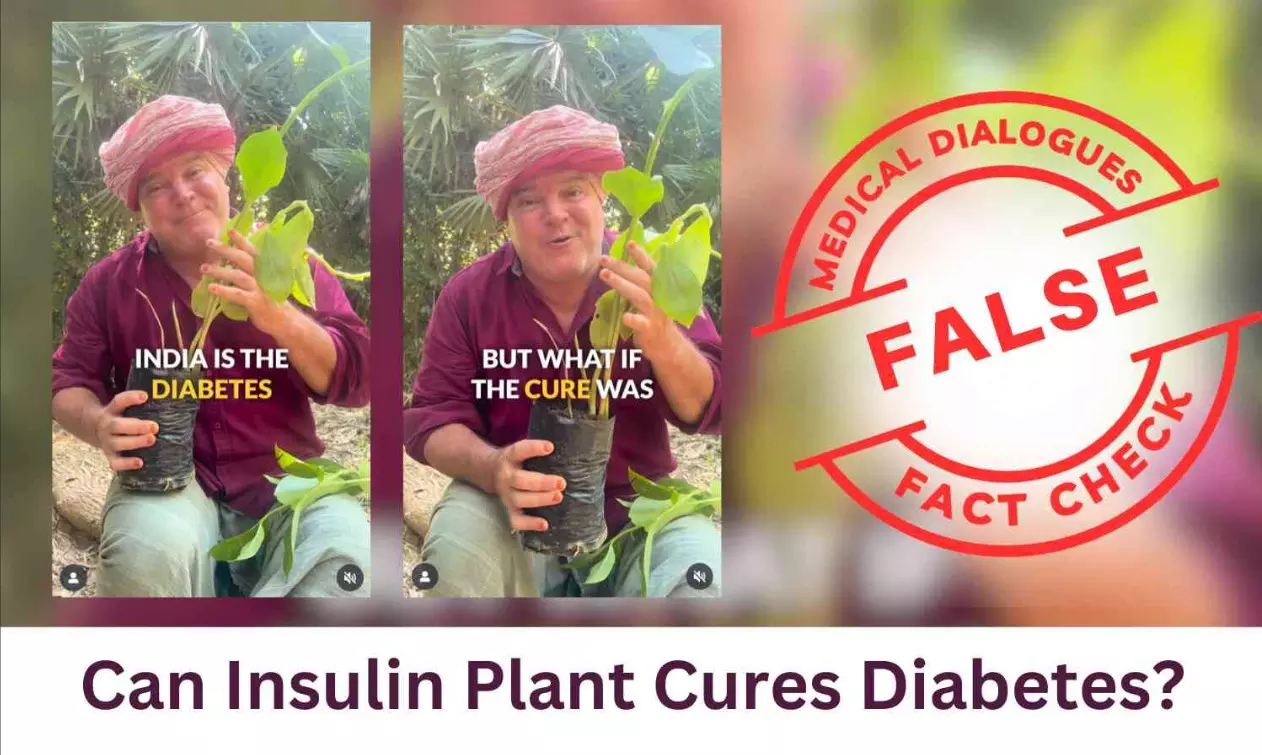


An Instagram reel claims that Insulin plant cures Diabetes. The claim is FALSE.
Claim
In an Instagram reel it is claimed that Insulin plant cures Diabetes. In the reel by krishna.mckenzie it is said, "India is the diabetes capital of the world. But what if the cure was right there on your balcony? This amazing plant is the insulin plant. It grows simply from a cutting even in a small pot. The leaves can be thrown into a salad. You can blend them into a smoothie. You can even cut them up into small pieces and add them into a vegetable dish. Honoring this plant means finding creative ways to integrate them into your diet. It's simple, it's powerful, and it's right in front of you. So, share this with your friends and your family."
The claim can be accessed here.
Fact Check
The claim is FALSE. There is no scientific evidence or medical consensus to back the claim by the user.
What is Diabetes?
Diabetes is a chronic health condition that occurs when the pancreas does not produce enough insulin or when the body is unable to use insulin effectively. Insulin is a vital hormone that regulates blood sugar levels. Without proper control, diabetes leads to hyperglycemia (high blood sugar), which, over time, can damage multiple organs—particularly the nerves and blood vessels.
Types of Diabetes
The World Health Organization (WHO) classifies diabetes into four main categories:
Type 1 Diabetes
Also called insulin-dependent or juvenile diabetes, this form develops when the body produces little or no insulin. People with type 1 diabetes require daily insulin injections. As of 2017, about 9 million people—mostly in high-income countries—were affected. The exact cause remains unknown, and no preventive measures have been established so far.
Type 2 Diabetes
This is the most common type, accounting for over 95% of cases. It occurs when the body cannot use insulin effectively, leading to elevated blood sugar. Risk factors include obesity, lack of exercise, and genetic predisposition. Though largely preventable, type 2 diabetes often goes undetected for years, as early symptoms may be mild or absent. It was once seen mostly in adults but is now increasingly diagnosed in children as well.
Gestational Diabetes
This form develops during pregnancy when blood sugar levels rise but not enough to qualify as diabetes. It can cause complications during pregnancy and delivery, and both mother and child have a higher long-term risk of developing type 2 diabetes. Routine prenatal screenings are essential for detection.
Prediabetic Conditions (IGT & IFG)
Impaired Glucose Tolerance (IGT) and Impaired Fasting Glycemia (IFG) are prediabetic states where blood sugar levels are higher than normal but not high enough to be classified as diabetes. These conditions increase the risk of developing type 2 diabetes, though progression is not inevitable.
Can Diabetes Be Cured?
At present, diabetes cannot be completely cured or eliminated. However, it can be effectively managed—and in some cases, people achieve diabetes remission or reversal. This means maintaining normal blood glucose levels without the need for medication, primarily through healthy eating, weight management, and regular physical activity. Sustaining remission requires lifelong dedication to lifestyle changes and consistent monitoring.
What is Insulin Plant?
The Insulin plant (Costus igneus) is a tropical plant widely recognized in traditional medicine for its potential role in supporting healthy blood sugar levels. It has earned its name because of the long-held belief that its leaves help manage diabetes naturally. The plant is rich in beneficial compounds such as flavonoids, alkaloids, and antioxidants, which are thought to promote overall wellness. In addition to its association with blood sugar management, the Insulin plant is also valued for its possible antioxidant and antimicrobial properties, which may help protect the body from oxidative stress and harmful microorganisms.
Can Insulin Plant Cures Diabetes?
There is no reliable scientific evidence that the insulin plant (or any herb) can cure diabetes. Some limited studies suggest mild blood-sugar lowering effects, but these do not amount to a cure for diabetes.
The Insulin plant may offer certain health benefits, particularly in supporting diabetes management. According to a study published in the Indian Journal of Pharmacy and Pharmacology, extracts from the Insulin plant may possess antioxidant and antibacterial properties and could potentially aid in maintaining blood sugar levels.
Scientific studies have also focused on the potential medicinal value of the Insulin plant in diabetes management. Findings from a review by Prakash K. Hegde et. al. indicate that the plant’s leaves may possess therapeutic properties that could aid in regulating blood sugar levels. The review notes that the antidiabetic effects of these leaves are currently being investigated in diabetic patients. However, it also emphasizes that these early results require further validation through comprehensive clinical trials to confirm their safety and efficacy before clinical application.
The Insulin plant may help in managing blood sugar levels, but there is no scientific evidence or medical consensus to support the claim that insulin plant cures diabetes.
Dr. G. Krishna Mohan Reddy, Senior Consultant Physician, Diabetologist, Yashoda Hospitals, Hyderabad in a conversation with The Medical Dialogues Fact Check Team said, "Many patients ask if chewing insulin plant leaves can treat or cure diabetes. The honest answer is no — it cannot cure diabetes nor can it replace insulin or oral medications. Some small studies suggest the plant may have insulin-mimetic properties and might modestly reduce fasting or post-meal glucose when used consistently. However, these effects are inconclusive and not enough to normalize blood sugar on their own. Importantly, using herbal remedies without a doctor’s guidance may interact with diabetes medications and even cause dangerous low blood sugar. Any use of the insulin plant should be discussed with your doctor as a potential supplementary measure, not as a substitute for proven diabetes therapies."
Dr. Hari Kishan Boorugu, Consultant Physician & Diabetologist, Yashoda Hospitals, Hyderabad further added, "There is very limited data of this plant (costus igneus/insulin plant) available in literature, that too in vitro studies or animal models. It needs a lot more research before we can say it will be helpful for clinical use in humans. For us to use a molecule for clinical benefit, it needs to through various phases of clinical trials to assess safety and efficacy. As of now, there seems to be only some in vitro ( laboratory) data and animal data available with this plant extract and very limited human data and no randomised controlled trials. We can not recommend this for clinical usage at this point."
Medical Dialogues Final Take
The claim that the “insulin plant” cures diabetes is false. While some studies may suggest mild blood-sugar lowering effects, there is no credible scientific evidence or medical consensus that the insulin plant can cure diabetes or replace standard diabetes treatments.
Hence, the claim by the user is FALSE.