ERCP With Minor Papillotomy Fails to Prevent Recurrent Pancreatitis: JAMA
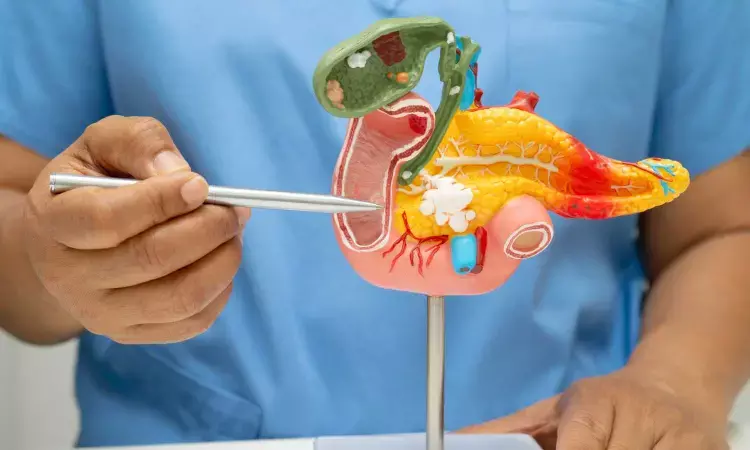


A large randomized clinical trial has now demonstrated that endoscopic retrograde cholangiopancreatography with minor papillotomy (ERCP) does not reduce the incidence of recurrent acute pancreatitis in adults with pancreas divisum and unexplained acute recurrent pancreatitis. The randomized clinical trial failed to demonstrate any reduction in the incidence of subsequent pancreatitis or its complications, and its results cast doubt on many assumptions regarding its value as a therapeutic procedure. The study was published in JAMA by Gregory A. and colleagues.
Pancreas divisum is a relatively common anatomic variant that occurs due to the non-fusion of dorsal and ventral pancreatic ducts, which can lead to poor drainage through the minor papilla. Pancreas divisum has traditionally been suspected as a cause of obstructive recurrent pancreatitis. Some studies have suggested that Endoscopic Retrograde Cholangio-Pancreatography with minor papillotomy can reduce the incidence of pancreatitis, but good evidence from randomized clinical trials has not been available.
The trial was carried out between September 1, 2018, and August 30, 2024. It was done in 21 US and Canadian referral centers. The final follow-up was done on February 15, 2025. The trial included adults who had two or more episodes of acute pancreatitis and had pancreas divisum. The individuals who had other known causes of pancreatitis and those with coexisting chronic calcific pancreatitis were excluded.
The trial included 148 individuals. They were randomly assigned in a 1:1 fashion. They received either ERCP and minor papillotomy or sham ERCP. The individuals had a mean age of 54 years. The SD was 19.5 years. The females comprised a significant percentage of the population. They accounted for 68.2%. The individuals in the trial were mostly non-Hispanic or Latino. The median follow-up time was 34 months. The interquartile range was 21.7–45.7 months.
Key findings:
• In follow-up, 26 out of 75 (34.7%) patients in the ERCP with minor papillotomy had acute pancreatitis, while 32 out of 73 (43.8%) patients had it in the Sham ERCP group.
• The adjusted HR for the incidence of acute pancreatitis was 0.83 (95% CI: 0.49, 1.41). The incidence rate ratio for recurrent pancreatitis episode frequency was 0.25 (95% CI: 0.18, 0.34) for the intervention group and 0.30 (95% CI: 0.23, 0.41) for the Sham group.
• In addition, chronic calcific pancreatitis occurred in 4.0% of patients in the ERCP with minor papillotomy and 2.7% in the Sham group, with a RD of 0.01 (95% CI: -0.05, 0.07).
• The incidence of diabetes was 15.8% in the intervention group and 12.8% in the Sham group, with a RD of 0.03 (95% CI: -0.13, 0.19).
• The incidence of exocrine pancreatic dysfunction was 7.7% in the ERCP with minor papillotomy and 17.2% in the Sham group, with a RD of -0.10 (95% CI: -0.27, 0.08).
• Acute pancreatitis occurring within 30 days of randomization was more common in the ERCP with a minor papillotomy group.
• Early post-procedural pancreatitis was seen in 14.7% of the participants who received the procedure compared with 8.2% in the sham group, which translates into a difference of 0.06 (95% CI -0.04 to 0.17).
• Though the difference was not statistically significant, it is a clear reminder of the risk of the procedure.
In adults presenting with unexplained acute recurrent pancreatitis and pancreas divisum, ERCP and minor papillotomy do not decrease the risk of recurrent pancreatitis and its complications. This study presents well-designed randomized evidence that contradicts current practice patterns and indicates that minor papillotomy for the prevention of recurrent pancreatitis in this patient group should not be performed.
Reference:
Coté GA, Durkalski-Mauldin V, Fogel EL, et al. Minor Papillotomy for Treatment of Idiopathic Acute Pancreatitis With Pancreas Divisum: A Randomized Clinical Trial. JAMA. 2026;335(8):682–692. doi:10.1001/jama.2025.23988