
Healthy lifestyle linked to lower diverticulitis risk, irrespective of genetic susceptibility


Maintaining a healthy lifestyle - specifically, a diet rich in fibre but light on red/processed meat, regular exercise, not smoking, and sticking to a normal weight—is linked to a significantly lower risk of diverticulitis, finds a large long term study, published online in the journal Gut.
What’s more, these 5 components seem to offset the effects of inherited genes, the findings indicate.
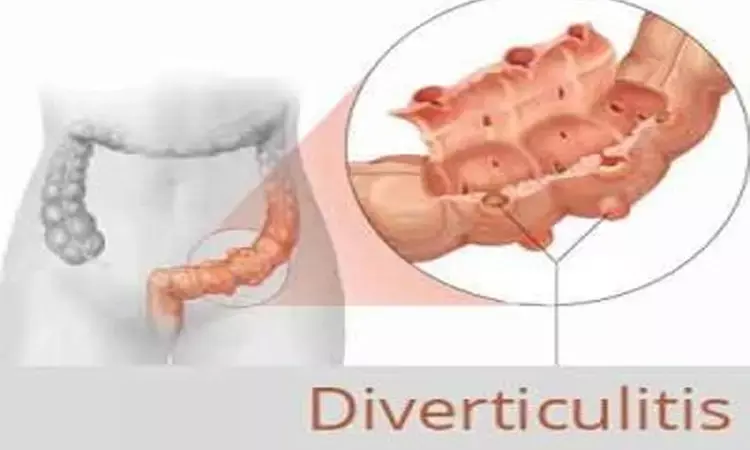
Diverticulitis occurs when ‘pouches’ develop along the gut and become inflamed or infected in the wall of the large intestine (colon), explain the researchers. It’s a common cause of hospital admissions and a major reason for emergency colon surgery, they add.
Genetic and environmental factors, including lifestyle, contribute to the development of the condition, but it’s not clear exactly how these factors interact or the extent to which lifestyle might offset the genetic risk, they say.
To shed more light on this, the researchers derived an overall healthy lifestyle score (0-5) for diverticulitis from survey responses for 179,564 participants drawn from three prospective studies: the Nurses’ Health Study (NHS), NHSII, and the Health Professionals Follow-Up Study.
The score was based on 5 elements that have independently been associated with heightened risks of developing diverticulitis: smoking; weight (BMI); physical activity; fibre intake; and red/processed meat intake.
The association between this score and incident diverticulitis was confirmed among 30,750 participants in the Southern Community Cohort Study (SCCS).
Genetic risk was assessed using a polygenic risk score (PRS) in 36,077 people with available genotype information.
During a monitoring period of 20 years, 10,299 new cases of diverticulitis were recorded. The 5 lifestyle factors were each significantly associated with the development of the condition.
For example, compared with participants with a BMI below 25, those who were overweight were 32% more likely to develop diverticulitis, while those who were obese were 44% more likely to do so.
Participants who had formerly or who were still smoking were, respectively, 17% and 13% more likely to be diagnosed with diverticulitis than those who had never smoked. And higher levels of physical activity were associated with a 16% reduced risk compared with lower levels.
While higher fibre intake was associated with a 14% lower risk, higher red meat intake was associated with a 9% increased risk.
And every 1-point increase in healthy lifestyle score was associated with a 12% lower risk of diverticulitis. Participants with a score of 5 were 50% less likely to be diagnosed with the condition than those with a score of 0.
The findings were consistently observed across all three studies and in different racial groups.
The association between healthy lifestyle score and incident diverticulitis was confirmed among 30,750 participants in the Southern Community Cohort Study (SCCS).
Some 2183 new cases of diverticulitis were reported during an average monitoring period of nearly 12 years in this group. Those with a healthy lifestyle score of 3–5 had a substantially lower risk (31%) than those with a score of 0.
Genetic risk was assessed using a polygenic (cumulative) risk score (PRS) in 36,077 people with available genotype information in the NHS, NHSII, and HPFS groups.
There were no notable differences in lifestyle factors across PRS categories, but PRS was significantly associated with incident diverticulitis. For each unit increase in PRS, the risk increased by 58%, and was particularly evident among those under the age of 60.
And a healthy lifestyle seemed to offset genetic susceptibility to the condition. For example, those in the lowest PRS category and with a healthy lifestyle score of 4-5 were 37% less likely to develop diverticulitis compared to those with a score of 0.
Similarly, those with a medium PRS were 48% less likely to do so, while those in the highest PRS category were 50% less likely to do so. Further analysis showed that adopting a healthy lifestyle might prevent 23–42% of diverticulitis cases across PRS categories.
And when the effect of PRS and a healthy lifestyle score were combined, those in the highest PRS category with a healthy lifestyle score of 0 or 1 were 5 times more likely to develop diverticulitis than those in the lowest PRS category with a score of 4 or 5.
The findings were further validated in the Mass General Brigham Biobank (MGBB).
This is an observational study, and as such, can’t establish cause. And the researchers acknowledge that ascertainment of diverticulitis was based on different approaches across the different studies.
Nevertheless, they conclude: “Our data provide consistent evidence from multiple data sets indicating that adherence to a healthy lifestyle is linked to a reduced risk of developing diverticulitis, irrespective of one’s genetic predisposition.”
Reference:
Ma W, Ha J, Neylan CJ, et alLifestyle factors, genetic susceptibility and risk of incident diverticulitis: an integrated analysis of four prospective cohort studies and electronic health records-linked biobankGut Published Online First: 01 July 2025. doi: 10.1136/gutjnl-2025-335364
