
Study finds people who consumed sugar-sweetened beverages on daily basis had higher risk of stomach cancer
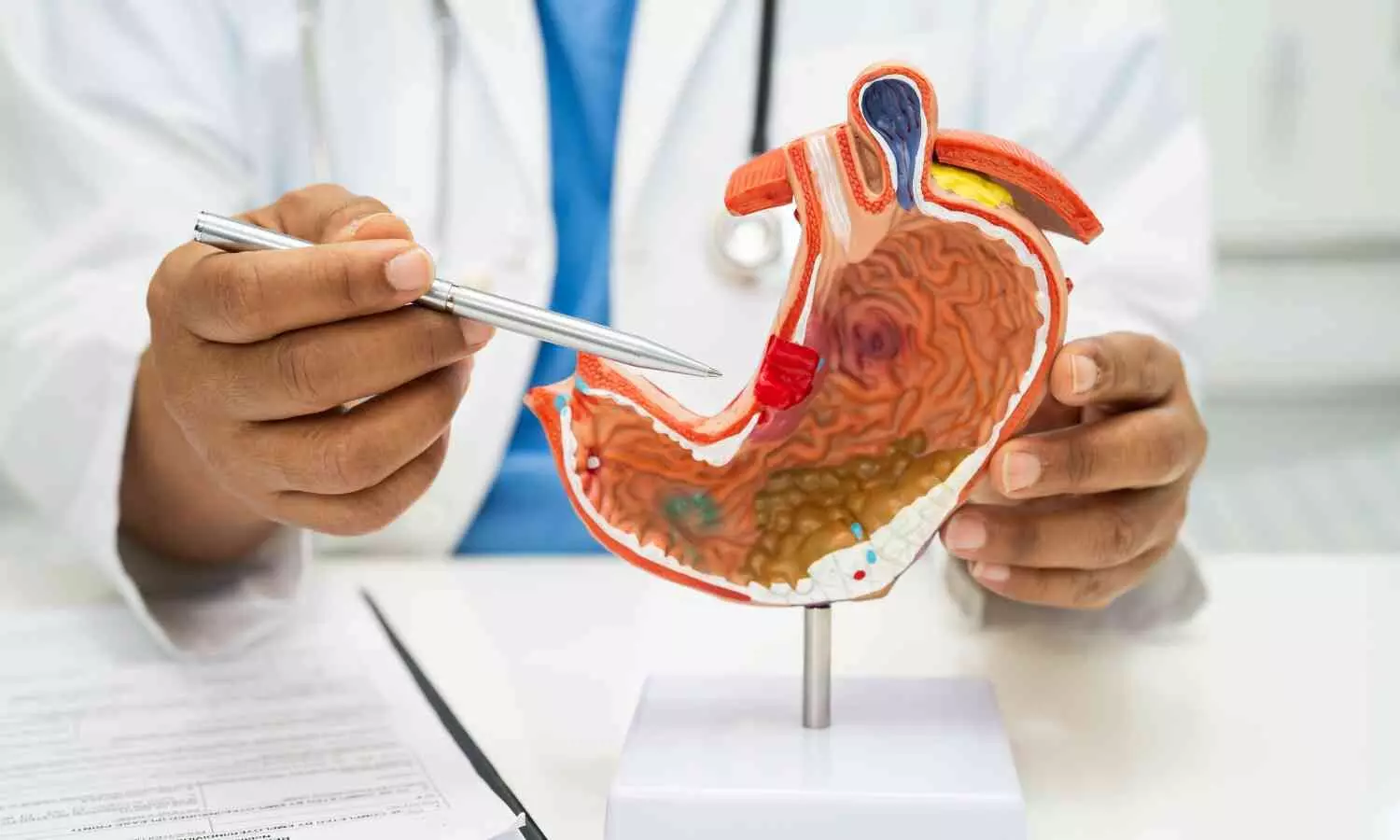


Approximately 65% of U.S. adults report consuming one or more sugar-sweetened beverages every day. Mass General Brigham Cancer Institute researchers found that consuming these drinks daily was associated with an increased risk of developing gastric cancer, while artificially sweetened beverages were not associated with an increased risk. Results are published in the journal Gastro Hep Advances.
Previous studies have linked sugar-sweetened beverages with an increased risk of colorectal, breast, and liver cancers, but evidence on gastric cancer has been limited. The study analyzed data from 112,284 participants in the Nurses’ Health Study and Health Professionals Follow-Up Study. Both studies gathered detailed diet, lifestyle and health information on U.S. adults over many decades. During the follow-up period, which spanned decades, 278 participants developed gastric cancer.
“This is the first study to demonstrate an association between sugar-sweetened beverage intake and gastric cancer in a U.S. population,” said senior author Andrew T. Chan, MD, MPH, a gastroenterologist and epidemiologist with the Mass General Brigham Cancer Institute. “Gastric cancer is the fifth leading cause of cancer death worldwide, but we’ve known very little about how diet might contribute to this cancer.”
After accounting for other potential risk factors, participants who consumed at least one serving of a sugar-sweetened beverage per day had a 2.45 times higher risk of gastric cancer compared with those who consumed less than one serving per month. The association was observed in both women and men. Higher total fructose intake (fructose is the main sweetener in these drinks) was also associated with greater gastric cancer incidence. For instance, among women in the Nurses’ Health Study, consuming more than one such beverage per day was associated with a 3.04-fold higher risk of gastric cancer, compared to those who very rarely consumed sugar-sweetened beverages. In contrast, after controlling for other factors, higher consumption of artificially sweetened beverages wasn’t associated with a higher incidence of gastric cancer.
Researchers defined sugar-sweetened beverages as carbonated beverages, punch, lemonade and sports drinks, while artificially sweetened beverages were defined as low-calorie carbonated beverages.
Because Helicobacter pylori (H. pylori) infection increases the risk of gastric cancer, researchers also assessed H. pylori status in a subset of 940 participants. While just over one third of these participants had evidence of H. pylori infection, there was no association between sugar-sweetened beverage consumption and infection.
Limitations of the study include its observational design. It is possible that higher rates of gastric cancer in people who consumed more sugar-sweetened beverages were related to other factors. The study had limited information on H. pylori status and family history of gastric cancer. In addition, participants were predominantly white, limiting the researchers’ ability to examine differences across racial and ethnic groups. However, the large study population and detailed health and lifestyle information gathered over many years allowed the researchers to control for many other possible potential risk factors for gastric cancer.
The researchers say further studies are needed to confirm the findings and investigate why these beverages might increase gastric cancer risk.
Reference:
Gweon, T.-G., et al. (2026). Association between sugar-sweetened and artificially sweetened beverage intake and gastric cancer incidence. Gastro Hep Advances. DOI: 10.1016/j.gastha.2026.101097. https://www.ghadvances.org/article/S2772-5723(26)00218-9/fulltext
