
Ceftriaxone Linked to Urinary Tract Stones in Children, finds meta analysis
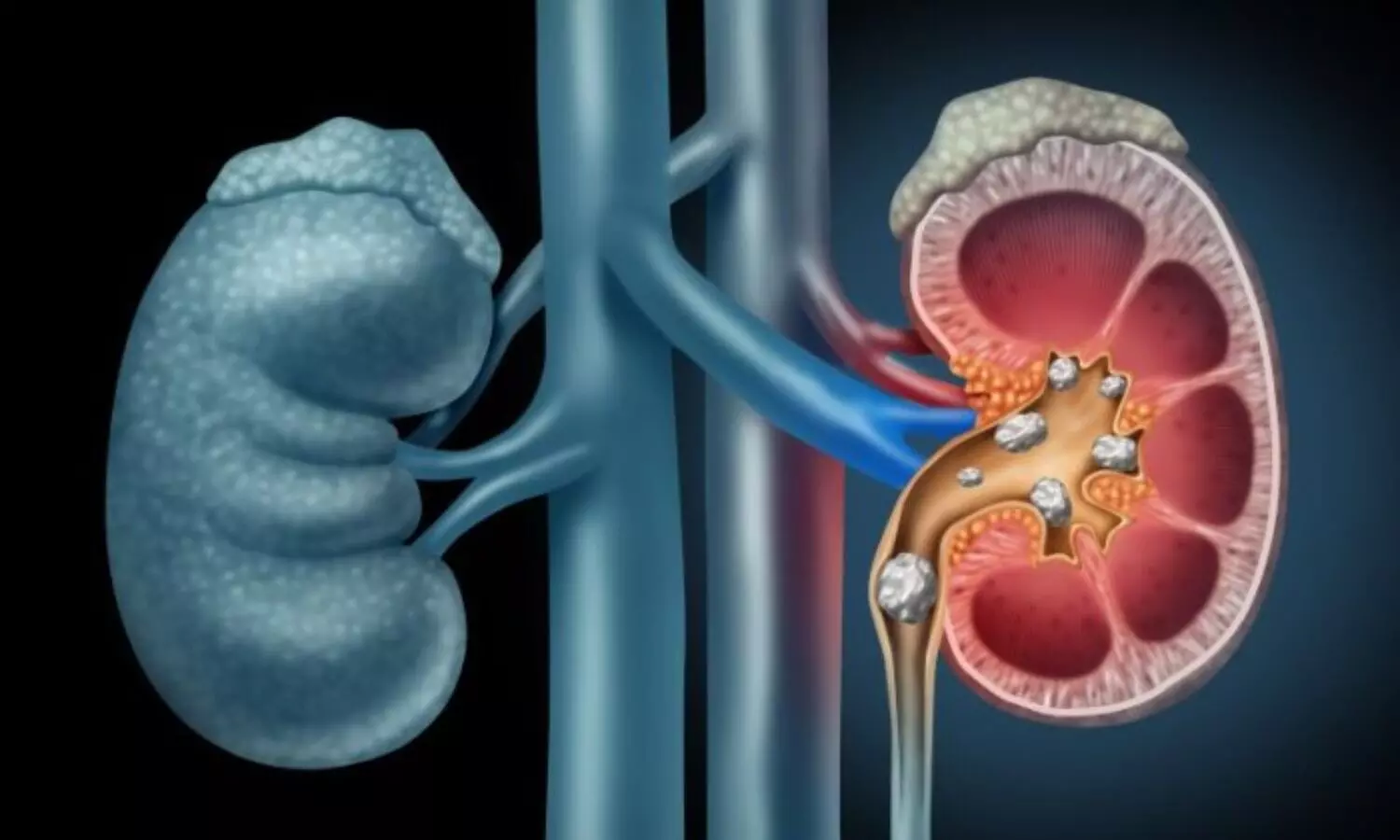


A new study published in the journal of Pediatric Nephrology showed that ceftriaxone medication has been linked to the development of urinary tract stones in about 7% of pediatric patients.
Ceftriaxone-induced urolithiasis is an adverse event marked by the development of urinary tract stones, and might occasionally complicate its administration. Reported incidence rates have varied greatly because clinical presentation might range from asymptomatic patients to acute renal colic. For pediatricians, determining the pooled frequency of this issue is crucial.
The real risk of urolithiasis is still unclear, however ceftriaxone-associated biliary pseudolithiasis is extensively documented. Previous reviews have limited precise incidence estimates by either combining biliary and urinary tract calcifications or relying mostly on descriptive findings. Thus, this systematic review and meta-analysis was to produce the first pooled frequency estimate for pediatric ceftriaxone-induced urolithiasis.
Up until November 2025, a thorough search of PubMed, Google Scholar, Web of Science, and Scopus was carried out. Included were studies detailing urolithiasis cases in children taking ceftriaxone. Two independent reviewers extracted and synthesized the data, and Stata 19.5 was used for analysis. A random-effects model using REML estimation was used to compute pooled proportions in order to obtain overall frequency, between-study variance (τ2), and 95% prediction intervals (PI).
8 studies satisfied the requirements for inclusion. Ceftriaxone-induced urolithiasis had a pooled incidence of 7% (95% CI: 2–12%). The 95% PI varied from 2.7 to 15.8%, and there was significant heterogeneity (I2 = 89.8%; τ2 = 0.0034).
Subgroup analysis revealed that although prospective Western research generally indicated lower frequencies, retrospective studies from Asian locations found much higher rates (up to 34%). The pooled estimate was lowered to 4% (p = 0.004) by sensitivity analysis that excluded the primary outlier. Underreporting of studies with low incident rates was indicated by publication bias (Egger's test, p = 0.006).
Overall, around 7% of children develop urinary tract stones as a result of ceftriaxone, albeit this number varies greatly depending on the research technique. Different research designs, patient demographics, and imaging methods are the main causes of the large discrepancy in reported instances.
Source:
Yaseen, T., Afzal, M. U., Alhamaidah, M. A., Khan, A. H., Burki, M. R., Arain, M. I., & Ashames, A. A. (2026). Pooled frequency of ceftriaxone-induced urolithiasis in pediatric patients: a systematic review and meta-analysis. Pediatric Nephrology (Berlin, Germany). https://doi.org/10.1007/s00467-026-07358-8

