
- Home
- Medical news & Guidelines
- Anesthesiology
- Cardiology and CTVS
- Critical Care
- Dentistry
- Dermatology
- Diabetes and Endocrinology
- ENT
- Gastroenterology
- Medicine
- Nephrology
- Neurology
- Obstretics-Gynaecology
- Oncology
- Ophthalmology
- Orthopaedics
- Pediatrics-Neonatology
- Psychiatry
- Pulmonology
- Radiology
- Surgery
- Urology
- Laboratory Medicine
- Diet
- Nursing
- Paramedical
- Physiotherapy
- Health news
- Fact Check
- Bone Health Fact Check
- Brain Health Fact Check
- Cancer Related Fact Check
- Child Care Fact Check
- Dental and oral health fact check
- Diabetes and metabolic health fact check
- Diet and Nutrition Fact Check
- Eye and ENT Care Fact Check
- Fitness fact check
- Gut health fact check
- Heart health fact check
- Kidney health fact check
- Medical education fact check
- Men's health fact check
- Respiratory fact check
- Skin and hair care fact check
- Vaccine and Immunization fact check
- Women's health fact check
- AYUSH
- State News
- Andaman and Nicobar Islands
- Andhra Pradesh
- Arunachal Pradesh
- Assam
- Bihar
- Chandigarh
- Chattisgarh
- Dadra and Nagar Haveli
- Daman and Diu
- Delhi
- Goa
- Gujarat
- Haryana
- Himachal Pradesh
- Jammu & Kashmir
- Jharkhand
- Karnataka
- Kerala
- Ladakh
- Lakshadweep
- Madhya Pradesh
- Maharashtra
- Manipur
- Meghalaya
- Mizoram
- Nagaland
- Odisha
- Puducherry
- Punjab
- Rajasthan
- Sikkim
- Tamil Nadu
- Telangana
- Tripura
- Uttar Pradesh
- Uttrakhand
- West Bengal
- Medical Education
- Industry
Diabetes and Anuria Predict High Post-Void Residual After Kidney Transplantation: Study
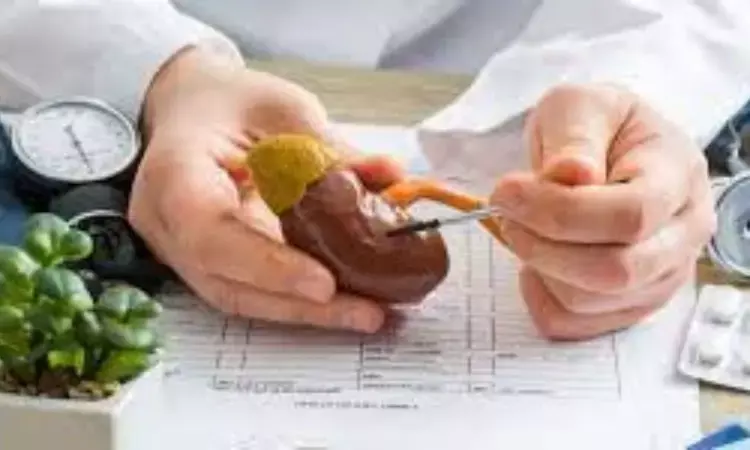
A prospective study found that diabetes mellitus and anuria are significant predictors of high post-void residual following kidney transplantation in patients with end-stage kidney disease. In male recipients, larger prostate volume was also associated with a higher risk of urethral re-catheterisation, highlighting the importance of urologic risk assessment in transplant care.
This study investigated the risk factors for both high post-void residual (PVR) and the need for urinary re-catheterisation (RC) following kidney transplantation (KT). Our objectives were to develop a predictive risk model for high post-void residual and to outline a management strategy for patients who experience post-transplant elevated post-void residual. This prospective study included 110 adult patients who underwent kidney transplantation. High post-void residual was defined as > 150 mL in non-anuric patients and > 50 mL in anuric patients. Logistic regression analysis was conducted to identify predictive factors for high post-void residual. Urinary re-catheterisation was evaluated as a secondary outcome.
Reference:
J. Kimura, B. Rawashdeh, B. Thomas, T. B. Dunn, M. Cooper, and E. Arpali, “ Risk Factors Associated With High Post-Void Residual Urine and Urethral Re-Catheterization in the Early Postoperative Period Following Kidney Transplantation.” Clinical Transplantation 39, no. 12 (2025): e70418. https://doi.org/10.1111/ctr.70418

Dr. Shravani Dali has completed her BDS from Pravara institute of medical sciences, loni. Following which she extensively worked in the healthcare sector for 2+ years. She has been actively involved in writing blogs in field of health and wellness. Currently she is pursuing her Masters of public health-health administration from Tata institute of social sciences. She can be contacted at editorial@medicaldialogues.in.
Dr Kamal Kant Kohli-MBBS, DTCD- a chest specialist with more than 30 years of practice and a flair for writing clinical articles, Dr Kamal Kant Kohli joined Medical Dialogues as a Chief Editor of Medical News. Besides writing articles, as an editor, he proofreads and verifies all the medical content published on Medical Dialogues including those coming from journals, studies,medical conferences,guidelines etc. Email: drkohli@medicaldialogues.in. Contact no. 011-43720751

