
- Home
- Medical news & Guidelines
- Anesthesiology
- Cardiology and CTVS
- Critical Care
- Dentistry
- Dermatology
- Diabetes and Endocrinology
- ENT
- Gastroenterology
- Medicine
- Nephrology
- Neurology
- Obstretics-Gynaecology
- Oncology
- Ophthalmology
- Orthopaedics
- Pediatrics-Neonatology
- Psychiatry
- Pulmonology
- Radiology
- Surgery
- Urology
- Laboratory Medicine
- Diet
- Nursing
- Paramedical
- Physiotherapy
- Health news
- Fact Check
- Bone Health Fact Check
- Brain Health Fact Check
- Cancer Related Fact Check
- Child Care Fact Check
- Dental and oral health fact check
- Diabetes and metabolic health fact check
- Diet and Nutrition Fact Check
- Eye and ENT Care Fact Check
- Fitness fact check
- Gut health fact check
- Heart health fact check
- Kidney health fact check
- Medical education fact check
- Men's health fact check
- Respiratory fact check
- Skin and hair care fact check
- Vaccine and Immunization fact check
- Women's health fact check
- AYUSH
- State News
- Andaman and Nicobar Islands
- Andhra Pradesh
- Arunachal Pradesh
- Assam
- Bihar
- Chandigarh
- Chattisgarh
- Dadra and Nagar Haveli
- Daman and Diu
- Delhi
- Goa
- Gujarat
- Haryana
- Himachal Pradesh
- Jammu & Kashmir
- Jharkhand
- Karnataka
- Kerala
- Ladakh
- Lakshadweep
- Madhya Pradesh
- Maharashtra
- Manipur
- Meghalaya
- Mizoram
- Nagaland
- Odisha
- Puducherry
- Punjab
- Rajasthan
- Sikkim
- Tamil Nadu
- Telangana
- Tripura
- Uttar Pradesh
- Uttrakhand
- West Bengal
- Medical Education
- Industry
Enhanced recovery feasible after partial nephrectomy of renal malignancies
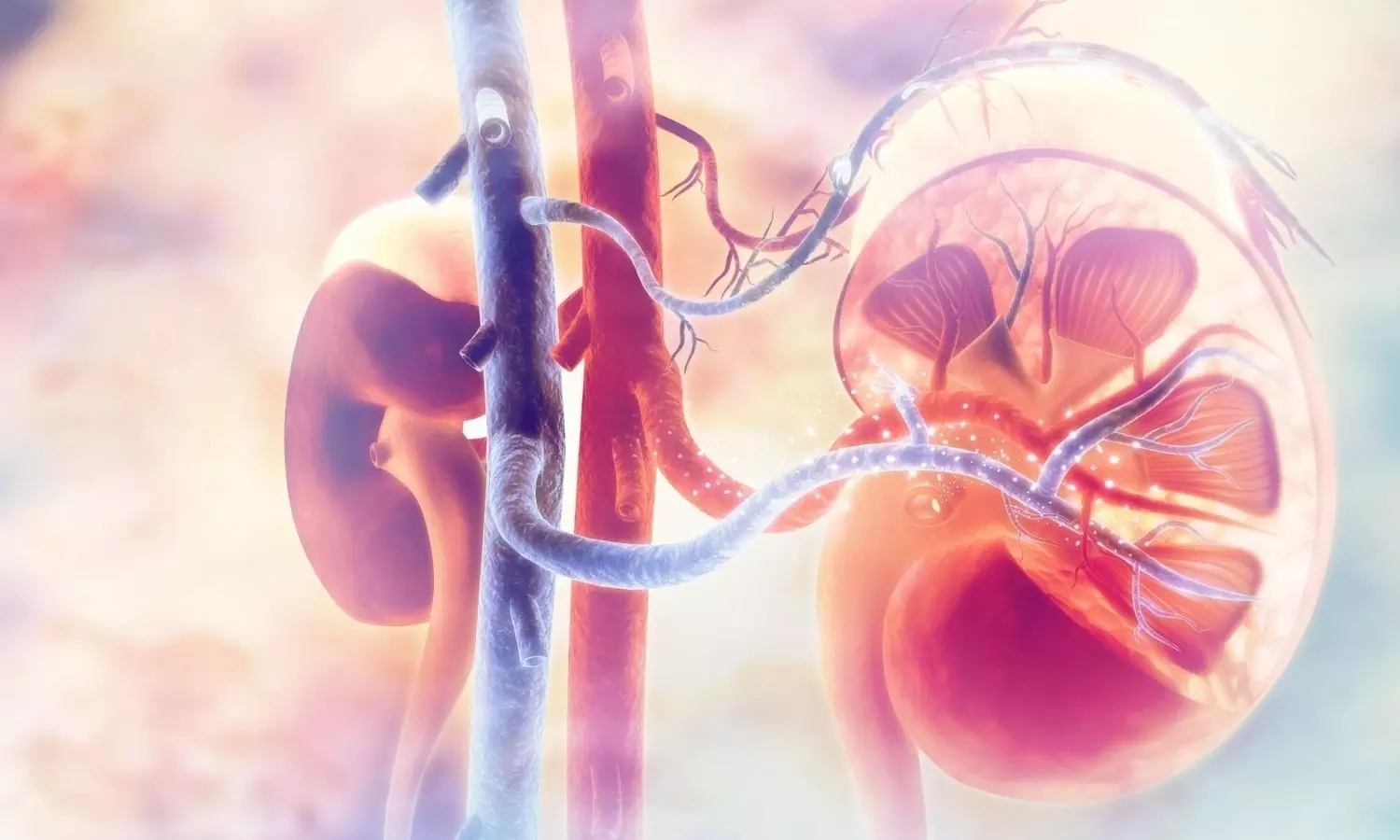
In the partial nephrectomy of renal malignancies, enhanced recovery after surgery (ERAS) is secure and efficient, says an article published in Frontiers in Oncology.
Enhanced recovery after surgery (ERAS), particularly in radical cystectomy and radical prostatectomy, has been popular in recent years and has proven to have benefits. In order to evaluate the safety and effectiveness of ERAS in the use of partial nephrectomy for renal malignancies, Wu Wangjian and colleagues carried out a systematic review and meta-analysis.
From the time of publication until July 15, 2022, Pubmed, Cohrance library, Embase, Web of science, and Chinese databases (CNKI, Wangfang, VIP, and CBM) were systematically searched for all published literature related to the application of improved recovery following surgery in partial nephrectomy for renal tumors. For each piece of included literature, the material's caliber was assessed. Standard Mean Difference (SMD), Weighted mean difference (WMD), and risk ratio (RR) at their 95% confidence intervals were used to show and interpret the data (CI). To provide the conclusions of this study a more objective perspective, the study's shortcomings are finally examined.
The key findings of this study were:
1. 35 pieces of literature, totaling 3171 patients across 19 retrospective cohort studies and 16 randomized controlled trials, were included in this meta-analysis.
2. The ERAS group was found to have advantages in the total hospital stay, postoperative hospital stay, first postoperative bed activity, first postoperative anal exhaust, first postoperative bowel movement, first postoperative food intake, time to drainage tube removal, time to catheter removal, postoperative hemorrhage incidence, total postoperative complication incidence, and postoperative urinary leakage incidence.
In conclusion, in the partial nephrectomy of renal malignancies, ERAS was found to be secure and efficient. ERAS can also lower medical expenses, increase the usage of medical services, and increase the rate at which hospital beds are changed over.
Reference:
Wangjian, W., Tianyi, L., Xiaoqian, M., Di, Z., Chuan, Z., Chao, W., Zijian, D., Tongtong, J., & Fenghai, Z. (2023). Application of enhanced recovery after surgery in partial nephrectomy for renal tumors: A systematic review and meta-analysis. In Frontiers in Oncology (Vol. 13). Frontiers Media SA. https://doi.org/10.3389/fonc.2023.1049294

Dr Kartikeya Kohli, Senior Consultant in Internal Medicine and specialist in Diabetes,Obesity and kidney diseases has done his DNB (Medicine), MRCP (UK). He has also obtained ECFMG Certification from USA in 2011. Also he has done his super-specialist training in Nephrology at IP Apollo Hospital. Dr Kohli is currently practicing as Consultant Internal Medicine at Sitaram Bhartia Institute of Science and Research and Apollo Clinic in East of Kailash. In the past, he has worked with several renowned hospitals in Delhi, including Apollo Hospital, Sir Ganga Ram Hospital & Fortis Vasant kunj. His additional academic qualifications include a PG Diploma in Clinical Endocrinology & Diabetes, Advanced Diabetes Care & Comorbidities, and Advanced Cardiology & ECG from the Royal College of Physicians. Dr Kohli has made significant contributions to medical academics and professional education. He has independently organised more than 100 Continuing Medical Education (CME) programmes and authored over 200 medical articles for various medical bulletins and healthcare portals, including Medical Dialogues.
Dr Kamal Kant Kohli-MBBS, DTCD- a chest specialist with more than 30 years of practice and a flair for writing clinical articles, Dr Kamal Kant Kohli joined Medical Dialogues as a Chief Editor of Medical News. Besides writing articles, as an editor, he proofreads and verifies all the medical content published on Medical Dialogues including those coming from journals, studies,medical conferences,guidelines etc. Email: drkohli@medicaldialogues.in. Contact no. 011-43720751

