
Simple Urine Test May Save Hundreds of Donor Kidneys Each Year, suggests study
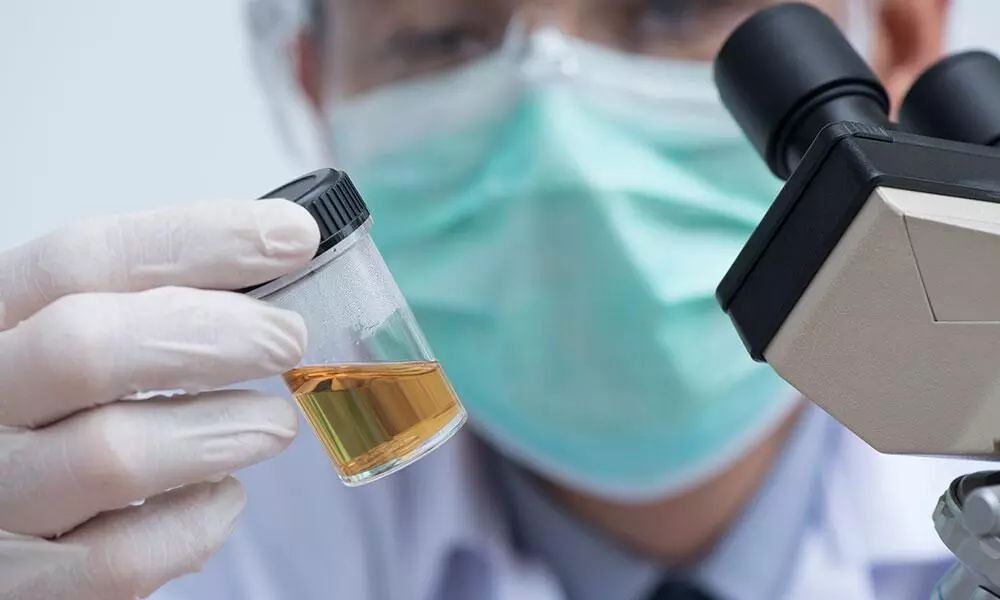


A new study led by researchers at Johns Hopkins Medicine found that a simple urine test performed on deceased kidney donors could help doctors make better transplant decisions, giving more people access to successful kidney transplants while reducing the number of deceased donor kidneys that go unused.
Published in the Journal of the American Society of Nephrology, the study results show that testing donor kidney urine for three urinary biomarkers along with the widely used Kidney Donor Profile Index (KDPI) provides a substantially more accurate assessment of donor kidney quality than the KDPI alone.
According to the American Kidney Fund, more than 92,000 people in the United States are currently waiting for a kidney transplant, while nearly one in four recovered donor kidneys goes unused each year because clinicians are uncertain about organ quality. Existing organ allocation decisions rely heavily on the KDPI, which estimates donor risk primarily from deceased donors’ age and medical history, but has long been seen to offer only modest ability to predict successful transplantation.
The researchers say their study demonstrated that biomarker-enhanced assessment could provide transplant teams with greater confidence when evaluating kidneys that might otherwise be rejected.
The multicenter observational study evaluated deceased kidney donors enrolled between 2010 and 2013 through five organ procurement organizations. Researchers followed paired kidney transplant recipients for three years after transplantation to determine whether combining urinary biomarkers with the Kidney Donor Profile Index could improve prediction of long-term graft function.
Researchers analyzed 474 deceased kidney donors whose kidneys were transplanted into two separate recipients. By evaluating paired recipient outcomes, investigators were able to more precisely determine how donor kidney quality influenced long-term transplant success.
The study found that adding three urinary biomarkers—uromodulin, osteopontin, and YKL-40—to the KDPI improved the ability to predict which donated kidneys were more likely to have good long-term function. The accuracy of the prediction increased from 80% with the KDPI alone to 86% when the biomarkers were included. The approach also improved the identification of kidneys likely to have favorable outcomes by 10 percentage points while maintaining a specificity of 78%.
“We have been evaluating donor kidneys almost entirely on the donor’s history; their age, their diagnoses, a single creatinine value,” says Chirag R. Parikh, M.D., Ph.D., director of the Division of Nephrology at the Johns Hopkins University School of Medicine and senior author of the study. Creatinine is a waste product filtered out by the kidneys. “These biomarkers tell us something the KDPI cannot: whether the kidney itself is repairing. That turns out to be a far better predictor of how it will work in a patient.”
Importantly, the researchers say, the three biomarkers can be measured using inexpensive urinary flow devices similar to at-home pregnancy tests. These point-of-care tests produce results within 30 minutes, making them practical for use during the fast-paced organ procurement process. The study demonstrated that the biomarker panel maintained strong predictive performance regardless of whether laboratory immunoassays or rapid lateral flow devices were used.
Using data from more than 1,500 deceased donors, researchers modeled how incorporating the three-biomarker panel into the kidney transplant evaluation process could improve clinical decision-making. Their analysis suggests that biomarker-guided assessments could also reduce unnecessary kidney biopsies in approximately 20% of donors and return at least one kidney to the transplant pool in about 7% of donors whose organs would otherwise not have been used.
To put these numbers into perspective, in a hypothetical group of 10,000 deceased donors, the researchers suggest this approach could eliminate more than 2,000 kidney biopsies and make approximately 700 additional kidneys available for transplantation. This would potentially expand access to life-saving transplants for patients waiting for a donor kidney.
Researchers say the findings, while observational and in need of further study, represent an important step toward precision medicine in kidney transplantation by incorporating real-time biological measures of organ health into existing allocation systems.
“Every kidney that is donated but not transplanted is a patient who stays on dialysis,” Parikh says. “If a test that is inexpensive and takes minutes can return even a portion of those organs to the pool, that matters enormously to the people who are waiting for a kidney transplant. Our next step is to prove it prospectively, in real time, at the point of donation.”
While more research is needed before the approach becomes standard practice, the findings suggest that adding urinary biomarkers to routine donor evaluations could lead to better transplant decisions, fewer non-utilized kidneys, and more life-saving transplants.
Study co-authors were from the University of Washington, Columbia University, Yale University, Vanderbilt University Medical Center, the University of Michigan, and CommonSpirit Health.
Reference: Thiessen Philbrook, H., Kerr, K. F., Mohan, S., DSouza, S., Hu, D. G., Obeid, W., Mansour, S. G., Hall, I. E., Doshi, M., Reese, P. P., & Parikh, C. R. (2026). Donor Urinary Biomarkers and the Prediction of Deceased Donor Allograft FunctionJournal of the American Society of Nephrology https://doi.org/10.1681/ASN.0000001183
